


 Close
Close
 18th February 2025
Investigations in cardiogenic pulmonary oedema
Acute decompensated heart failure is mainly a clinical diagnosis based on signs and symptoms. Subsequent investigations are used to confirm the suspected diagnosis and investigate underlying causes. Investigations include:
- Electrocardiogram – will often show tachycardia and possible LVH (left ventricular hypertrophy); may show precipitating causes, e.g. acute ischaemic changes or arrhythmia
- Chest x-ray – can rule out other causes of dyspnoea; in pulmonary oedema can show alveolar oedema, cardiomegaly, upper lobe diversion and pleural effusions
- Arterial blood gas – type 1 respiratory failure and assess lactate
- Biochemical tests – full blood count (identify anaemia or infection), renal function and liver function (identify causes of fluid overload), troponin (rule out acute coronary syndrome)
- NT-proBNP – typically raised but may be normal in hyperacute or flash pulmonary oedema or acute MR (mitral regurgitation)
- Echocardiography – can identify ventricular systolic and diastolic function, valvular abnormalities and regional wall motion abnormalities from ischaemia; urgent if a mechanical problem is suspected, e.g. valvular dysfunction, ventricular wall rupture, tamponade
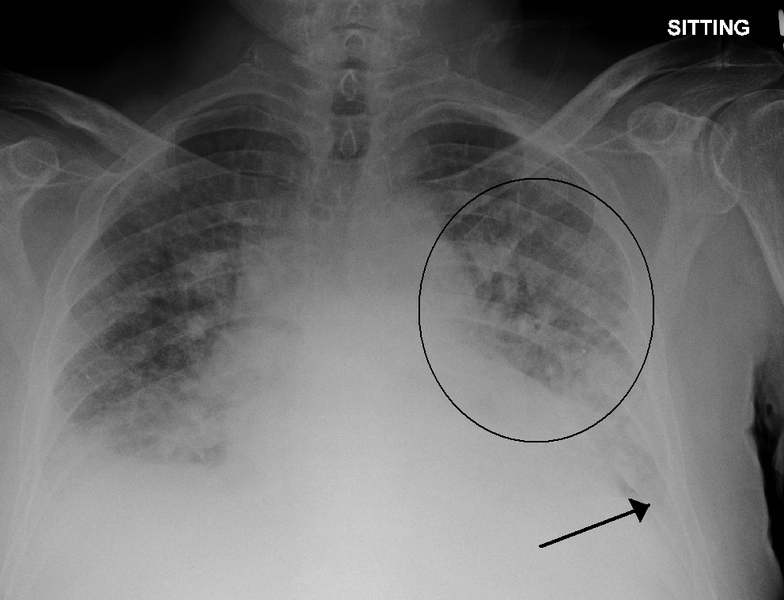
Image Source: Wikimedia Commons (2011). PulmEdema, Licensed under a creative commons licence. Available for free at: https://en.wikipedia.org/wiki/File:PulmEdema.PNG#/media/File:PulmEdema (Accessed: 19 January 2024).
Complete Guide to Clinical Genetics ST3 Application and Recruitment (2027)
Written by Medibuddy. Last updated: October 2026. Clinical Genetics is

Complete Guide to Clinical Radiology ST3 Application and Recruitment (2027)
Recruitment paused: NHS England is not running Clinical Radiology ST3+ recru

Complete Guide to Paediatric Surgery ST3 Application and Recruitment in United Kingdom (2026)
Written by Medibuddy. Last updated: October 2026. If you’re planning


Take your subscriptions with you
Our mobile app allows you to access your interview and exam question banks wherever you are.

