


 Close
Close
 7th June 2025
Rosacea
Rosacea is a common, chronic, and relapsing inflammatory skin condition that primarily affects the central face. In the UK around 1 in 20 people are affected and onset is between 30-50 years of age. Rosacea cannot be cured and is characterised by episodes of remission and recurrence. Treatment is targeted at controlling symptoms.
Cause
Pathogenesis is thought to be multifactorial involving genetic and environmental factors. Potential causes include factors that affect inflammatory or immune response, including various microbes, or vascular dysfunction.
Certain factors may trigger or worsen rosacea:
- Ultraviolet radiation exposure
- Increasing age
- Photosensitive skin types
- Smoking
- Hot or cold ambient temperature
- Spicy foods and hot beverages
- Alcohol
- Emotional stress and exercises
- Medication (calcium channel blockers, topical corticosteroid)
Diagnosis
Rosacea is a clinical diagnosis, but the findings can mimic other diseases, so other conditions may need to be excluded. Rosacea is sometimes divided into erythematotelangiectatic versus papulopustular subtypes. In most cases, features of both occur. Phymatous rosacea, in which there is soft tissue overgrowth usually affecting the nose, is more unusual. Some people with rosacea have ocular involvement, which may be more severe than the skin disease.
Symptoms and signs
- Central face predominantly affected, including cheeks, chin, nose and mid-forehead
- Facial flushing
- Burning or stinging sensation from skin (not pruritus)
- Facial erythema with prominent telangiectasia
- Inflammatory papules and pustules
- Rhinophyma
- Ocular manifestations including blepharitis, chalazia, conjunctivitis and keratitis
- Facial oedema
Investigations
- Usually a clinical diagnosis
- Occasionally, lupus antibodies or skin biopsy may be helpful in atypical cases
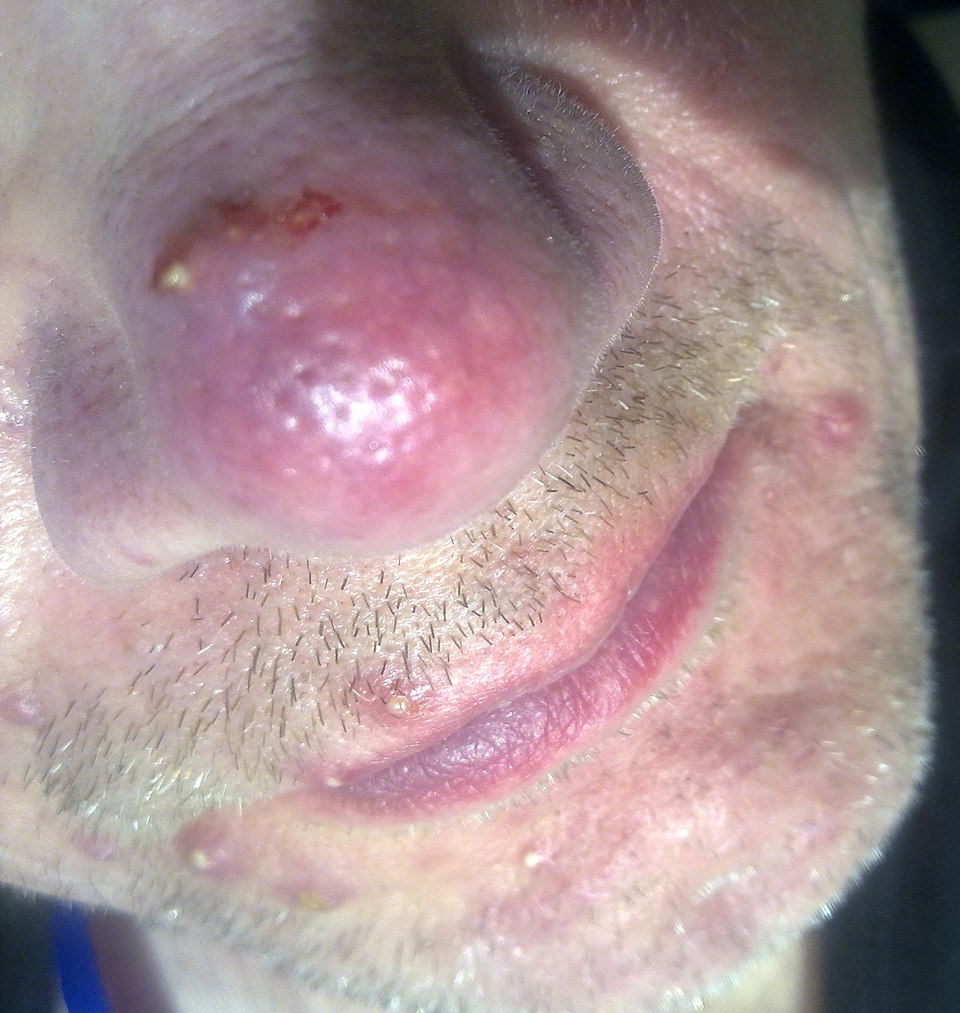 Image Source: Wikimedia Commons (2014). Acne Rosacea, Licensed under a creative commons licence. Available for free at: https://commons.wikimedia.org/wiki/File:Acne_rosacea.jpg (Accessed 23 May 2025).
Management
- High sun protection factor (SPF) sunscreen on face regularly (SPF 30-50)
- Minimise triggers that could worsen skin and flushing, such as:
- Ultraviolet light exposure
- Temperature extremes
- Alcohol
- Heavy exercise
- Stressful situations
- Spicy food
- Hot beverages
- Treatment of erythematotelangiectatic component
- Brimonidine (alpha agonist) gel – produces temporary vasoconstriction for a few hours after application but rebound erythema can be problematic
- Camouflage cream
- Laser therapy
- Treatment of papulopustular component
- Topical azelaic acid/ivermectin/metronidazole
- Oral lymecycline or doxycycline for moderate-to-severe disease
- Management of ocular disease
- May require ophthalmology input
- Lid hygiene
- Lubricants +/- topical anti-inflammatories
- Oral lymecycline or doxycycline
Complete Guide to Clinical Genetics ST3 Application and Recruitment (2027)
Written by Medibuddy. Last updated: October 2026. Clinical Genetics is

Complete Guide to Clinical Radiology ST3 Application and Recruitment (2027)
Recruitment paused: NHS England is not running Clinical Radiology ST3+ recru

Complete Guide to Paediatric Surgery ST3 Application and Recruitment in United Kingdom (2026)
Written by Medibuddy. Last updated: October 2026. If you’re planning


Take your subscriptions with you
Our mobile app allows you to access your interview and exam question banks wherever you are.

