


 Close
Close
 28th May 2025
Management of Type 2 Diabetes Mellitus
Non-Pharmacological Management
Ensuring the required long-term engagement with the health service and compliance with treatment is integral to successfully managing T2DM. Therefore, there is perhaps a greater emphasis placed on the structured education of patients, family members and carers about the disease than many other medical conditions. NICE recommends that courses should be offered to patients at the time of diagnosis with
Upon initial diagnosis of T2DM, patients should be encouraged to adjust their lifestyle to reduce their sugar levels and avoid medication. Changes must be individualised, taking into account factors such as the risk of hypoglycaemia and comorbidities. Generalisable suggested dietary modifications include:
- Opting for high-fibre, low-glycaemic-index sources of carbohydrates, such as whole grains and vegetables, and avoiding low-fibre, high glycaemic-index sources such as white rice, white bread, potatoes, sugary snacks and drinks.
- Consuming low-fat dairy products where possible.
- Incorporating a portion of oily fish per week into their diet.
- Reducing their amount of saturated and trans-fatty acids.
- Striving to fit 5 portions of fruit or vegetables into their daily diet.
- Avoidance of products that are specifically marketed towards patients with diabetes.
Newly diagnosed patients should be encouraged to engage in regular physical exercise even if they have a normal body weight. Patients who are overweight should target 5-10% weight loss in the initial 6-month period. All patients should be counselled on the risks of smoking and offered help with smoking cessation. Abstinence from alcohol is not required but heavy use is not advisable and patients should be made aware of the erratic effect binge drinking can have on their blood sugar.
Patients living with T2DM with a BMI of over 35kg/m2 should be considered for bariatric surgery, lower than the usual recommended threshold of 40kg/m2 due to there being good evidence that it improves control of the disease. For patients from Asian, Middle Eastern, Black African or African-Caribbean family backgrounds a lower threshold of 32.5kg/m2 is used for referral for assessment.
Monitoring and Targets
HbA1c should be monitored closely in patients newly diagnosed with T2DM, approximately every 3-6 months until the level stabilises and then every 6 months thereafter. The HbA1c target depends on the treatment the patient is taking and whether they have a history of hypoglycaemia:
48 mmol/mol 🡪 Patients who control their blood sugars via lifestyle modifications with or without a single medication that does not cause hypoglycaemia.
53 mmol/mol 🡪 Patients whose treatment regime includes a medication that can cause hypoglycaemic episodes
53 mmol/mol 🡪 Patients already taking one medication but HbA1c has risen to 58 mmol/mol and therefore a second agent is being introduced.
In patients trying to control their sugar levels using lifestyle modifications and a single medication only, an HbA1c of 58 mmol/mol should trigger the introduction of further medication. At each stage where a new medication is started, education should be reinforced, and lifestyle modifications emphasised. HbA1c targets may be loosened on an individual basis in certain situations. These include:
- Where there is a significant risk to their health associated with hypoglycaemic episodes, for example in frailty.
- If the patient has a reduced life expectancy and is therefore unlikely to benefit from the long-term effects of controlling sugar levels.
- The patient has significant comorbidities, so tight control of sugars would not be beneficial.
Self-monitoring of capillary blood glucose is not routinely recommended for T2DM patients unless they are taking insulin or an oral agent that may lead to hypoglycaemic episodes (e.g. sulfonylureas), have a history of hypoglycaemia or are pregnant or trying to conceive. Continuous glucose monitoring, either intermittent scanned (isCGM) or real time (rtCGM) should be considered in T2DM patients injecting insulin multiple times per day and either have a risk of hypoglycaemia or impaired hypoglycaemia awareness. They are also used in patients with impaired cognitive ability who need to but are unable to self-monitor capillary blood glucose. Patients on CGM should still measure their capillary blood glucose to check the accuracy of the CGM and in case of device failure, but this can be done less frequently.
Pharmacological Management
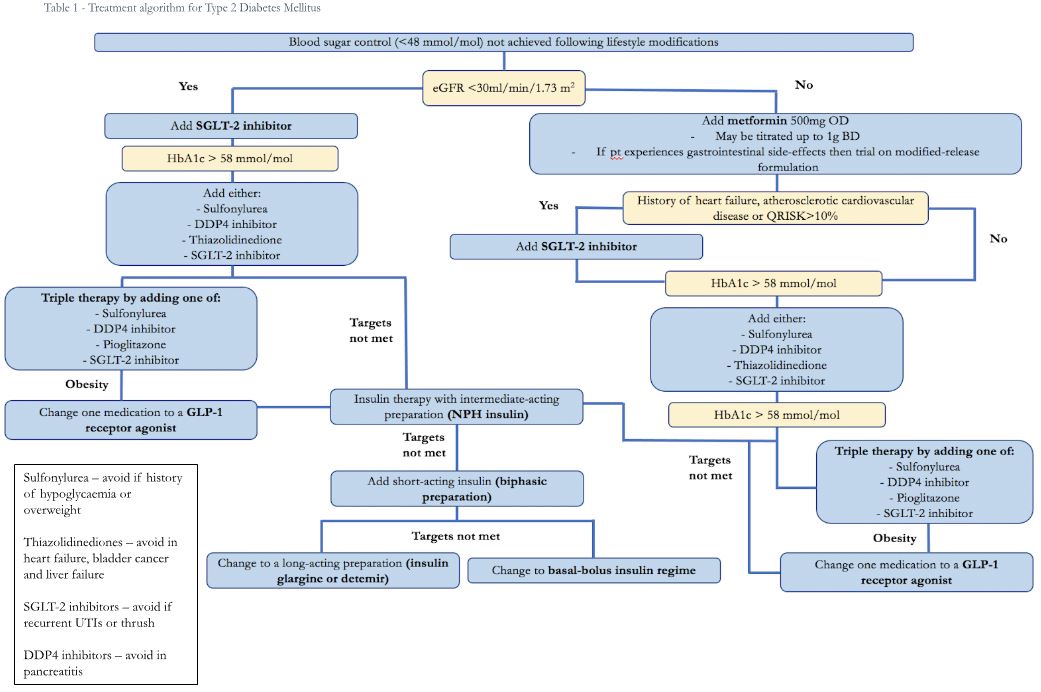
The order of introduction of medications for T2DM hinges on several factors and is not a simple stepwise algorithm. There are multiple therapeutic options that MRCP candidates must know in detail, including their mechanism of action, indication and potential side effects.
Metformin and SGLT-2 inhibitors are used as first-line agents, depending on the clinical scenario. Other medications including DPP-4 inhibitors, sulfonylureas, thiazolidinediones and GLP-1 mimetics may be used if further intervention is required. If glycaemic control is still not achieved, then a third agent can be added, or the patient can be considered for insulin. If three agents are not effective, then the patient should be started on insulin unless there are any contraindications.
Patients who have symptomatic hyperglycaemia (polyuria, polydipsia, headaches, fatigue, thrush or recurrent urinary or skin infections etc) should be considered for rescue treatment with insulin or a sulfonylurea (e.g. gliclazide) until blood glucose is controlled, at which point treatment should be reviewed.
Metformin
Metformin is a biguanide medication that has been used as the mainstay of medical treatment for T2DM for a number of years. The standard-release formulation is used first line in patients without CKD, with dosing starting at 500mg OD with the scope to titrate up to 1g BD before considering adding another medication.
Mechanism of action – metformin has multiple glucose-lowering effects:
- Inhibition of gluconeogenesis in the liver through activation of AMP-activated protein kinase (AMPK).
- Opposition to the action of glucagon by inhibiting mitochondrial complex I.
- Increasing systemic sensitivity to insulin through activation of AMPK, increasing the uptake of glucose into the hepatic and skeletal muscle cells.
- Decreasing the amount of carbohydrates absorbed in the small intestine.
Adverse reactions:
- Gastrointestinal upset – this is the most common side-effect of metformin, usually diarrhoea. Modified-release metformin should be trialled before stopping the drug entirely.
- Lactic acidosis – occurs rarely and is normally only seen in patients with significant renal impairment
- Vitamin B12 deficiency – this is due to interaction with intrinsic factor-dependent B12 absorption in the terminal ileum.
Contraindications:
- Renal impairment – the drug is excreted by the kidneys unchanged and the build-up of the drug in the bloodstream increases the risk of lactic acidosis. Metformin should be reviewed and potentially reduced in dose when eGFR falls below 45ml/min and stopped when it falls under 30ml/min. Caution should be taken when the drug is prescribed alongside nephrotoxic drugs when a patient requires x-ray contrast media or in cases of significant dehydration (usually it is advised patients stop metformin 24 hours before the procedure and restart 48 hours after).
- Metabolic acidosis – including lactic acidosis and diabetic ketoacidosis. Caution should also be used in patients with risk factors for developing lactic acidosis such as following periods of tissue hypoxia such as sepsis or following a myocardial infarction.
SGLT-2 Inhibitors (-flozins)
Members of this family of medications, including empagliflozin and dapagliflozin, have been shown to improve outcomes for patients with heart failure and atherosclerotic cardiovascular disease. They are therefore used, alongside metformin, as first-line treatment in these patients, as well as those deemed at high risk of developing cardiovascular disease (QRISK2>10%). Metformin should be started first and if tolerated then an SGLT-2 inhibitor should be added. If metformin is not tolerated, then the SGLT-2 inhibitor can be used as a monotherapy. SGLT-2 inhibitors are also used for patients with CKD, more information can be found in the complications section of this chapter.
Mechanism of action – SGLT-2 inhibitors encourage the renal excretion of glucose via modulation of sodium-glucose co-transporters in the proximal tubule of the nephrons.
Adverse reactions:
- Infection of genitalia and urinary tract – increasing the urinary concentration of glucose makes a more hospitable environment for microorganism growth. Patients who struggle to maintain good personal hygiene are especially at risk. This increases the risk of UTIs, balanitis, prostatitis and Fournier’s gangrene. SGLT-2 inhibitors should be stopped during the treatment of these conditions and reviewed before recommencing.
- Diabetic ketoacidosis – DKA is a very rare but serious reaction that can be difficult to diagnose as these patients are often euglycaemic. The medication should be permanently stopped if this happens.
- Hypoglycaemia – usually occurs when prescribed alongside insulin or a sulfonylurea.
- Hypotension – fluid imbalance leading to hypotension is an uncommon but associated side-effect.
Contraindications – the most important and intuitive is ketoacidosis. They should be used with caution in the elderly and frail due to the increased risk of hypotension and potential falls.
Sulfonylureas
Whilst first-generation sulfonylureas have largely fallen out of favour, second-generation medications are seen commonly, examples include gliclazide and glimepiride. They are often used as a second-line therapy in conjunction with metformin as they have very different mechanisms of action for achieving glycaemic control. However, they are also used as monotherapy in some patients who cannot tolerate metformin.
Mechanism of action – Sulfonylureas antagonise ATP-sensitive potassium channels on the cell membranes of beta-cells at the islets of Langerhans. This inhibits potassium efflux and depolarises the cell membrane causing calcium channels to open and an influx of calcium ions. The increased intracellular calcium stimulates insulin secretion.
Adverse reactions:
- Hypoglycaemia – the mechanism of action of sulfonylureas is unaffected by blood glucose levels so they have the potential to cause dangerous episodes of hypoglycaemia.
- Weight gain – an increase in the circulatory level of insulin means that more glucose will be pushed into cells and turned into fat. Therefore, this class of drugs should be avoided in obese patients.
- GI upset – as with many drugs, nausea, diarrhoea and abdominal pain may be seen whilst taking sulfonylureas.
- Bone marrow suppression – agranulocytosis and pancytopenia are seen rarely.
- Syndrome of inappropriate ADH secretion – SIADH can be caused by first-generation long-acting preparations such as chlorpropamide.
Contraindications – sulfonylureas are principally metabolised by the liver and therefore they shouldn’t be used in severe liver impairment due to increased risk of hypoglycaemia. The same is true for severe renal impairment, they can be used in mild to moderate renal impairment. They should also be avoided in patients with DKA. They are usually avoided in obesity.
DPP-4 inhibitors (-gliptins)
Medications such as sitagliptin and saxagliptin represent a relatively new class of hypoglycaemic agents: DPP-4 inhibitors, the first of which was licensed in 2006. They are generally used as a second-line therapy alongside another medication, usually metformin, but are sometimes used as monotherapy.
Mechanism of action – the hormone glucose-like peptide-1 (GLP-1) is secreted by L-cells in the distal small intestine in response to rising blood sugar levels, stimulating insulin release. The rise in GLP-1 is short-lived as the hormone is quickly broken down by the enzyme DPP-4, thereby producing a spike in insulin after meals. DPP-4 inhibitors delay the degradation of GLP-1, allowing further insulin release and a greater hypoglycaemic effect.
Adverse reactions – DPP-4 inhibitors are usually well tolerated and have few side-effects but some are observed:
- General symptoms – such as headache, dizziness, nausea and constipation are most commonly seen.
- Increased risk of infections – particularly upper respiratory tract and skin infections.
- Pancreatitis – DPP-4 inhibitors are a rare cause of pancreatitis.
- Severe allergic reactions – such as angioedema, anaphylaxis and Steven-Johnson syndrome.
Contraindications – The dose of DPP-4 inhibitor should be reduced in patients with significant renal impairment and they should not be used in patients with a history of pancreatitis.
Thiazolidinediones (-glitazones)
The two currently licensed thiazolidinediones, pioglitazone and rosiglitazone, are another second-line treatment option. They are usually combined with either metformin or a sulfonylurea but can rarely be used as monotherapy.
Mechanism of action – thiazolidinediones regulate gene expression through binding to peroxisome proliferator-activated receptor-gamma (PPAR-gamma), which regulates transcription of genes involved in glucose homeostasis. This leads to increased production of adiponectin and expression of the gene GLUT-4, which increases insulin sensitivity.
Adverse reactions – thiazolidinediones are often avoided in preference for other drug classes because they are associated with several undesirable side effects:
- Heart failure – patients have an increased risk of heart failure and peripheral oedema whilst taking thiazolidinediones for a prolonged period, especially rosiglitazone.
- Weight gain – activation of PPAR-gamma receptors stimulates glucose uptake into adipocytes (where the majority of these receptors are found). Thiazolidinediones also increase appetite.
- Osteoporosis – and the associated risk of fragility fractures.
- Bladder cancer – especially seen in patients taking rosiglitazone.
- Hepatotoxicity – LFTs should be taken at baseline and during treatment as there is a significant risk of acute liver injury.
- Macular oedema – concomitant use of insulin increases this risk.
Contraindications – these generally match the above adverse reactions. Thiazolidinediones should be avoided in patients with a history of heart failure, bladder cancer, obesity, osteoporosis and hepatic impairment.
GLP-1 receptor agonists
There are two categories of GLP-1 receptor agonists, those based on a human GLP-1 structure (for example liraglutide, dulaglutide) and those based on an exendin-4 structure (including exenatide). If patients do not achieve glycaemic control on triple therapy with metformin and two other drugs then one medication can be changed to a GLP-1 receptor agonist if the patient has a history of obesity or cardiovascular disease. Treatment is only continued if they have a satisfactory response after 6 months – a reduction of at least 11 mmol/mol in HbA1c and weight loss of at least 3% of their body weight.
Increasingly, they are being used as a treatment for obesity without type 2 diabetes as they can aid weight loss through appetite suppression and better blood glucose control. These medications are given via subcutaneous injection.
Adverse reactions:
- GI upset – including nausea, dyspepsia, diarrhoea and abdominal pain. The early satiety associated with GLP-1 receptor agonists can develop into nausea if patients continue to eat.
- Immunogenicity – patients can develop antibodies against the medication leading to injection site reactions or angioedema.
- General symptoms – mild tachycardia, headaches and dizziness may occur.
Contraindications – these medications aren’t used in patients of normal weight and should not be given to pregnant patients. They should be avoided where there is hepatic impairment or renal impairment (with a creatine clearance of <30ml/minute).
Insulin
Generally, insulin is considered if patients are not controlled on three oral medications. Patients should be offered a neutral protamine Hagedorn insulin (an intermediate-release preparation) to be administered either once or twice per day, according to an individual’s need. A short-acting insulin should be added to the regime if the HbA1c is over 75 mmol/mol and can be given as a separate injection or in a combined biphasic preparation. A long-acting insulin (detemir or glargine) should be considered in patients who do not meet their HbA1c targets, suffer from significant hypoglycaemia or would benefit from a once-daily injection (for example if they need a carer to administer their insulin). A basal-bolus regime may be used in patients who don’t achieve their targets using a biphasic preparation and are able to administer several injections per day and monitor their own blood glucose.
Metformin should always be continued when patients are started on insulin but other medications should be reviewed (especially those with a capacity to cause hypoglycaemia). All patients should be offered education on insulin administration, blood glucose monitoring, hypoglycaemia awareness and DVLA guidance.
Complete Guide to Clinical Genetics ST3 Application and Recruitment (2027)
Written by Medibuddy. Last updated: October 2026. Clinical Genetics is

Complete Guide to Clinical Radiology ST3 Application and Recruitment (2027)
Recruitment paused: NHS England is not running Clinical Radiology ST3+ recru

Complete Guide to Paediatric Surgery ST3 Application and Recruitment in United Kingdom (2026)
Written by Medibuddy. Last updated: October 2026. If you’re planning


Take your subscriptions with you
Our mobile app allows you to access your interview and exam question banks wherever you are.

