


 Close
Close
 27th October 2023
Leadership, Power and Group Behaviour
Leadership and Types of Social Power
‘There are almost as many different definitions of leadership as there are persons who have attempted to define the concept.’ – Ralph Stogdill
Leadership
As highlighted by the quote above, leadership is a constantly evolving area and trying to reach a consensus on a definition of ‘leadership’ is like trying to catch smoke. This constant state of flux likely reflects the changing demands we have as a society from our leaders and, by extension, their followers.
For the purposes of this chapter, we’ll be defining leadership as simply this:
‘Leadership is the ability of a group or individual to lead followers towards a goal.’
Sounds reductive, right? Trust me, once you start including terms like influence, control and power, it gets a whole lot muddier, so let’s stick with this.
Thankfully, for the purposes of the MRCPsych papers, we do not need to engage in a lengthy debate around the merits of each and every definition; we simply need to have a passing familiarity with some of the more established contemporary and historical models.
Let’s begin by looking at a more contemporary distinction:
Transactional vs transformational leadership
| Transactional leadership | Transformational leadership | |
|---|---|---|
| Leaders source of power | Rank, control of rewards. | Character, charisma. |
| Follower response | Compliance. | Commitment. |
| Rewards | Tangible, such as money. | Less tangible, such as satisfaction. |
| Timeframe | Better for short term goals. | Better for long term goals. |
It might be easy to look at the previous table and conclude that transformational leadership is inherently better than transactional leadership, but this would be a mistake. Sometimes, you need rapid action to meet a short term goal, in which case a simple transactional style where goals and rewards are outlined clearly will be better suited.
Now let’s quickly look at a more historical leadership model that may crop up in your exams by Lewin (1939):
Autocratic vs Democratic vs Laissez-Faire leadership
| Autocratic | Democratic | Laissez-Faire | |
|---|---|---|---|
| Decision-maker | Leader alone. | Leader with team input. | Anyone. |
| Advantages | Most rapid decision. Purposeful direction. |
Well regarded by most teams. Allows for innovation. |
No need for centralised coordination. Allows for innovation. |
| Disadvantages | Heavily dependent on the leader. This can lead to conflict and staff turnover. |
Slowest and most costly due to repeated meetings. This can lead to a lack of consistency. |
Only works when the whole team is highly skilled and motivated. This can lead to a total lack of consistency and direction. |
Again, certain styles lend themselves better to certain situations, and it is important to appreciate this flexibility.
Now that we have established a working knowledge of leadership models that might appear in your exam, it is worth looking at the concept of power.
Power and influence
What does power mean to you? As a noun, it has several meanings:
- The ability or capacity to do something or act in a particular way.
- The capacity or ability to direct or influence the behaviour of others or a course of events.
- Physical strength and force exerted by someone or something.
- Energy that is produced by mechanical, electrical or other means and used to operate a device.
For the purposes of MRCPsych, we’ll focus on the second bullet point and how it formed the basis of the work by social psychologists French and Raven (1959). They initially described the ‘5 Bases of Social Power’ as follows:
- Expert power – The power of a person with specialist skills or knowledge.
- Reward power – The power of a person in a position to provide rewards.
- Legitimate power – The power held by an individual in an organisation simply by virtue of rank.
- Referent power – The power held by a person with charisma whom people gravitate towards.
- Coercive power – The power of a person who has the ability to apply punishments.
Six years later, Raven added a sixth base of social power that is less likely to come up on your exams but definitely has the potential to!
6. Informational power – This results from a person’s ability to control the information that others need to accomplish something.
Now we touch on the debated area of ‘power vs influence’.
It is often stated that power is ‘The ability to MAKE people do things’ whereas influence is ‘The ability to make people WANT to do things.’
However, this distinction falls into problems when we consider the above work of French and Raven, as their definition of referent power would definitely fall under what constitutes ‘influence’ by most definitions.
It’s best not to get bogged down in the details on this one and simply be aware of the work of Herbert Kelman (1958), a Harvard psychologist who, in a historical paper in the Journal of Conflict Resolution, proposed three broad varieties of social influence.
- Compliance – Responding favourably to a request (implicit or explicit) from another. It is primarily a change of behaviour rather than one of attitude, as one can agree to perform a task without personally agreeing with it. Often, this is done to achieve a reward or avoid a punishment.
- Identification – The changing of attitudes or behaviours to conform to someone that is well-liked or respected by the individual, such as a celebrity or role model.
- Internalisation – Influence is readily accepted intrinsically and extrinsically because it fits with the individual’s own value system, so they are simply ‘doing what they think is right.’
Obedience vs conformity
It is important for the college exams to be able to differentiate between conformity and obedience.
- Conformity – No explicit instructions are given, but peer influence and social pressure influences one to perform a certain task.
- Obedience – Explicit instructions are given from a position of authority, and the implicit or explicit threat of punishment influences one to perform a certain task.
The above distinction is the majority of what you need to remember, but the table below outlines more of the differences for reference:
| Conformity | Obedience | |
|---|---|---|
| Source of influence? | Peers. | Authority. |
| Instructions? | Implicit. | Explicit. |
| Consequence? | Marginalisation. | Punishment. |
In the next topic, ‘Group Behaviour’, we will explore some of the more notable examples of some of these principles in action, which recurrently feature in MRCPsych exams.
References
- Stogdill, R. M. (1974). Handbook of leadership: A survey of theory and research. New York: Free Press.
- Avolio, B. J., Walumbwa, F. O. and Weber, T. J. (2009). ‘Leadership: current theories, research, and future directions’. Annual Review of Psychology. 60: 421-49.
- K. Lewin. (1939). Field Theory and Experiment in Social Psychology: Concepts and Methods. American Journal of Psychology. 44:6. 868-896.
- French, J. & Raven, B. (1959). The bases of social power. Studies in social power. Univer. Michigan.
Group Behaviour
Notable examples
We’ll start by looking at some of the more universal phenomena exhibited in group interactions before looking at some of the more notable studies that you may be asked about in Paper A!
Common group phenomena
There are a number of phenomena in group interactions that are important to know for your exams; they are:
- Groupthink – Is a phenomenon where a group decision is made by prioritising maintenance of conformity and harmony within the group, and so critical decision-making is not undertaken – Initial research performed by Irving Janis.
- Groupshift or ‘Risky shift’ – Is a phenomenon wherein, due to a perceived diminished responsibility by the individuals within a group, they are more prone to extreme or risky decisions due to the perceived sharing of risk.
- Group polarisation – A group can serve to reinforce and intensify a direction that the group individuals were previously leaning, leading to opinions more extreme than previously held.
- Deindividuation – Controversial to define but commonly felt as a loss of self-awareness by individuals when within a context in which they cannot be readily identified, such as a mob or the internet.
- Bystander effect – A theory that the likelihood that a person will intervene to help in a situation is inverse to the number of people present, often felt as an extreme example of diffusion of responsibility.
Conformity – Asch
Perhaps the most famous (but by no means infamous, that one comes later!) study into group conformity came from Solomon Asch in the 1950’s.
The premise is simple: a group of college students were invited into a room and asked to perform a simple perceptual task. The most common one is below:

Image Source: Wikimedia Commons (2014). Asch experiment, Licensed under a creative commons licence. Available for free at: https://commons.wikimedia.org/wiki/File:Asch_experiment.svg (Accessed on: 18 October 2023).
The group were shown a sequence of variations of the above two cards and asked which line on the comparison card was equal in length to the reference card on the left. In normal circumstances, it was expected to have a near 100% correct identification rate.
However, these were not normal circumstances.
In fact, every single one of the college students except one was an actor. Their task was simple. To correctly identify the line on the comparison card for the first 2 comparisons in the sequence, but then to all give the same incorrect answer on the third comparison. They would then go on to intentionally all agree on the same wrong answer for 11 of the remaining 15 comparisons.
The results are as follows:
- 5% of people agreed with the actors every single time.
- 25% of people disagreed with the actors every single time.
- The remainder showed some degree of conformity, with an overall majority of responses being correct (63%), but a sizable proportion of incorrect answers were given in agreement with the actors (37%).
After the experiment concluded, many participants stated that they didn’t truly agree with the other participants but felt an overwhelming need to not ‘rock the boat’ or appear unusual when faced with a clear group norm.
This study goes some way to explain the contemporary theory of normative influence, with many of us regularly being influenced by the unconscious desire to remain ‘normal’ and belong to the wider social group.
Conformity & social norms – Sherif
A study into group conformity and social norms was performed in 1935 by Muzafer Sherif, a social psychologist. The study involved the use of the autokinetic effect, specifically the phenomenon of a lone dot of light in an otherwise dark room, which can be perceived to ‘move’ if there is no frame of reference.
A common example of this in exams is the ‘standby’ light on electrical devices in the middle of the night, appearing to move independently. This is a normal experience of what is commonly known as an optical illusion and not indicative of mental illness.
However, in Sherif’s study, three participants were subjected to the autokinetic effect together by looking at the same dot of light at the same time, all within the same dark room. They were sequentially asked to estimate, out loud, the distance that the dot had moved without discussion. The sequence of estimates was repeated several times.
After repeated estimates, the groups of three would consistently come to a consensus estimate. Some groups’ consensus was high, and some groups were low, but within the groups, they consistently agreed on an estimate. There was a ‘social norm’ answer established within the groups. Interestingly, if the individuals were invited back at a later date to repeat the study alone, they answered similarly to their previously established ‘social norm.’
This has been thought to suggest that social norms are more than simply performative and can individually alter our understanding of perceptions.
Suggestibility – Guðjónsson
The Guðjónsson suggestibility scale (GSS) was created in 1983 by Icelandic psychologist Gísli Hannes Guðjónsson.
It centres around the concept of interrogative suggestibility, normally in the context of legal proceedings and the suggestibility of witnesses.
The GSS involves reading a short story to a participant, usually revolving around a fictional criminal event, for example, a woman being mugged outside a bus station. Following this, either immediately or after a certain period of time has elapsed, the participant is asked to recall as much of the story as they can.
Afterwards, the participants are asked a series of ‘neutral’ and ‘yield’ questions about the story:
‘Neutral’ questions are questions where the correct answer is yes.
‘Yield’ questions, however, are a mixture of leading, affirmative and false alternative questions:
- Leading questions – Worded to seem plausible and suggest an affirmative answer, i.e., ‘Did the lady’s bag strap break while it was being pulled?’
- Affirmative questions – Include facts not previously included in the story but framed in a way to again imply the correct answer, i.e., ‘The men ran off down West Street, correct?’
- False alternative questions – Includes a choice where neither answer is correct, such as ‘Did she bruise her arm or her face?’ in a story where no bruising has been mentioned at all.
After the initial round of questioning is complete, the participant is told in a disapproving manner that there are a multitude of mistakes in their initial responses and asked to repeat the questions. The amount this influences their answers to change is referred to as ‘the shift.’
In reality, the GSS has limited usefulness on a case-by-case basis. It, however, highlights the problems with the suggestibility and fallibility of the human memory and the significant consequences this has for many legal systems so heavily reliant on the weight of witness testimony.
Obedience – Milgram
Following the downfall of the Nazi regime, many psychologists were interested in the concept of obedience and ‘Just following orders’ as this was a common stance taken by those who felt responsible for a large proportion of the atrocities in World War 2.
From this, one of the more controversial studies in psychology was born. The Milgram experiment was first undertaken in 1961 by Stanley Milgram, a social psychologist.
Its purpose was to assess to what degree people will obey authority even when it conflicts with their personal values.
In the study, the participants were recruited under the false pretence of being involved in an experiment looking at the relationship between learning and punishment.
The participant met with the researcher and an actor, who they were led to believe was another potential participant.
Both participants and actors were given pieces of paper seemingly at random to determine whether they would be a ‘teacher’ or a ‘learner.’ In reality, the actors were always given the ‘Leaner’ role and the study participant was always given the ‘teacher’ role. At this point, the actor would mention that they had an underlying heart condition.
The actor was then taken into an adjoining room where they could communicate with the participant but not be directly seen by them.
The researcher then informed the participant that the study involved the ‘teacher’ asking the ‘learner’ questions. If the answer was incorrect, the ‘teacher’ was to use a mechanism to deliver an electric shock to the ‘learner’. The participant was then given an unpleasant 45 volt electric shock as a sample of what they would be inflicting on the ‘learner.’
The participant was informed that the voltage would increase by 15 volts every time a shock was administered.
The study commenced, and the actor would gradually begin to get answers wrong, and the participant would inflict electric shocks on them. However, after multiple voltage increases, the actor would begin to shout, scream and bang on the wall to communicate with the participant that they are distressed and remind the participant about their underlying heart condition. After repeating this multiple times through successive shocks, the actor would fall silent, meaning any further questions were classed as incorrect due to no answer. In reality, the ‘learner’ received no electric shocks; all of their distress was an act.
Throughout the experiment, many of the participants voiced significant distress at the harm they perceived to be inflicting on the ‘learner’ and wished to halt the experiment. At this point, they were reassured that they would not be held responsible and told the following statements in order and separately.
- Please continue.
- The experiment requires you to continue; please go on.
- It is essential that you continue.
- You have no choice, you must continue.x
If any of the above orders persuaded the participant to continue, then the experiment continued, with the participant needing to push through all four of the above verbal orders in succession for the experiment to be halted early.
Otherwise, the experiment was halted once the participant had given three maximum voltage (450 volt!) shocks in succession.
- Every single ‘teacher’ expressed distress and a desire to stop the experiment at some point during the process.
- All of the participants gave shocks up to 300 volts.
- 65% of the participants completed the experiment by giving the final 450 volt shocks.
The study has been repeated in multiple different cultural contexts worldwide, and meta-analysis of the results suggests that the percentage of participants who continue to deliver shocks under duress until the experiment finishes is consistently around 65%.
This study is often cited as one of the most controversial in psychology, given the significant emotional distress experienced by the participants involved.
Situational attributions – Zimbardo
Another controversial experiment was the Stanford Prison experiment of 1971 by psychologist Philip Zimbardo.
The US Navy had noted a high degree of conflict and poor conditions in their prisons and funded Zimbardo to investigate the hypothesis that those employed as prison guards were self-selecting for the role due to hostile and neglectful tendencies or whether it was a product of environmental influences.
Zimbardo recruited 24 study volunteers from a pool of 70. The 24 recruited were those who scored the highest on measures of maturity and psychological stability.
The 24 participants were randomly allocated to be either ‘prisoner’ or ‘guard’ in the experiment.
The experiment took place in a mock jail constructed in the basement of the Stanford psychology department.
Both groups were given very little formal instruction on how to conduct themselves; other than that, guards were allowed to come and go from the prison, whereas prisoners had to remain in the prison for the duration of the experiment. The guards were also explicitly told the use of physical violence was forbidden.
Despite the relatively lax boundaries established for the experiments, some components were controlled. For example, the guards were given a military-esque uniform and mirrored sunglasses to prevent eye contact. The prisoners were all required to wear a plain prisoner uniform with a number embroidered that they would be referred to as (instead of their name) for the duration of the experiment.
The experiment was intended to last two weeks.
Remarkably quickly, despite no external encouragement to do so, guards began to inflict cruel and humiliating punishments on the prisoners, and the prisoners largely accepted it. Prisoners were denied bathroom privileges, soiling their clothes and their cells. Prisoners were forced to exercise repeatedly, and stress positions were inflicted. Even psychological warfare was used by the guards by sowing dissent among the prisoners by creating the false impression that some of them were informants.
After six days, a researcher not previously involved in the study attended the prison and remarked on the seriousness of the squalor and abuse evident in the jail, highlighting the lack of morality in letting it continue further. For this reason, the experiment was terminated after just six days.
This study remains controversial for its obvious ethical issues due to pervasive emotional distress, but also its applicability to wider contexts and lack of reproducibility has been debated. Many critics highlight that the guards were likely acting out models of how they believed guards should behave from pre-existing stereotypes.
However, supporters of the study feel that it shows evidence towards the concept of situational attributions, that robust character traits such as kindness do not exist, and that most human behaviour is a result of multiple situational factors dependent on the context in which we find ourselves.
References
- Asch, S. E. (1951). Effects of group pressure upon the modification and distortion of judgments. Groups, leadership and men; research in human relations. 177–190.
- Sherif, M. (1935). A study of some social factors in perception. Archives of Psychology. 27(187).
- Gudjonsson, GH. (1984). A new scale of interrogative suggestibility. Personality and Individual Differences 5(3), 303–314.
- Milgram, S. (1963). Behavioural Study of obedience. The Journal of Abnormal and Social Psychology. 67(4), 371–378.
- Haney, C., Banks, C., & Zimbardo, P. (1973). Interpersonal dynamics in a simulated prison. International Journal of Criminology & Penology, 1(1), 69–97.
- Zimbardo, P. G. (1973). On the ethics of intervention in human psychological research: With special reference to the Stanford prison experiment. Cognition, 2(2), 243–256.
Intergroup Behaviour
Social identity and group membership
How do you identify yourself?
I’m not talking about ‘Hello, my name is…’; I’m talking about what groups you identify yourself as belonging to.
For example, religion, occupation and ethnicity are all groups that people use to understand and explain who they are to themselves and others.
This has led to great fascination from social psychologists, notably Henry Tajfel and John Turner, about how we self-identify as members of wider groups and the influence that has on our individual and collective behaviours.
This led to the development of the ‘Social identity theory’ by Tajfel in the 1970’s.
Social identity theory – Tajfel and Turner
The specifics of Tajfel’s theory is quite complex and way above the level of detail needed for the MRCPsych, but a basic understanding is necessary, so that is what I will describe here.
Humans are social animals, and this is the principal reason for our emergence as the dominant species on Earth. However, humans also have limited cognitive processing capacity and so use cognitive heuristics to respond to the world around us.
Due to this, the human brain naturally lends itself to categorising things, including people, based on context clues and past experiences. For example, if you were to walk into a mechanic’s office and saw a man in overalls covered in oil, it is reasonable that you would presume him to be a mechanic. Whereas, if you entered and the same man was in a tailored suit, you might not. This is how we navigate the world.
This categorising process applies not only to others but to ourselves. If you remember back to Maslow’s hierarchy of needs, once you have established the basic physiological and safety needs, the next need to be addressed is ‘belonging.’, closely followed by ‘esteem.’
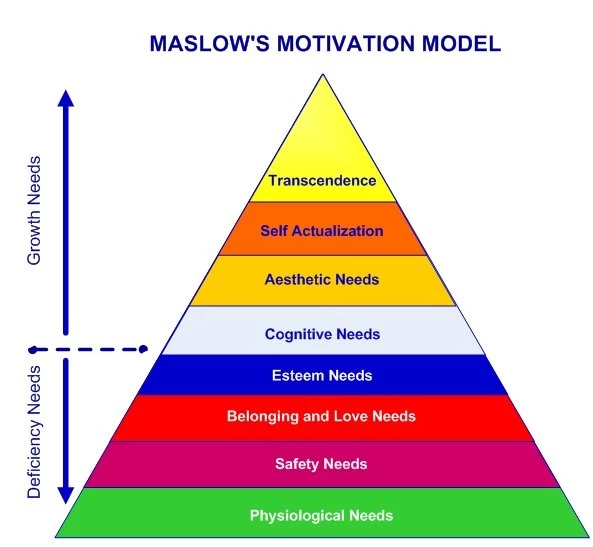
We are social animals, and the need to belong and feel valued is part of who we are. As such, we can identify with multiple social groups at once, for example, a Catholic doctor who supports Manchester United.
Once an individual has categorised themselves as a certain group, they will often adopt some of the behaviours of that group to conform to their social norms in an attempt to generate validation and a sense of ‘belonging.’
Image Source: Wikimedia Commons (2020). Expanded Maslow’s Needs, Licensed under a creative commons licence. Available for free at: https://en.wikipedia.org/wiki/File:Expanded_Maslow%27s_Needs.webp (Accessed on: 18 October 2023).
The problem comes from the fact that once we have identified ourselves as part of an ‘us,’ this inevitably leads to the formation of a ‘them.’
Intergroup conflict and prejudice
Social identity and intergroup conflict
By definition, once we establish what defines belonging to a specific group, we have inherently defined what it means to be NOT part of that group.
In social psychology, this is often referred to as the ‘ingroup’ and the ‘outgroup.’
It is felt in social identity theory that once an individual identifies as a member of a certain ‘ingroup’, then they will compare their group’s performance to the relevant ‘outgroup.’
The individual’s self-image is then tied to both their personal circumstances as well as their group’s relative performance. The better ‘their group’ is performing, the better it reflects on them as a member of it.
This felt competition leads to conflict between the groups.
It was often believed that for this to occur, there needed to be a specific competition over scarcity of resources, the most famous study of this being the ‘Robbers Cave’ study by social psychologist Muzafer Sherif.
Intergroup conflict – Sherif
Two groups of white young boys were taken to a summer camp in Robbers Cave State Park in Oklahoma in the summer of 1954. The two groups were isolated for the initial phase of the experiment, spending multiple days doing activities within their group collaboratively. The boys chose names for their groups, one group identifying as ‘The Eagles’ and the other as ‘The Rattlers.’
After several days, the groups were introduced to one another and told they would spend the next few days engaging in competition for prizes.
Over the few days of the competition, there was increasing conflict and hostility between the groups, with initial name-calling progressing to flag-burning and, ultimately, destruction and theft of property.
Once the competition days were over, the groups were brought together to engage in recreational activities. However, the conflict only seemed to further increase with multiple fights breaking out.
The groups were asked to describe the members of their ‘ingroup’ and the members of the ‘outgroup.’ Consistently, they described the members of their ‘ingroup’ in a positive light, highlighting their positive characteristics while consistently berating and criticising the members of the ‘outgroup.’
However, the groups were then forced to engage in tasks that would benefit both groups and required collaboration as one large group. Through these tasks, there was noted to be a decrease in hostile behaviour and expressed ill feelings for the other group.
The above study is often cited as an example of ‘realistic conflict theory’ in that the hostility was felt to be directly attributable to the scarcity and competition of resources, in this case, prizes. However, many debate that the mere existence of two groups led to the previously discussed relative performance comparison and resultant effects on self-esteem. It is worth noting that the hostilities began to decrease once the groups were forced to work collaboratively and, arguably, began to function as a larger singular group.
Prejudice
Prejudice is, simply put, the act of pre-judging something, usually people, before sufficient evidence for a belief can be attained.
It is often thought to be composed of three separate components: affective, cognitive and behavioural.
- Affective component – Feeling a certain emotion towards a group, i.e., hate or disgust.
- Cognitive component – Stereotypes leading to erroneous thinking about members of a group.
The psychologist Gordon Allport categorised prejudiced behaviour into the following tiers:
- Antilocution – ‘Negative speech’ such as stereotypes, badmouthing, unpleasant ‘banter.’
- Avoidance – Avoiding, ignoring, excluding.
- Discrimination – Active attempts to harm by denying access to opportunities and services.
- Physical Attack – Assault, rape, damage to physical property.
- Extermination – Total destruction or removal of the group, i.e., genocide.
It was argued by Allport that the prevalence of the actions of earlier tiers if left unchecked, can lead to the increasing frequency of activities of later tiers.
References
- Tajfel, H.; Turner, J. (1979). An integrative theory of intergroup conflict. The social psychology of intergroup relations. 33–47.
- Tajfel, H. Turner, J. (1986). The social identity theory of intergroup behaviour. Psychology of Intergroup Relations. 7–24.
- Sherif, M. et al. (1958). Superordinate Goals in the Reduction of Intergroup Conflict. American Journal of Sociology. 63(4).
- Allport, G. (1955). The nature of prejudice. Cambridge. Addison-Wesley Pub. Co.
Complete Guide to Clinical Genetics ST3 Application and Recruitment (2027)
Written by Medibuddy. Last updated: October 2026. Clinical Genetics is

Complete Guide to Clinical Radiology ST3 Application and Recruitment (2027)
Recruitment paused: NHS England is not running Clinical Radiology ST3+ recru

Complete Guide to Paediatric Surgery ST3 Application and Recruitment in United Kingdom (2026)
Written by Medibuddy. Last updated: October 2026. If you’re planning


Take your subscriptions with you
Our mobile app allows you to access your interview and exam question banks wherever you are.

