


 Close
Close
However, knowing a strong answer isn't the same as delivering it well under pressure, which is why we provide:
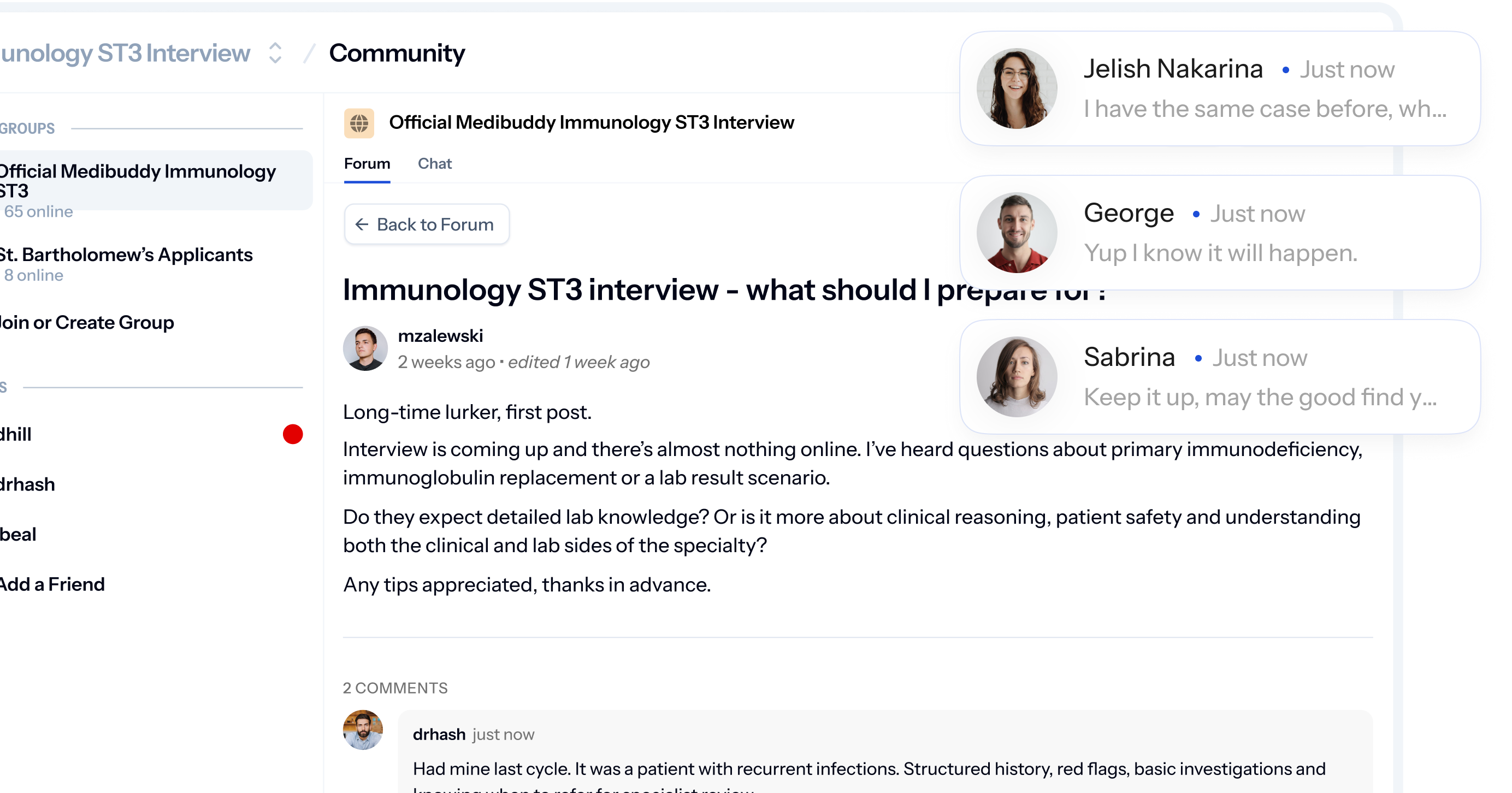
- Study Groups with candidates across the country
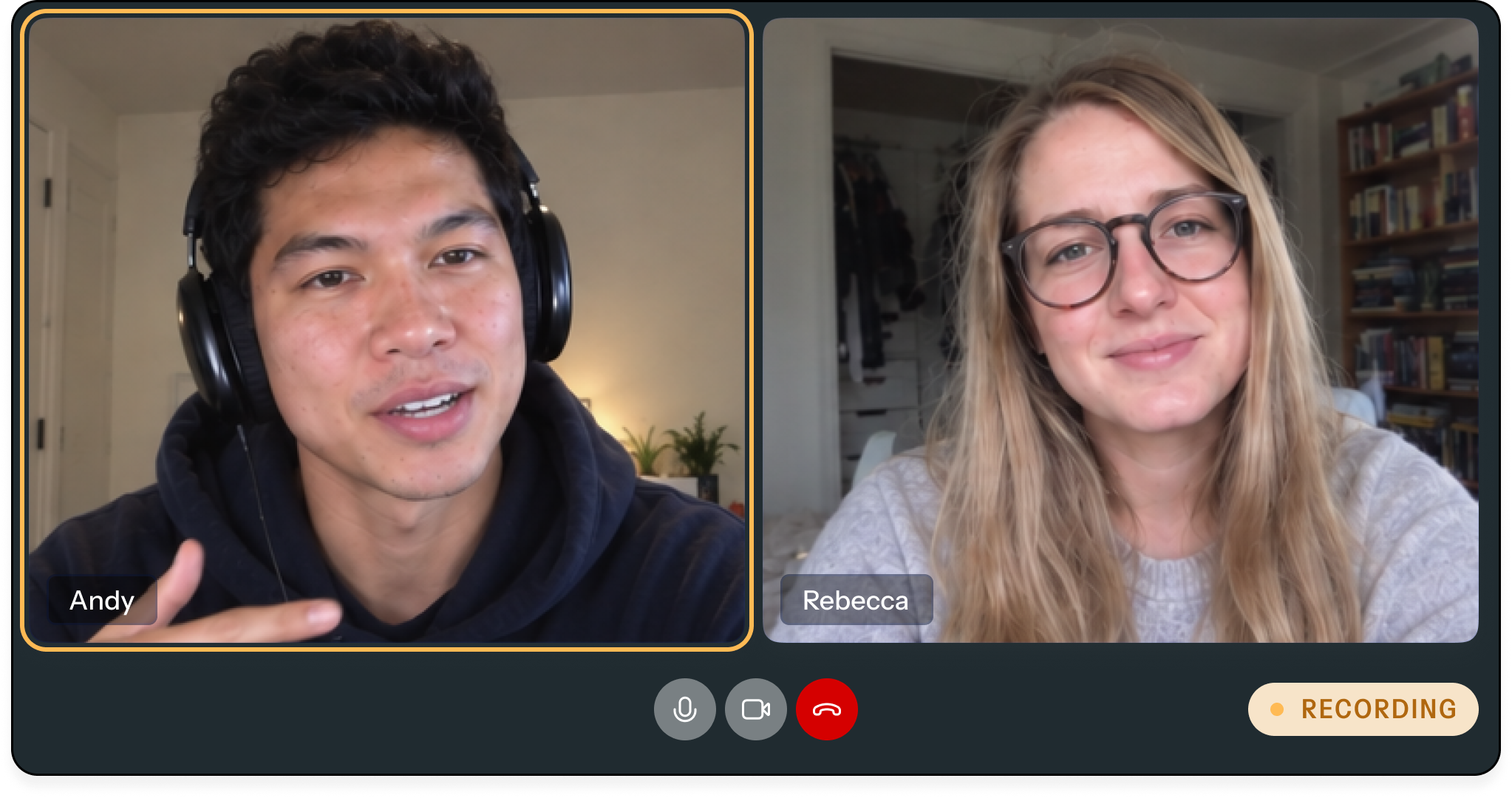
- Unlimited Live Mocks with real people
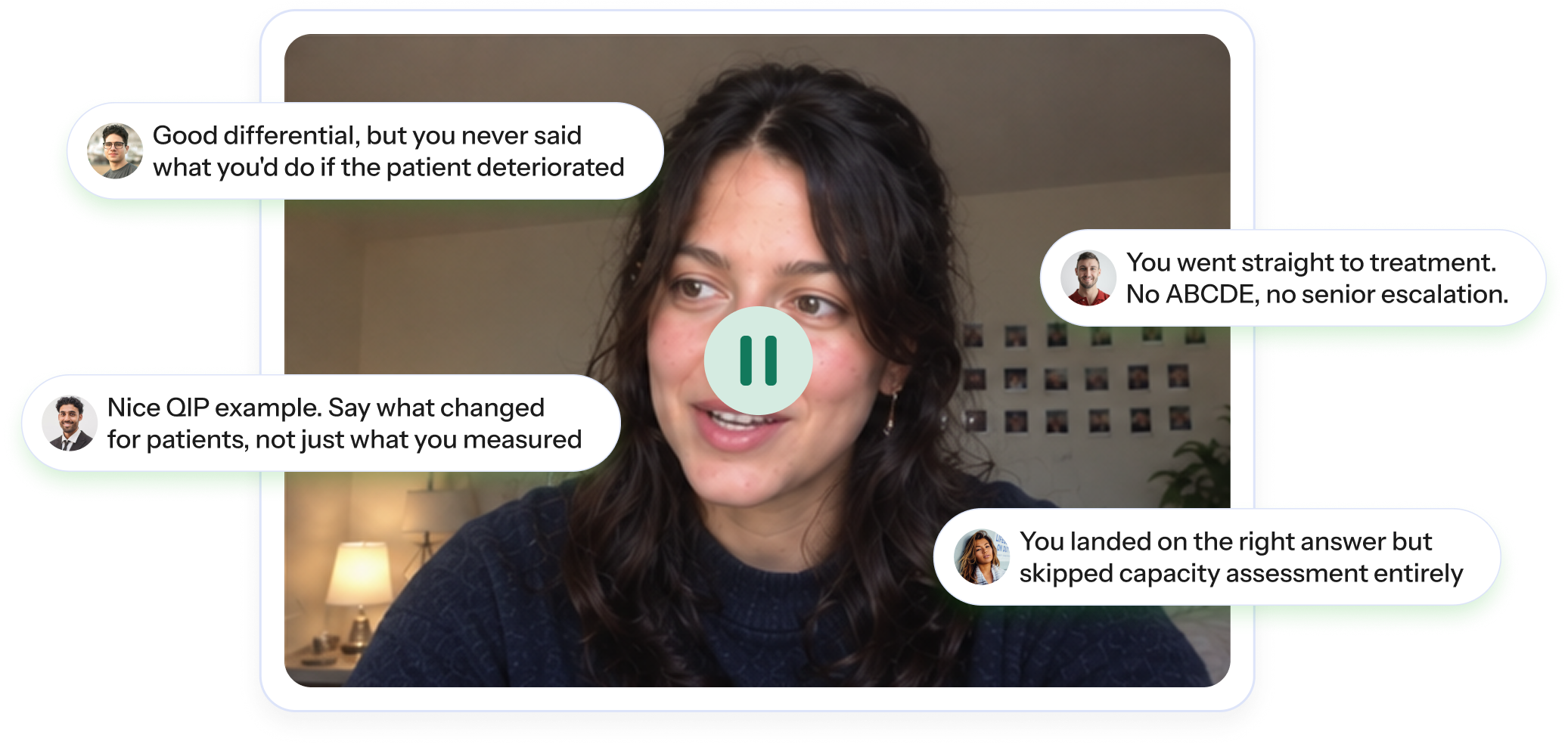
- Peer Feedback on your mocks from a wide range of candidates

10 years' experience preparing doctors for interviews
Always up to date
Network and practise real interview scenarios with other candidates
See every scenario, and how to answer it well

Connect with candidates across the country
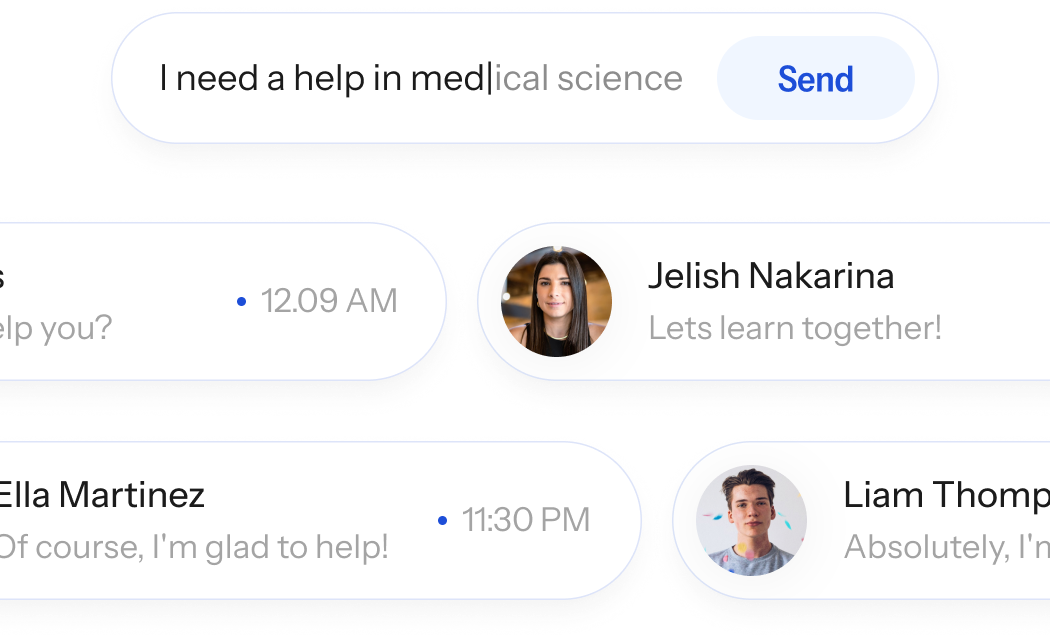
Practise interview technique with different candidates
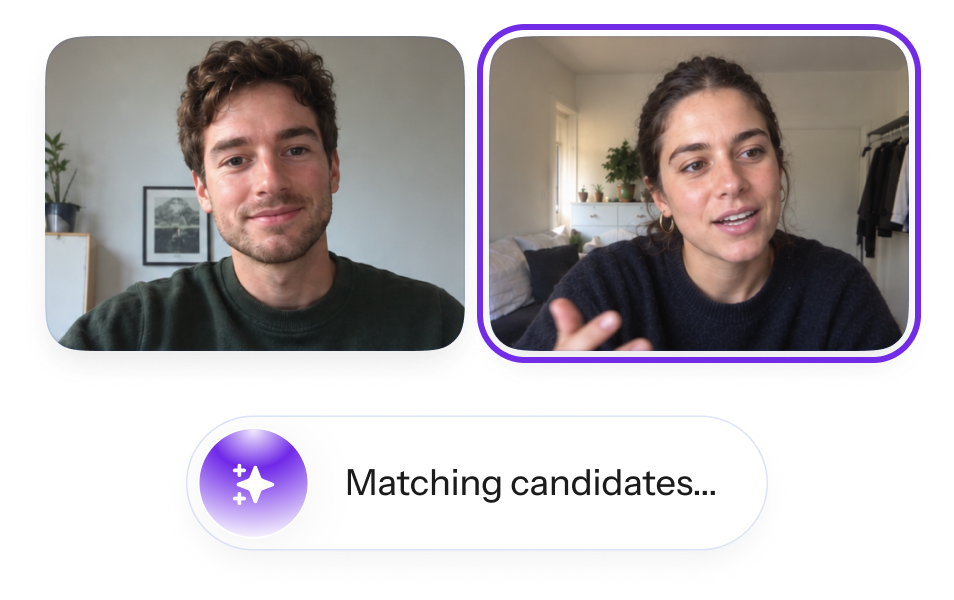
Reviewed by candidates across the platform

The question bank, and other candidates to practise with, all in one platform.
Immunology ST3 Revision Platform • £144.99
Scored well, secured their post
A few of the candidates who prepared with us for the Allergy and Clinical Immunology ST3 interview.
"Rehearsing the three-minute paper presentation out loud, and then defending it, was what made the difference. By the day itself I could talk around the trial without reaching for my cards."Secured first-choice post
"The clinical and ethics scenarios were pitched exactly right. Having a structure ready meant I could work through an unfamiliar immunology case calmly under pressure."Ranked highly
The Medibuddy 2027 Immunology ST3 Question Bank
What's included in the Immunology ST3 Question Bank
Clinical Scenarios
Presentation
Ethics, Professionalism & Governance
Suitability & Commitment
Try an example Immunology ST3 question
Station 2 opens with a three-minute presentation: 'An interesting research paper covering a recent development or research finding relevant to allergy and/or clinical immunology.'
No slides, visual aids or screen sharing are permitted, and small prompt cards are allowed for personal use only. You are stopped at three minutes, and the panel then discusses your presentation and asks further questions.

That's one scenario. There are over 40 more.
Immunology ST3 Revision Platform • £144.99
How we keep our Question Banks up to date
That's why we review and update every Question Bank twice a year, so you know you're revising with scenarios that are likely to come up. We do this in April after the previous year's interviews, and again in the autumn when the new recruitment guidance is published.
The only interview resource where you can practise live with other candidates from across the country
Our Immunology ST3 Question Bank tells you exactly how to answer real interview scenarios. But how you practise with them will determine how many marks you score. Simply reading answers off a screen won't prepare you for the intense scrutiny you'll face in the interview. And in a specialty this small, only practising with the same few colleagues or friends limits the amount of feedback you'll get. Medibuddy gives you unique access to Allergy and Clinical Immunology ST3 candidates across the country, so you can learn from a variety of perspectives and hear a far wider range of feedback than your own circle could ever give you.
What to expect from the Immunology ST3 interview
Allergy and clinical immunology is one of the smallest physician specialties, with very few national training posts, so places are highly sought after and strong applicants are separated by narrow margins at interview.
Clinical Scenario
Ethics, Professionalism & Governance
Presentation
Suitability & Commitment
How the interview is scored
How to prepare for the Immunology ST3 interview
Start with the Question Bank
Talk the hard ones through in Study Groups
Rehearse out loud in Live Mocks
Get reviewed with Peer Feedback before the day
Frequently asked questions
What does the Immunology ST3 interview involve?
I'm applying to allergy, or to both. Is this bank right for me?
How competitive is the Immunology ST3 interview?
Who writes the model answers?
Can I practise with other candidates?
How do the Live Mocks work?
What are Study Groups and how do they help?
Can I get feedback on my interview performance?
How do you keep the Immunology ST3 Question Bank up to date?
How long do I get access for?
Start preparing for the Immunology ST3 interview
The Revision Platform gives you 50 scenarios to practise and refine with other candidates through Study Groups, Live Mocks and Peer Feedback.