General Internal Medicine ST4 Interview Question Bank 202720% Off All Interview & Exam Question Banks and TTT On-demand • Use Code: BLACKFRIDAY26 • Ends Midnight November 29th
The 2027 General Internal Medicine ST4 Interview Revision Platform: Question Bank, Live Practice and Mocks with Other Candidates
The Medibuddy General Internal Medicine ST4 Question Bank includes over 45 scenarios that closely mirror the real interview structure, and each has a model answer that's been written and edited by high-scoring candidates who sat the General Internal Medicine ST4 interview in 2026.
However, knowing a strong answer isn't the same as delivering one under pressure, which is why we provide:
Study Groups with candidates across the country
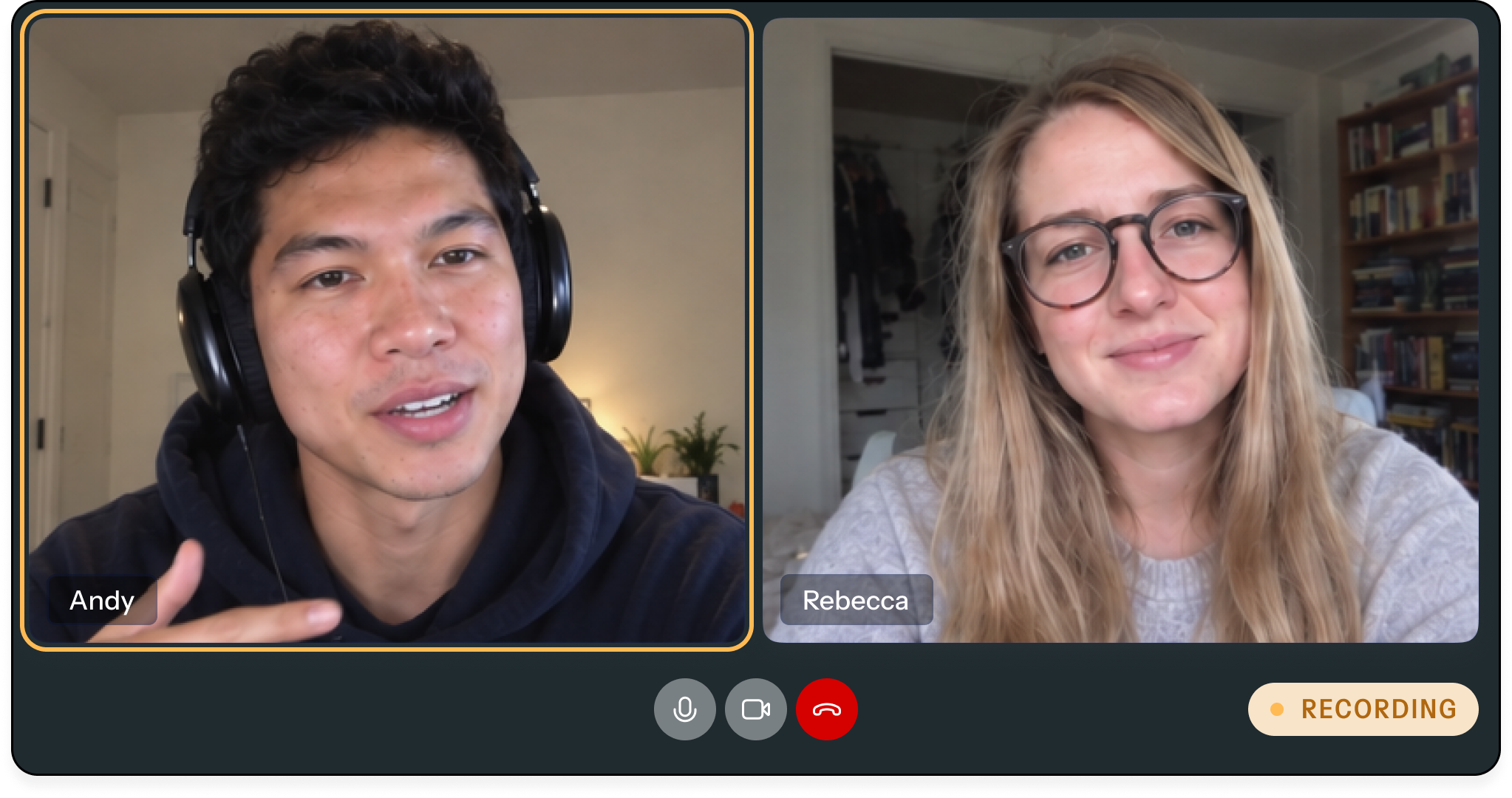
Unlimited Live Mocks with other candidates
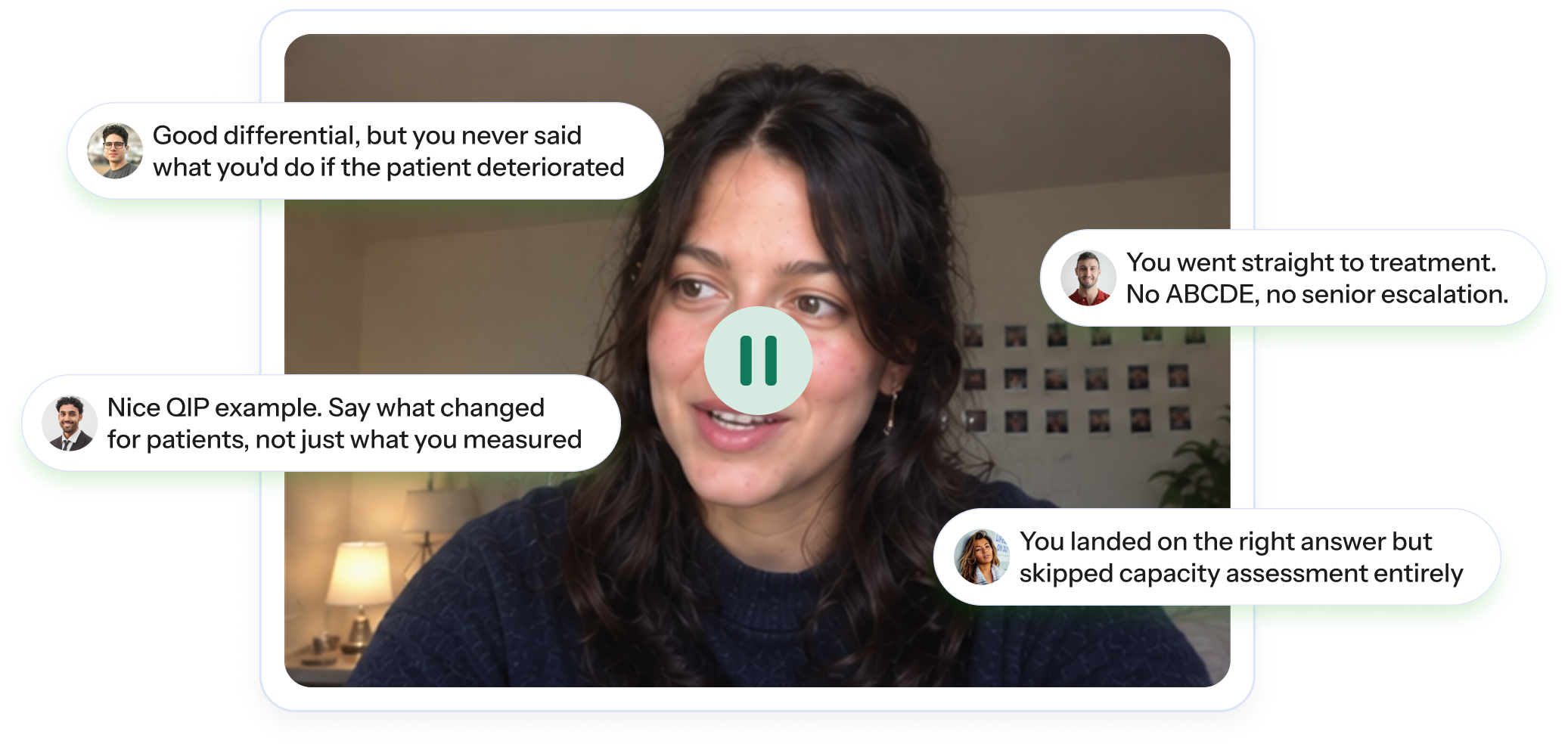
Peer Feedback on your mocks from a wide range of candidates
10 years’ experience preparing doctors for interviews
Users of Medibuddy Revision Platforms have secured some of the most competitive training jobs in recent rounds, and the General Internal Medicine ST4 Question Bank is built in exactly the same way, around the stations you will actually face.
Always up to date
Did you know the interviews change every year? That's why we review and update every Question Bank on the platform twice a year, so you know you're always practising with scenarios based on the latest interview structure.
Network and practise real interview scenarios with other candidates
Question Bank
See every scenario, and how to answer it well
45+ scenarios across both interview stations, which tell you exactly how to respond to each question.
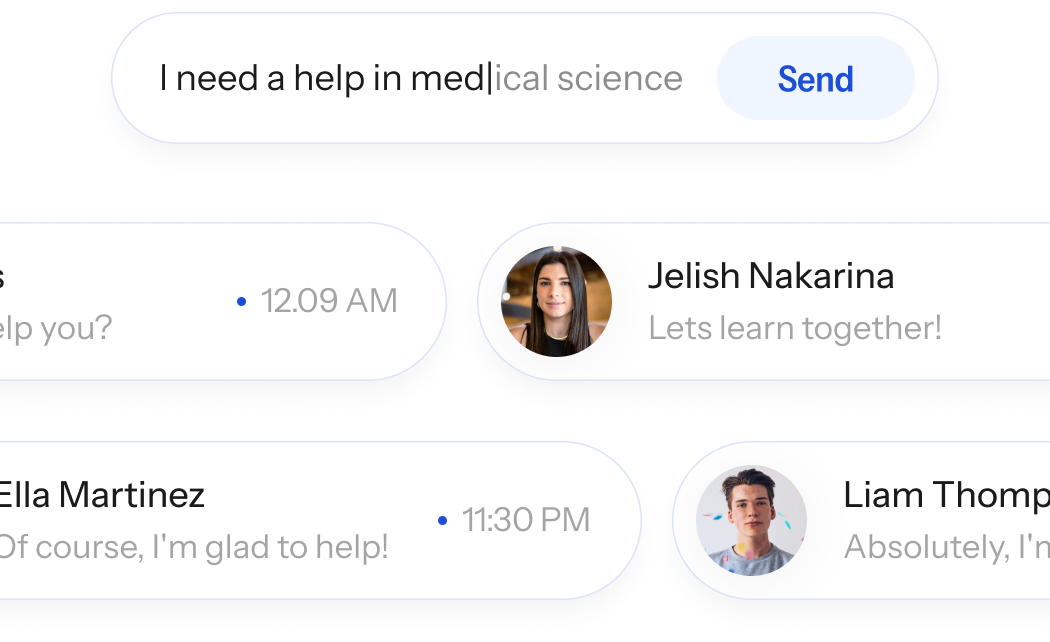
Study Groups
Connect with candidates across the country
Most people only ever practise with one or two friends. Study Groups connect you with registrars across the country applying for the same General Internal Medicine ST4 posts.
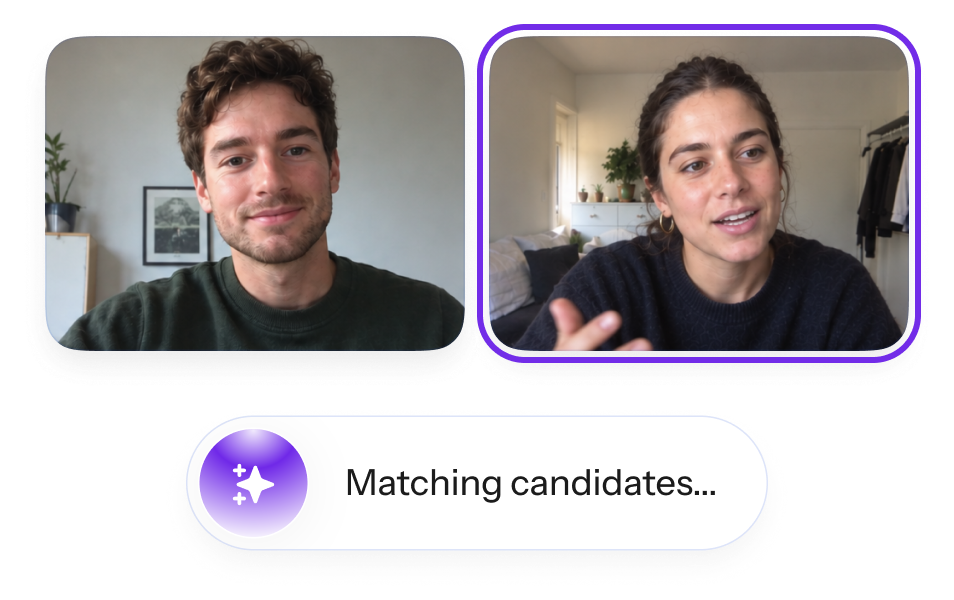
Live MocksBeta
Practise interview technique with different candidates
Arrange or get matched on demand with other candidates and run real scenarios out loud under interview conditions. Those who practise with the widest range of people tend to score the highest.
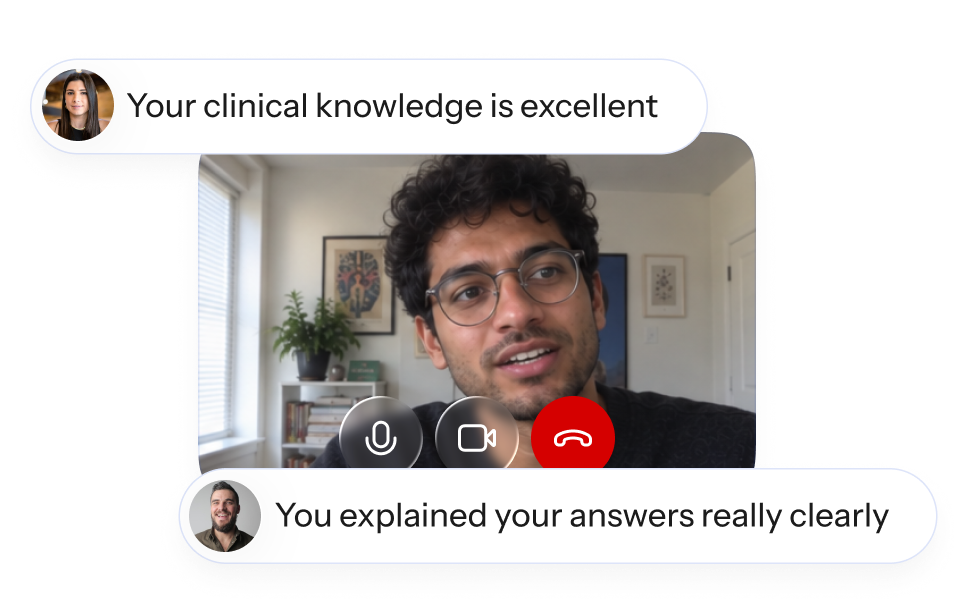
Peer FeedbackBeta
Reviewed by candidates across the platform
Submit your recorded mocks to candidates across the platform and get honest, varied feedback. Reviewing other people's mocks teaches you just as much.
The question bank, and other candidates to practise with, all in one platform.
General Internal Medicine ST4 interview prep has two parts
The Revision Platform gives you the questions, this year's model answers, and other candidates to practise them out loud with. The General Internal Medicine ST4 Knowledge Course teaches the clinical topics behind those answers, so when the panel pushes past your first response in the clinical scenario, you've got somewhere to go. Most candidates take both.
The Medibuddy 2027 General Internal Medicine ST4 Question Bank
Both stations are tightly timed, so you have a limited window to deliver the high-scoring answers you need to do well. That means every point has to land, and knowing how to structure each answer is essential. That's why each of our 45-plus scenarios comes with a model answer, written by candidates who scored highly in the General Internal Medicine ST4 interview, so you know exactly how to approach every question the interviewers put to you.
What's inside
What's included in the General Internal Medicine ST4 Question Bank
There's nothing worse than getting to the interview and being handed a presentation you haven't thought through since your last take. In GIM, the specialty is the acute take itself, so the clinical station can draw on almost anything that comes through the front door. That's why we provide a wide spread of clinical scenarios, alongside every other question in the interview, so you go in ready for the common cases and the less obvious ones.
Clinical Scenarios
20 scenarios on the acute take, from sepsis, AKI and hyperkalaemia, and DKA to upper GI bleeding, delirium and ceilings of treatment. Every one includes a question on communicating with the patient, family or colleagues, because that earns its own mark.
Suitability & Commitment
10 topics on your motivation for single-accredited GIM and the value of generalism, your commitment so far, and your audit, teaching, research and leadership, each with a model answer.
Ethical Scenarios
10 short written dilemmas from the take, including DNACPR and ReSPECT conversations, DVLA disclosure after a blackout, safeguarding, and fair access to critical care when beds are short.
Medical Registrar Suitability
6 topics on running the take, including the one-minute presentation on your experience as the medical registrar, prioritising a busy take, leading the on-call team and handling bed pressures.
Reflecting how the interview is really assessed
Our model answers follow the current four-question format. The clinical scenario and the suitability and commitment question carry the highest weighting, and communication is marked separately in the clinical scenario.
Try it
Try an example General Internal Medicine ST4 question
You are the General Internal Medicine ST4 registrar on call. A ward nurse calls you about a 72-year-old man with type 2 diabetes, hypertension and CKD stage 3b (baseline creatinine 180 micromol/L), admitted yesterday with dehydration after a diarrhoeal illness.
He takes ramipril 10 mg, metformin 1 g twice daily and ibuprofen for chronic back pain. He has not passed urine for six hours, and a point-of-care potassium has just come back at 6.8 mmol/L. His blood pressure is 94/58 mmHg, heart rate 108 bpm and GCS 14/15.
How would you approach this?
Question
What is your immediate response to the call?
Example answer
This is a time-critical emergency: severe hyperkalaemia with haemodynamic compromise and oliguria, so I would attend straight away.
Ask the nurse for an urgent 12-lead ECG and cardiac monitoring, and alert the critical care outreach team.
Assess him with an ABCDE approach, getting IV access and sending a venous gas, formal U and E, FBC, glucose and lactate.
Catheterise him to measure his urine output accurately.
Stop the nephrotoxic and risky drugs on his chart: ramipril, ibuprofen and metformin.
Question
What would you look for on the ECG, and how does it change your management?
Example answer
The ECG tells me how urgently the heart needs protecting.
Early changes are tall, peaked T waves. Later there is PR prolongation, loss of P waves and a broadening QRS, and finally a sine-wave pattern before arrest.
With a potassium of 6.8, I would give IV calcium gluconate straight away to stabilise the myocardium, whatever the ECG shows, and repeat the ECG afterwards.
Calcium does not lower the potassium, so treatment to lower it has to follow immediately.
Question
How would you lower his potassium?
Example answer
I would work through three steps, following the UK Kidney Association hyperkalaemia guideline.
Shift it into cells: IV insulin with glucose, monitoring his blood glucose closely afterwards, with nebulised salbutamol as an addition.
Remove it from the body: a potassium binder to prevent rebound, and treating the AKI itself.
Plan for refractory cases: involve the renal team early, as renal replacement therapy may be needed if it doesn't respond.
Question
Thirty minutes later his potassium is 6.2, pH 7.21, creatinine 480 and he has passed 5 ml of urine in the last hour. How do you manage the AKI?
Example answer
This is stage 3 acute-on-chronic kidney injury with oliguria, acidosis and persistent hyperkalaemia, so I would escalate now.
Inform my consultant and speak to the renal registrar about renal replacement therapy, keeping outreach or ICU involved.
Treat the cause: give cautious fluid boluses of 250 to 500 ml, reassessing after each one, as he is hypovolaemic but at risk of overload.
Arrange a renal ultrasound to exclude obstruction, and repeat his gas and bloods every one to two hours.
Agree clear triggers for calling renal or ICU again and document the escalation plan.
Question
How would you update his family, who are worried he is getting worse?
Example answer
I would find a quiet space and check what they already know before explaining.
Explain in plain language that his kidneys have been strained by the dehydration and some of his tablets, and that his potassium level is dangerous for the heart, which is why we are treating it urgently.
Be honest that he is unwell and may need treatment from the kidney or intensive care teams, without overwhelming them with detail.
Check their understanding, invite questions, and tell them when they will next hear from us.
Question
He recovers over the next four days. What would you put in place before discharge?
Example answer
A safe discharge after AKI depends on medicines, follow-up and safety-netting.
Stop the ibuprofen for good, and restart ramipril and metformin only once his renal function is back near baseline, with a clear plan for the GP.
Arrange a repeat U and E with his GP, and a renal referral if his function doesn't recover.
Give him sick-day rules in writing, so he knows which medicines to pause if he becomes dehydrated again.
Write a detailed discharge summary listing what was stopped, what is on hold and the monitoring needed.
The biggest fear for any candidate is getting to interview day and realising you've revised with a question bank that's out of date. We don't let that happen.
That's why we review and update every Question Bank twice a year, so you know you're revising with scenarios that are likely to come up. We do this in April after the previous year's interviews, and again in the autumn when the new recruitment guidance is published.
For 2027, the General Internal Medicine ST4 Question Bank was built from the latest national recruitment guidance, so every scenario follows the current station order, which differs from most other physician specialties.
Updated for 2027 Interviews
Part 2 • Practise them live
The only interview resource where you can practise live with other candidates from across the country
Our General Internal Medicine ST4 Question Bank tells you exactly how to answer real interview scenarios. But how you practise with them will determine how many marks you score. Reading answers off a screen won't prepare you for being questioned in real time, and practising with the same one or two colleagues limits the feedback you'll get. Medibuddy gives you access to General Internal Medicine ST4 candidates across the country, so you can learn from a range of perspectives and hear far more feedback than your own circle could give you.
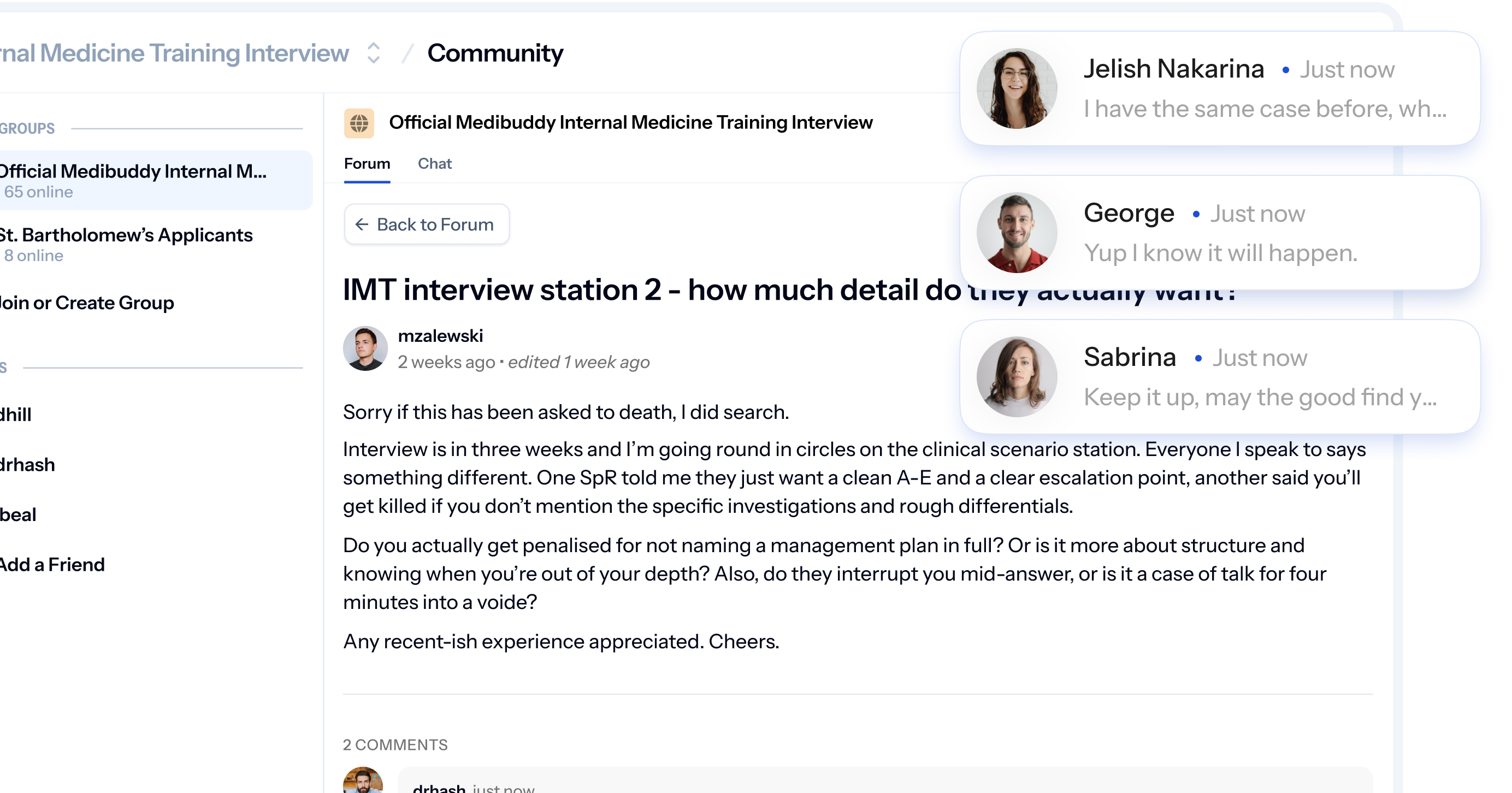
Study Groups
When you prepare on your own, you're relying on your own reading of the interview, which is one of the quickest ways to get caught out on the day. Study Groups connect you with other registrars across the country who are also applying to General Internal Medicine ST4, so you can share what you've learned and test your thinking with people preparing for the same interview. Everyone brings experience from different hospitals and regions, so you won't miss the key pieces of information that could swing the interview in your favour.
Live MocksBeta
Candidates who don't take part in mocks often struggle with the pressure of the interview. Your knowledge might be right, but without confident delivery the interviewers will score you poorly, and in GIM your communication is marked on its own. The best way to improve your delivery is to do as many live mocks as possible, which is why there's no cap on how many you can do. Just join the waiting room and we'll match you with a different General Internal Medicine ST4 candidate each time. Take turns as interviewer and candidate on real Question Bank scenarios, so you see how other candidates perform while you refine your own technique.
Peer FeedbackBeta
Preparing alone means you won't know how you're coming across. And preparing with the same few candidates means you'll miss chances to improve, which is why it's so important to get as many opinions on your performance as you can. With Medibuddy, you can record a mock and submit it for feedback from other candidates on the platform, then refine your answers with each person who reviews it. Reviewing other people's mocks is just as valuable, because it shows you how strong candidates handle the same scenarios.
Pick your plan
Choose the Revision Platform, the Knowledge Course, or both
The General Internal Medicine ST4 Revision Platform gives you the Question Bank, the model answers and all the live practice. It covers the common questions that come up across both stations and shows you how to score highly on them.
However, if you're doing well, the interviewers will often probe further to test the depth of your clinical knowledge. It's usually how they decide whether to award the top mark, and these are the questions you can only answer well with a thorough understanding of the topic.
The clinical scenario rests on that depth. A model answer shows you how to structure your reasoning, but structure only takes you as far as your clinical knowledge goes.
That's what the General Internal Medicine ST4 Knowledge Course is for: 12 interactive modules and around 10 hours on the general internal medicine topics the clinical scenario is built around.
The Knowledge Course is £89.99 on its own. Most candidates add it for £45 as part of the Bundle, which is £189.99 instead of £234.98, so you save £44.99 buying both together.
What the General Internal Medicine ST4 Knowledge Course covers
Instant access on web and the Medibuddy app. The Revision Platform and the Bundle both include Study Groups, Live Mocks and Peer Feedback.
The interview
What to expect from the General Internal Medicine ST4 interview
This interview is for the single-accredited General Internal Medicine programme at ST4, which is separate from the stroke medicine with GIM route. There are two stations of 16 minutes, each with its own pair of interviewers, and the interview takes about 40 to 45 minutes in total. You answer four questions, and your communication is scored as a fifth area in the clinical scenario.
Station 1
Clinical Scenario
You read a short written clinical situation, then the interviewers ask for your initial response and follow up with probes on diagnosis and management. They also mark how you would communicate with the patient, family and colleagues, and how clearly you communicate with them.
Station 1
Suitability & Commitment
Questions on why you want to train in GIM, what you've done to show your commitment and how your experience so far has prepared you for higher training.
Station 2
Ethical Scenario
A short written scenario to read just before the question, followed by around six minutes of discussion. Explain your reasoning, refer to the law and guidance that apply, and show how you would handle it safely.
Station 2
Medical Registrar Suitability
This opens with a one-minute presentation on your experience of managing the acute unselected take as the medical registrar, followed by questions on leading the take and your team.
How the interview is scored
The clinical scenario, communication, suitability and commitment, ethical scenario and medical registrar suitability areas are marked against the General Internal Medicine person specification. Our model answers are structured against those criteria, so you know exactly what a strong, well-organised answer looks like at each station.
Get ready
How to prepare for the General Internal Medicine ST4 interview
Start with the Question Bank
Work through over 45 scenarios across both stations, each with a model answer from a candidate who scored well in the 2026 interview. Read how a strong answer is put together first, then think about how you would say it.
Talk the hard ones through in Study Groups
Study Groups are your biggest opportunity to network and connect with other candidates sitting the same interview as you. Everyone on the platform is in the same boat, so don't be scared to get involved and ask questions. Someone in your group might help you work through a scenario you've been stuck on.
Rehearse out loud in Live Mocks
Live Mocks are where you put everything you've learned into practice, and we know from experience that those who practise with a wide range of candidates usually do best. Practise your one-minute presentation until it fits the time comfortably, then take turns as interviewer and candidate with people from your Study Group or a matched General Internal Medicine ST4 candidate.
Get reviewed with Peer Feedback before the day
Once you've recorded a mock, other members can review it. You'll see how you come across, and you'll have time to refine your delivery before the interview rather than finding out on the day. Reviewing other people's mocks is just as useful, as you see how other candidates handle the same scenarios.
Build the clinical depth behind your answers
When a panel pushes past your first answer, real clinical knowledge is what carries you. The General Internal Medicine ST4 Knowledge Course teaches the general internal medicine topics tested in the clinical scenario in depth, so add it if you want to be ready for the follow-up questions as well as the scenarios themselves.
Questions
Frequently asked questions
What does the General Internal Medicine ST4 interview involve?
Two stations of 16 minutes, about 40 to 45 minutes in total, with a different pair of interviewers in each. You answer a clinical scenario, a suitability and commitment question, an ethical scenario and a medical registrar suitability question that opens with a one-minute presentation. Communication is marked as a separate area in the clinical scenario.
Is this the same as the Stroke Medicine and GIM ST4 interview?
No. This Question Bank is for the single-accredited General Internal Medicine programme. If you're applying for stroke medicine with GIM, our Stroke Medicine and GIM ST4 Question Bank covers that interview.
Who writes the model answers?
High-scoring candidates who sat the General Internal Medicine ST4 interview in 2026, so the answers reflect the current format.
Can I practise with other candidates?
Yes. Every Revision Platform purchase gives you the opportunity to connect with other candidates through Study Groups, Live Mocks and Peer Feedback.
How do the Live Mocks work?
Join the waiting room and we match you with another General Internal Medicine ST4 candidate. You then take turns as interviewer and candidate on real Question Bank scenarios, so you get used to answering out loud before you sit in front of the panel.
What are Study Groups and how do they help?
Study Groups are community forums for doctors across the country preparing for the same General Internal Medicine ST4 interview. You can ask questions, share what you're finding difficult and compare how you'd approach a scenario.
Can I get feedback on my interview performance?
Yes. After you've recorded a mock, you can ask other members to review it, so you can see which parts of your answer need work.
How do you keep the General Internal Medicine ST4 Question Bank up to date?
We review and update it twice a year: in April after that year's interviews, and again in the autumn when the new recruitment guidance is published.
How long do I get access for?
Access runs for 12 months from the purchase date.
What's the difference between the Question Bank and the General Internal Medicine ST4 Knowledge Course?
The Question Bank is over 45 practice scenarios with worked answers and all the live-practice features. The General Internal Medicine ST4 Knowledge Course provides the clinical depth behind your answers, with around 10 hours of content across 12 interactive modules on the topics tested in the clinical scenario. Most candidates use both, and the Bundle saves £44.99.
Start preparing for the General Internal Medicine ST4 interview
The Revision Platform gives you over 45 scenarios to practise and refine with other candidates through Study Groups, Live Mocks and Peer Feedback.


 Close



 Stroke thrombolysis
 The basics
 Recognising it
 Confirming the diagnosis
 Managing it


