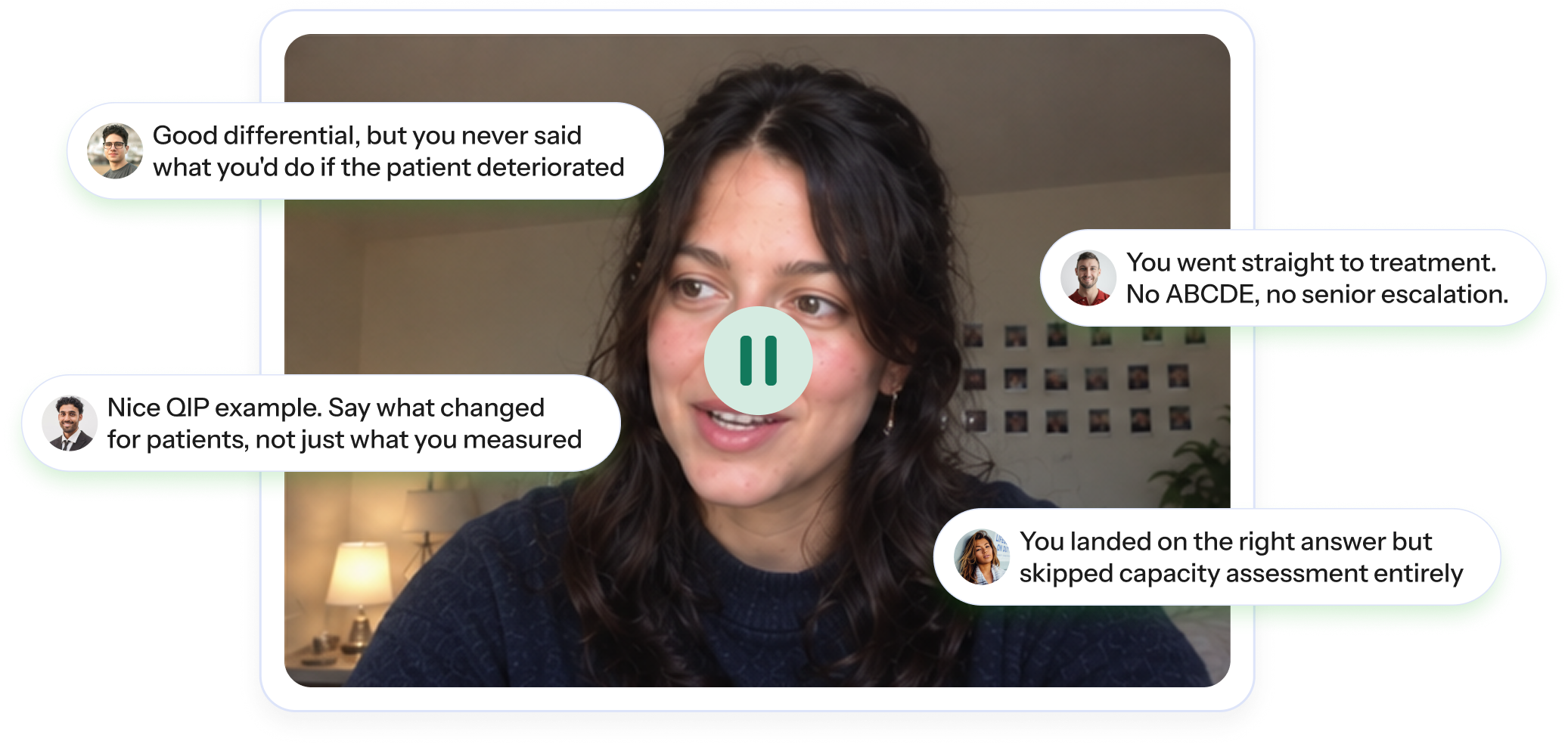
Academic Clinical Fellowship (ACF) Interview Question Bank - Medibuddy
Academic Clinical Fellowship • 2027 Interview

The 2027 Academic Clinical Fellowship Interview Revision Platform: Question Bank, Live Practice and Mocks with Other Candidates

The Medibuddy Academic Clinical Fellowship Question Bank includes over 20 scenarios that closely mirror the real interview, each with a model answer written/edited by high-scoring candidates who secured Academic Clinical Fellowship posts in 2026.

However, knowing a strong answer isn't the same as delivering it well under pressure, which is why we provide:

10 years’ experience preparing doctors for interviews

Users of the Medibuddy Academic Clinical Fellowship Revision Platform have secured some of the most competitive academic training posts in recent rounds. Ask around, there's a good chance the fellows in the year above you used us too.

Always up to date

Did you know the interviews change every year? That's why we review and update every Question Bank on the platform twice a year, so you know you're always practising with scenarios based on the latest interview structure.

Network and practise real interview scenarios with other candidates

Question Bank

See every scenario, and how to answer it well

Over 20 scenarios covering every part of the interview, which tell you exactly how to respond to each question.
Study Groups

Connect with candidates across the country
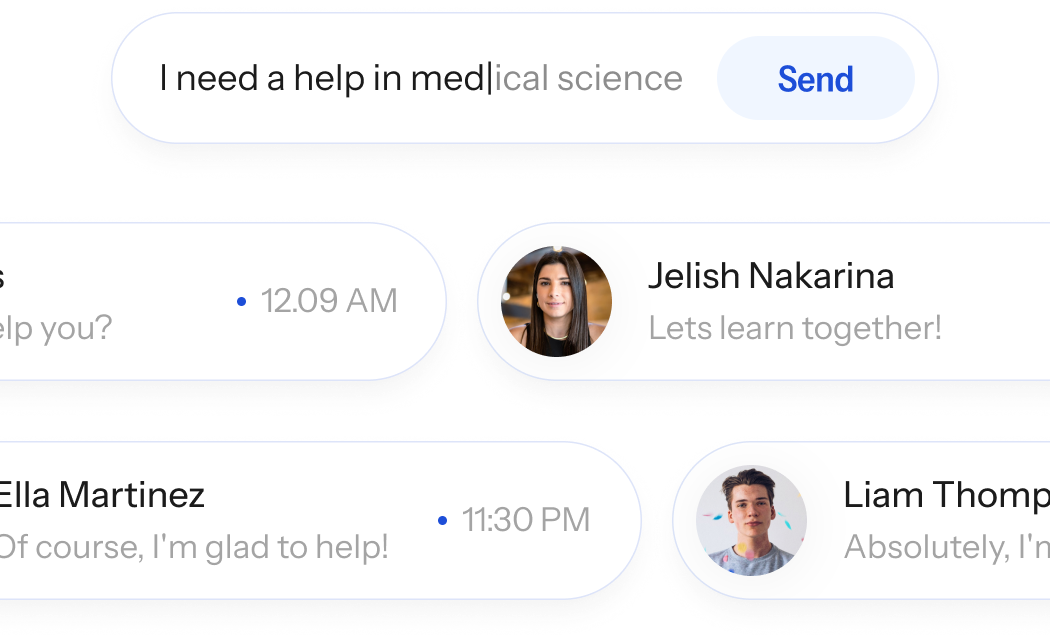
Most people only ever practise with one or two friends. Study Groups connect you with candidates right across the country sitting the same Academic Clinical Fellowship interview.
Live MocksBeta

Practise interview technique with different candidates
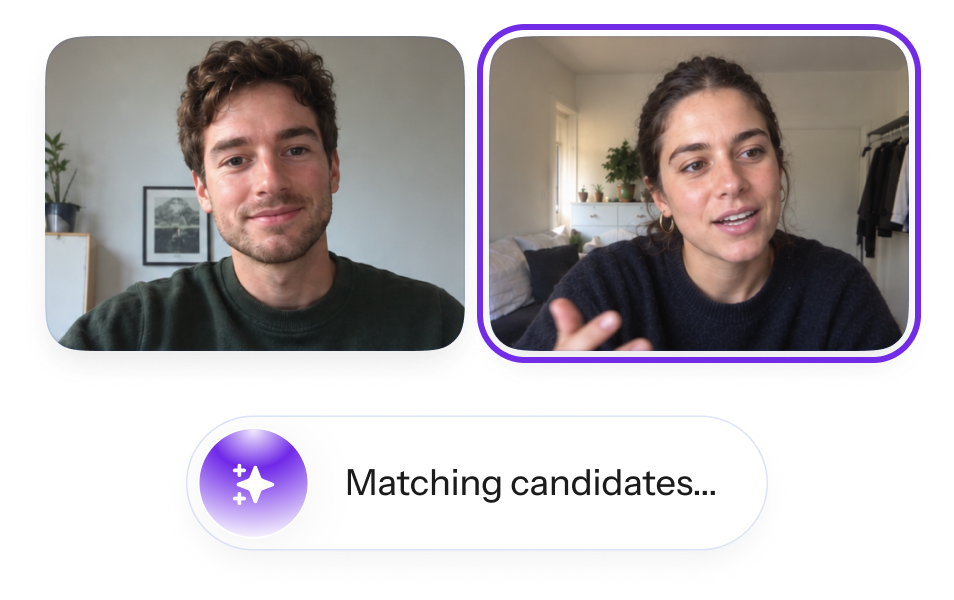
Arrange or get matched on demand with other candidates and run real scenarios out loud under interview conditions. Those who practise with the widest range of people tend to score the highest.
Peer FeedbackBeta

Reviewed by candidates across the platform
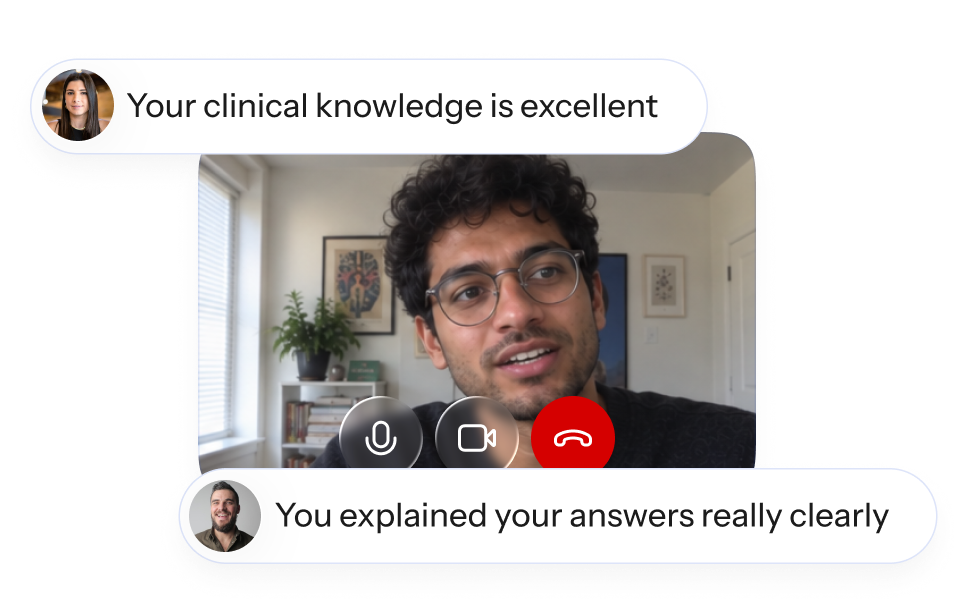
Submit your recorded mocks to candidates across the platform and get honest, varied feedback. Reviewing other people's mocks teaches you just as much.

The question bank, and other candidates to practise with, all in one platform.

Academic Clinical Fellowship Revision Platform • £89.99

Gain access to over 20 scenarios covering every part of the interview, and collaborate with other candidates through Study Groups, Live Mocks and Peer Feedback.
Get instant access
What candidates say

Scored well, secured their post

A few of the candidates who prepared with us for the Academic Clinical Fellowship interview.

Verified candidateInterviewed 2026
"The dataset appraisal walkthroughs were exactly what I needed. Having a clear structure ready meant I could talk through a paper confidently in the time allowed."
Secured an ACF post
Verified candidateInterviewed 2026
"Practising out loud with other candidates was the single most useful thing I did. The model answers showed me how much structure the panel is really looking for."
Ranked highly
Part 1 • See the questions

The Medibuddy 2027 Academic Clinical Fellowship Question Bank

The interview is around 30 minutes, and each question is tightly timed, so you have a limited window to deliver the high-scoring answers you need to do well. That means every point has to land, and knowing how to structure each answer is essential. That's why each of our 20-plus scenarios comes with a model answer, written by candidates who secured Academic Clinical Fellowship posts in 2026, so you know exactly how to approach every question the interviewers throw your way.
What's inside

What's included in the Academic Clinical Fellowship Question Bank

There's nothing worse than getting to the interview and being handed a task you've never practised before. The panel assesses both your academic and clinical skills, from appraising a dataset to discussing your research, so the safest approach is to prepare across all of them. We provide worked examples for every part of the interview, including the common tasks and the more unusual ones that have come up before, so you don't get caught out.

Critical Appraisal

Appraising a dataset or paper provided in advance, interpreting the data and summarising it for a lay audience, each with a worked example showing a clear, systematic structure.

Academic Achievements

Questions on summarising your research contributions and your personal role in projects and publications, with model answers so you can present them clearly.

Research Interests

Discussing how your interests align with the ACF post and the NIHR research themes, with worked answers so you can make the fit obvious.

Practical Research Experience

Questions on your hands-on experience in study design, methodology and analysis, with model answers that show real depth.
Reflecting the NIHR framework
The interview follows the NIHR evaluation framework and assesses both academic and clinical skills, including a dataset or paper provided in advance. Our worked examples are built around exactly this.
Try it

Try an example Academic Clinical Fellowship task

This is an example of the dataset critical appraisal you may be asked to deliver.

You are given data from the SYMBAD trial, a randomised, double-blind, placebo-controlled trial published in The Lancet, evaluating mirtazapine for agitation in people with dementia. You have the study design, baseline characteristics, and efficacy and safety outcomes in front of you.

How would you appraise and present it?

Question
How would you structure your answer?
Example answer
I would deliver this in around 4 to 5 minutes, orienting the panel first.
  • Identify the study design and main aim, and signpost how I will proceed.
  • This is the SYMBAD trial, a randomised, double-blind, placebo-controlled trial evaluating the efficacy and safety of mirtazapine for agitation in dementia.
  • I will summarise the design, interpret the baseline characteristics and outcomes, discuss limitations and confounders, and then outline the implications.
Question
How would you set out the study design?
Example answer
I would structure it as a PICO to show a systematic approach.
  • Population: adults with probable Alzheimer's disease and agitation unresponsive to non-pharmacological measures, across 26 UK centres.
  • Intervention: mirtazapine titrated up to 45mg daily.
  • Comparator: an identical placebo.
  • Outcomes: the primary outcome was change in the CMAI agitation score at 12 weeks, with secondary outcomes including cognition, quality of life, neuropsychiatric symptoms and adverse events including mortality.
Question
How would you interpret the baseline characteristics?
Example answer
I would check for balance between the groups.
  • The two groups appear well matched overall, supporting successful randomisation.
  • There is a sex imbalance, with more women in the mirtazapine group, which is relevant as sex may influence dementia progression and drug response.
  • The authors account for this with adjusted analyses, which strengthens the validity of the results.
Question
How would you interpret the efficacy results?
Example answer
I would interpret the results, not just state them, focusing on effect size and confidence intervals.
  • For the primary outcome there was no significant difference in CMAI scores, with an adjusted mean difference of about -1.7 and a p-value of 0.53.
  • The confidence interval crosses zero, indicating no evidence of benefit.
  • The secondary outcomes show only small, marginal and inconsistent differences, and several rely on carer-reported proxy measures, which introduces observer bias.
Overall there is no convincing signal of clinical benefit.
Question
How would you address safety, confounders and limitations?
Example answer
Safety is essential to comment on, especially in an RCT in a frail population.
  • Adverse event rates were similar, but mortality was higher in the mirtazapine group (7 deaths versus 1), and although the p-value of 0.065 does not reach conventional significance, it is an important finding.
  • Both groups improved over time, which could reflect a placebo effect, regression to the mean, ongoing non-pharmacological care or a Hawthorne effect.
  • Limitations include the modest sample size, heterogeneity in dementia severity and subtype, proxy-reported outcomes, and a follow-up period that may miss longer-term harms.
Question
How would you conclude, and what are the implications?
Example answer
I would draw it together and finish clearly.
  • This high-quality RCT provides no evidence to support mirtazapine for agitation in dementia, and the possible increase in mortality raises safety concerns.
  • The findings reinforce that non-pharmacological interventions remain first-line, and that caution is needed prescribing psychotropics in dementia.
  • Future work could focus on longer-term safety and on optimising non-pharmacological approaches, and I would briefly link this to my own research interest to show transferability.
In summary, this well-conducted trial shows mirtazapine is no more effective than placebo for agitation in dementia and may be associated with harm, so the results do not support its routine use.

That's one example. There are over 20 more.

Academic Clinical Fellowship Revision Platform • £89.99

Includes every scenario in the Question Bank, and access to Study Groups, Live Mocks with other candidates and Peer Feedback.
Get instant access
Actively maintained

How we keep our Question Banks up to date

The Academic Clinical Fellowship interview changes from year to year, and the biggest fear for any candidate is getting to interview day and realising you've revised with a question bank that's totally outdated.

That's why we review and update every Question Bank twice a year, so you know you're revising with scenarios that are likely to come up. We do this in April after the previous year's interviews, and again in the autumn when the new recruitment guidance is published.

Updated for 2027 interviews

3 new interview scenarios added.

Updated for 2027 Interviews
Part 2 • Practise them live

The only interview resource where you can practise live with other candidates from across the country

Our Academic Clinical Fellowship Question Bank tells you exactly how to answer real interview scenarios. But how you practise with them will determine how many marks you score. Simply reading answers off a screen won't prepare you for the intense scrutiny you'll face in the interview. And only practising with the same few colleagues or friends limits the amount of feedback you'll get. Medibuddy gives you unique access to Academic Clinical Fellowship candidates across the country, so you can learn from a variety of perspectives and hear a far wider range of feedback than your own circle could ever give you.
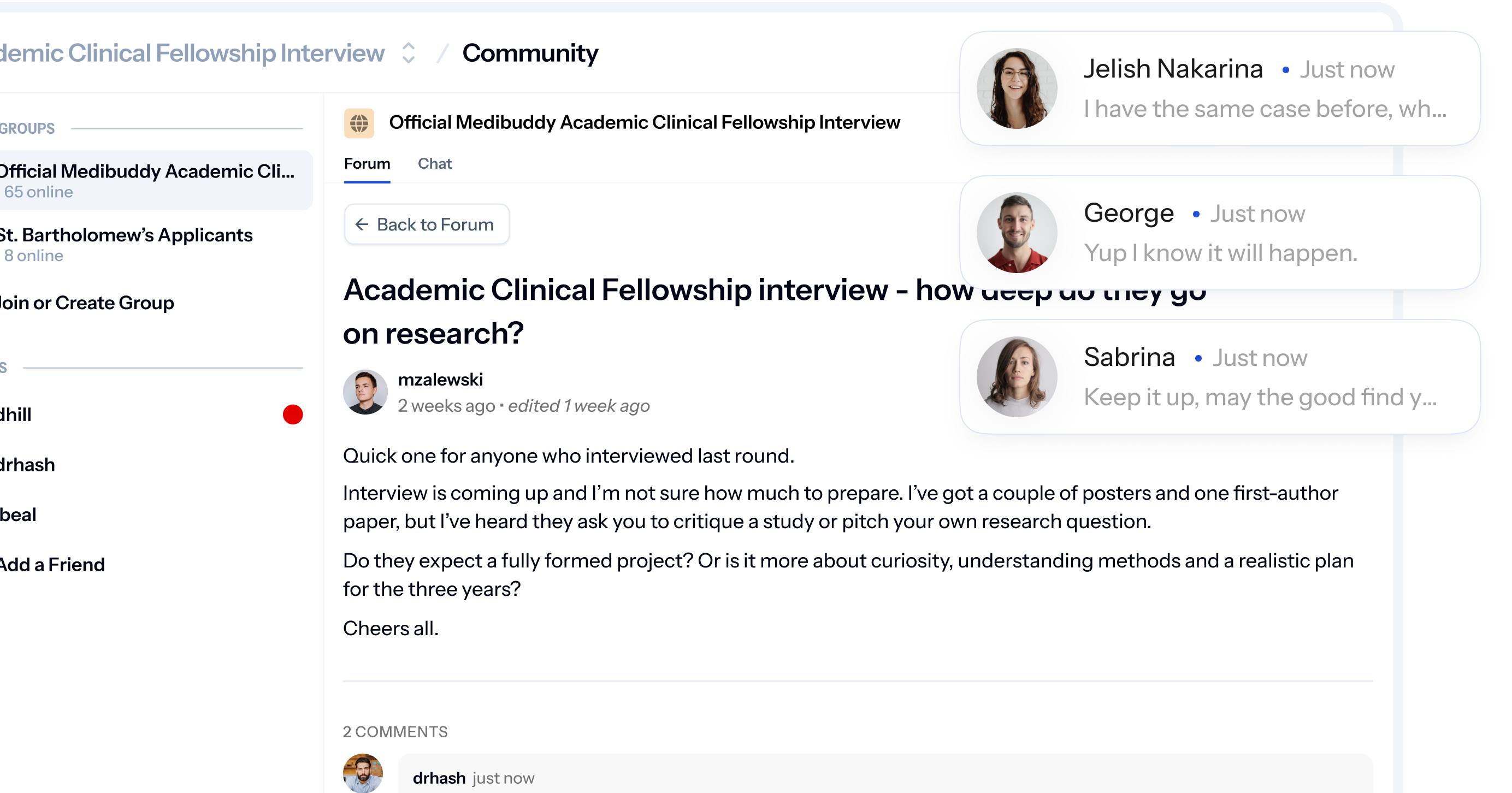
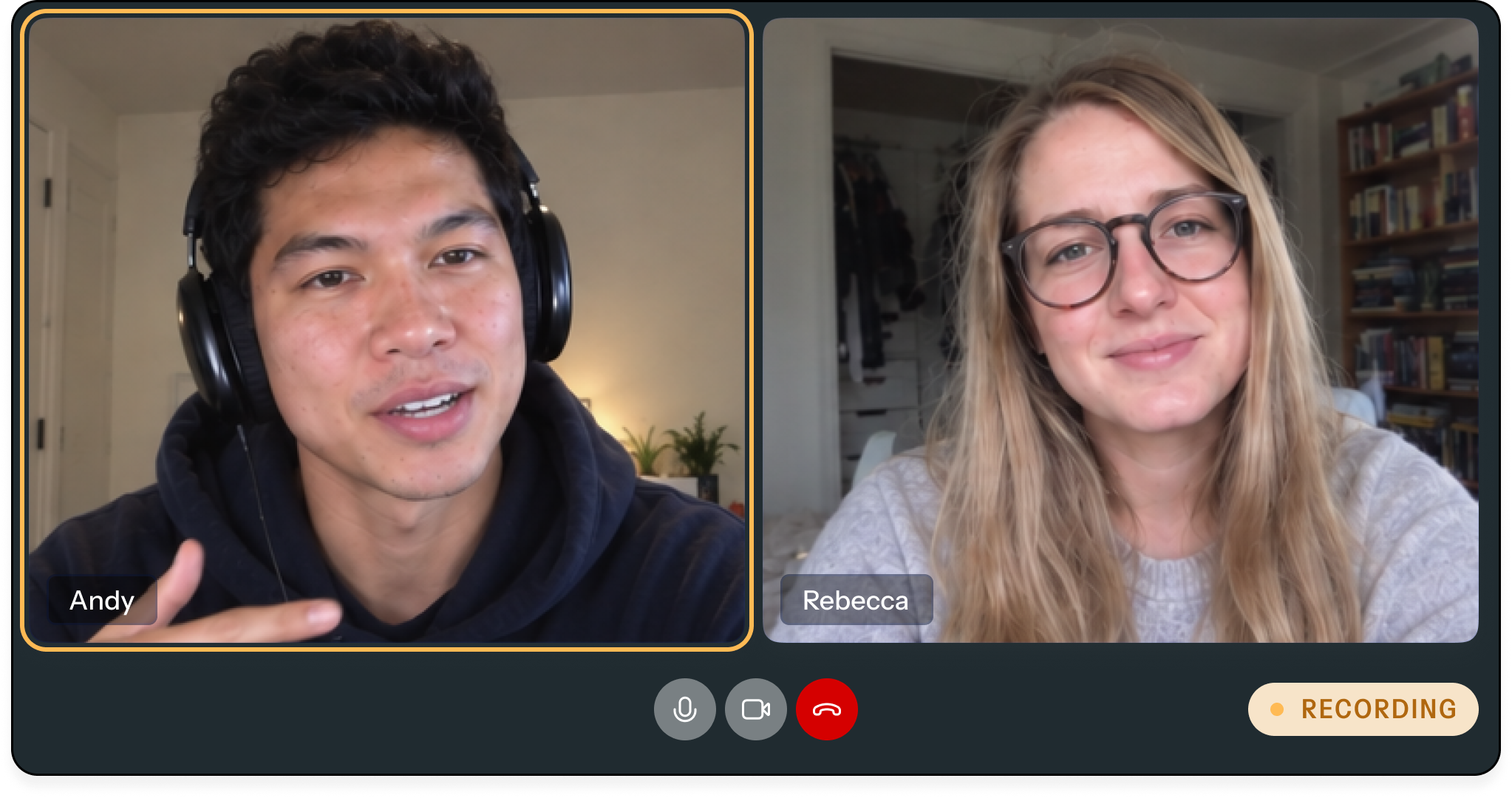
Study Groups
When you prepare in isolation, you're relying on your own interpretation of the interview process, which is one of the quickest ways to get found out on the day. Study Groups connect you with other doctors across the country who are also applying for Academic Clinical Fellowships, so you can engage and network with people preparing for the same interview as you. Everyone brings different experience from different hospitals and deaneries, meaning you won't ever miss out on the key bits of information that could swing the interview in your favour.
Live MocksBeta
Candidates who don't take part in mocks often struggle to adapt to the pressure of the interview. Your knowledge might be correct, but without convincing delivery the interviewers will score you poorly. The best way to improve your delivery is to take part in as many live mocks as possible, which is why we haven't put a cap on how many you can do. We also know how difficult it can be to organise mocks with other people, so all you have to do is join the waiting room and we'll match you with a different Academic Clinical Fellowship candidate each time. Take turns as both the interviewer and candidate on real Question Bank scenarios, so you can see exactly how other candidates perform in real time, while refining your own interview technique.
Peer FeedbackBeta
Preparing alone means you won't know how you're coming across during the interview. And preparing with the same few candidates means you'll miss opportunities to improve, which is why it's so important to get as many opinions as possible on your performance. With Medibuddy, you can record a mock and submit it for feedback from other candidates on the platform, so you receive a wider range of feedback and refine your answers with each person you practise with. Reviewing other people's mocks is just as valuable, as it shows you how strong candidates handle the same scenarios, which is one of the fastest ways to improve.
The interview

What to expect from the Academic Clinical Fellowship interview

Academic Clinical Fellowships are highly sought after, and strong applicants are often separated by narrow margins at interview.

Assessed

Critical Appraisal

Explaining a dataset or paper and summarising it for a lay audience, showing you can interpret data clearly and systematically.
Assessed

Academic Achievements

Summarising your research contributions and your personal role in projects and publications.
Assessed

Research Interests

Discussing how your interests align with the ACF post and the NIHR research themes.
Assessed

Practical Research Experience

Outlining your hands-on experience in study design, methodology and analysis, sometimes alongside a brief clinical scenario in your specialty.

How the interview is scored

The interview follows the NIHR evaluation framework, assessing both academic and clinical skills. Our model answers are structured against what panels reward, so you know exactly what a strong, well-organised answer looks like.
Get ready

How to prepare for the Academic Clinical Fellowship interview

Start with the Question Bank

Work through over 20 scenarios covering every part of the interview, each with a worked answer from a candidate who secured an ACF post in 2026. Start by reading how a strong answer is formed, then think about how you'd deliver it.

Talk the hard ones through in Study Groups

Study Groups are your biggest opportunity to network and connect with other candidates sitting the same interview as you. Everyone on the platform is in the same boat, so don't be scared to get involved and ask questions. Someone in your study group might just help you work through a task you've been struggling with.

Rehearse out loud in Live Mocks

Live mocks are where you begin to put everything you've learned into practice, and we know from experience that those who practise with a wide range of candidates usually do the best. Organise mocks with people from one of your study groups, or get matched with a random Academic Clinical Fellowship candidate, then take turns as interviewer and candidate using real scenarios until answering out loud under pressure feels normal.

Get reviewed with Peer Feedback before the day

Once you've recorded a mock, you can have other community members review it. This lets you see how you come across to other people, and gives you time to refine your delivery as you revise, rather than being caught out on the day. Reviewing other people's mocks is just as crucial, as you see how other candidates navigate the same tasks.
Questions

Frequently asked questions

What does the Academic Clinical Fellowship interview involve?
An interview of around 30 minutes, usually online and following the NIHR evaluation framework, assessing both academic and clinical skills. It typically includes appraising a dataset or paper provided in advance, discussing your academic achievements and research interests, and your practical research experience, sometimes with a brief clinical scenario.
How competitive is the Academic Clinical Fellowship interview?
Academic Clinical Fellowships are highly sought after, and strong candidates are frequently separated by small margins at interview, which is why a structured, well-rehearsed approach matters.
Who writes the model answers?
High-scoring candidates who secured Academic Clinical Fellowship posts in 2026, so the answers reflect what came up and what scored this year.
Can I practise with other candidates?
Yes. Every Revision Platform purchase gives you the opportunity to connect with other candidates through Study Groups, Live Mocks and Peer Feedback.
How do the Live Mocks work?
All you have to do is join the waiting room, and we match you with another Academic Clinical Fellowship candidate. You then take turns as interviewer and candidate on real Question Bank scenarios, so you gain experience answering out loud to a real person before you ever sit in front of the panel.
What are Study Groups and how do they help?
Study Groups are community forums for doctors across the country preparing for the same Academic Clinical Fellowship interview. You can ask questions, share what you're struggling with, and compare how you'd approach a task.
Can I get feedback on my interview performance?
Yes. After you've recorded a mock, you can ask other members to review it, so you can see which part of your answer needs fine-tuning.
How do you keep the Academic Clinical Fellowship Question Bank up to date?
We review and update it twice a year: in April after that year's interviews, and again in the autumn when the new recruitment guidance is published, so you always practise with the current format.
How long do I get access for?
Access runs for 12 months from the purchase date.

Start preparing for the Academic Clinical Fellowship interview

The Revision Platform gives you over 20 scenarios to practise and refine with other candidates through Study Groups, Live Mocks and Peer Feedback.

Academic Clinical Fellowship Revision Platform • £89.99

Buy Now