Close
Close
Build the Clinical Depth to Perform Confidently in the Anaesthetics CT1/ACCS Interview (2026)
£89.99
Expires: 19 October, 2027

Knowledge course includes:
- 7 comprehensive video lectures
- Differentiate yourself as a top candidate
- Be prepared for all follow-up questions
£147.99
£179.98 total if both bought separately

Expires: 19 October, 2027
Buy our Anaesthetics CT1/ACCS Question Bank in addition to our Clinical Knowledge Course to:
- Over 30 common interview scenarios
- Clinical Judgement Station scenarios
- General Interview Station scenarios
- Comprehensive answer explanations
- Written by high-scoring candidates
Anaesthetics CT1/ACCS interviews go beyond factual knowledge. The Judgement Station presents a clinical scenario and assesses how clearly you reason through it, reflect on your approach, and make sound decisions under pressure. The General Interview Station also covers Commitment to Specialty and wider knowledge of anaesthesia.
Most candidates use a question bank to work through scenarios and build confidence with the format. This is effective for refining structure and familiarity. But strong Judgement Station performance depends on more than technique: when the assessor pushes deeper, what carries you is genuine understanding of the clinical picture.
The Knowledge Course is designed to provide that foundation, so you can respond clearly and confidently across the full range of Anaesthetics CT1/ACCS interview scenarios.

Why a Question Bank Alone May Not Be Enough
Our Anaesthetics CT1/ACCS Question Bank is designed to help you:
- Practise common acute presentations across Clinical Judgement and General Interview scenarios
- Structure and rehearse answers to expected question types
- Build familiarity with the Anaesthetics CT1/ACCS interview format
This builds strong preparation for what to say first.
However, interview performance often requires more. You may need to:
- Explain the underlying clinical basis for acute presentations and their management
- Discuss assessment priorities and management decisions under pressure
- Handle probing follow-up questions on conditions that go beyond the most predictable presentations
These requirements demand applied clinical understanding, not just rehearsed content.
The Question Bank and Knowledge Course serve distinct roles in how you prepare for interview.


Build the Clinical Foundation for Strong Interview Performance
The Knowledge Course complements your question practice by building the clinical depth behind the core acute presentations tested at Anaesthetics CT1/ACCS level.
Used together, the two resources help you:
- Develop answers grounded in sound clinical reasoning
- Respond with greater confidence to follow-up questions
- Cover a broader range of acute presentations tested in the interview
- Apply knowledge across the Clinical Judgement and General Interview stations
This is what gives answers the depth to hold up under sustained questioning.
Dr. Lasith Ranasinghe covers the definition, clinical features, assessment, and management of delirium in acute settings.
What You'll Learn in the Anaesthetics CT1/ACCS Knowledge Course
This course includes 7 focused modules and over 3 hours of in-depth video lectures, covering the acute presentations most commonly tested across Anaesthetics CT1/ACCS interviews.
Each module focuses on:
- Core clinical understanding
- Presentation and recognition
- Investigation and management principles
- Safety considerations and complications
Abdominal Pain
One of the most frequent acute presentations and one of the most clinically demanding to approach systematically. This module walks through assessment and management in emergency settings, building the structured reasoning you'll need to demonstrate clearly in interview.
Chest Pain
Life-threatening chest pain presentations must be identified quickly and managed decisively. This module builds a systematic diagnostic approach with clear management steps, focused on the conditions most likely to feature in CT1 and ACCS interview scenarios.
Delirium
A common and clinically important presentation in acute settings. This module covers its definition, clinical features, assessment, and management, giving you the grounding to handle it confidently in interview scenarios.
Dizziness
Differentiating the causes of dizziness requires careful history-taking, a structured examination approach, and clear clinical reasoning. This module builds a systematic framework for assessing and managing the dizzy patient across the key differentials most relevant to acute and anaesthetic practice.
Shortness of Breath
Managing patients presenting with shortness of breath is a core skill in acute care. This module provides a structured approach to identifying and prioritising the most likely causes, with a focus on the clinical decision-making examiners are looking for in the CT1 interview.
Trauma
Among the highest-stakes scenarios in acute medicine, where a clear systematic approach is essential. This module covers the primary, secondary, and tertiary survey in depth, preparing you to demonstrate structured, confident decision-making in both interview and clinical settings.
Vomiting
Managing vomiting effectively requires identifying the underlying cause while addressing its immediate physiological consequences. This module provides a structured approach to clinical assessment and management, with emphasis on the reasoning steps most likely to be tested in interview.
Learn From Doctors With Recent Experience of the Process
The course is taught by practising anaesthetic and acute-care doctors who have recent, direct experience of the Anaesthetics CT1 and ACCS selection process.
Teaching draws on practical experience of:
- The range of acute presentations commonly tested across the Clinical Judgement and General Interview stations
- The clinical depth expected at CT1/ACCS level when reasoning through a scenario
- How to approach acute presentations decisively in an interview setting
- The follow-up questions that differentiate candidates in the most competitive areas of the interview
The focus is on helping you translate clinical understanding into clear, well-structured answers.
Why This Course Matters More Than Ever
In the 2025 recruitment round, 6,770 doctors applied for 539 Anaesthetics CT1/ACCS posts — a competition ratio of 12.56:1. With over 12 candidates for every post and the interview the only opportunity to differentiate yourself, preparation has to go beyond practising your answers.
In this context, success depends not just on preparation, but on:
- Clarity of thought
- Structured delivery
- Safe clinical reasoning under pressure
£89.99
Expires: 19 October, 2027
Knowledge course includes:
- 7 comprehensive video lectures
- Differentiate yourself as a top candidate
- Be prepared for all follow-up questions
£147.99
£179.98 total if both bought separately
Expires: 19 October, 2027
Buy our Anaesthetics CT1/ACCS Question Bank in addition to our Clinical Knowledge Course to:
- Over 30 common interview scenarios
- Clinical Judgement Station scenarios
- General Interview Station scenarios
- Comprehensive answer explanations
- Written by high-scoring candidates
Frequently Asked Questions
Who Is This Course For?
This course is designed for:
- Foundation doctors and core trainees applying to Anaesthetics CT1/ACCS for the first time
- Candidates who want clinical depth alongside scenario practice
- Doctors without extensive acute or anaesthetic experience
- Anyone who wants to understand the clinical content, not just recall it
It is designed to work alongside the Anaesthetics CT1/ACCS Question Bank.
What Is an Anaesthetics CT1/ACCS Knowledge Course?
The Knowledge Course is a series of video lectures covering the core acute presentations across the CT1/ACCS interview, each taught by a practising anaesthetic or acute-care doctor.
Rather than focusing on rehearsing model answers, it focuses on:
- Understanding the underlying clinical basis of common acute presentations
- Applying that knowledge to structured interview-style scenarios
- Developing logical reasoning for follow-up discussions across the full range of question types
Who Delivers the Knowledge Course?
The course is delivered by anaesthetic and acute-care trainees with direct experience of the CT1 and ACCS selection process, providing insight into how clinical knowledge is assessed and what interviewers are looking for.
Do I Need the Question Bank as Well?
The Knowledge Course and Question Bank are designed to work together. The Anaesthetics CT1/ACCS Question Bank builds your scenario delivery and technique, while the Knowledge Course gives you the clinical depth behind those answers. Purchased as a bundle, you save £30 compared to buying both separately.
Prepare with Structure, Not Guesswork
Question practice builds your ability to structure answers. Clinical understanding determines how well those answers hold up when questions go deeper. The Knowledge Course is designed to provide that depth, helping you respond with confidence across the full range of Anaesthetics CT1/ACCS interview scenarios. Used alongside the Question Bank, it provides both the structured practice and clinical foundation needed for stronger performance on the day.
£89.99
Expires: 19 October, 2027
Knowledge course includes:
- 7 comprehensive video lectures
- Differentiate yourself as a top candidate
- Be prepared for all follow-up questions
£147.99
£179.98 total if both bought separately
Expires: 19 October, 2027
Buy our Anaesthetics CT1/ACCS Question Bank in addition to our Clinical Knowledge Course to:
- Over 30 common interview scenarios
- Clinical Judgement Station scenarios
- General Interview Station scenarios
- Comprehensive answer explanations
- Written by high-scoring candidates
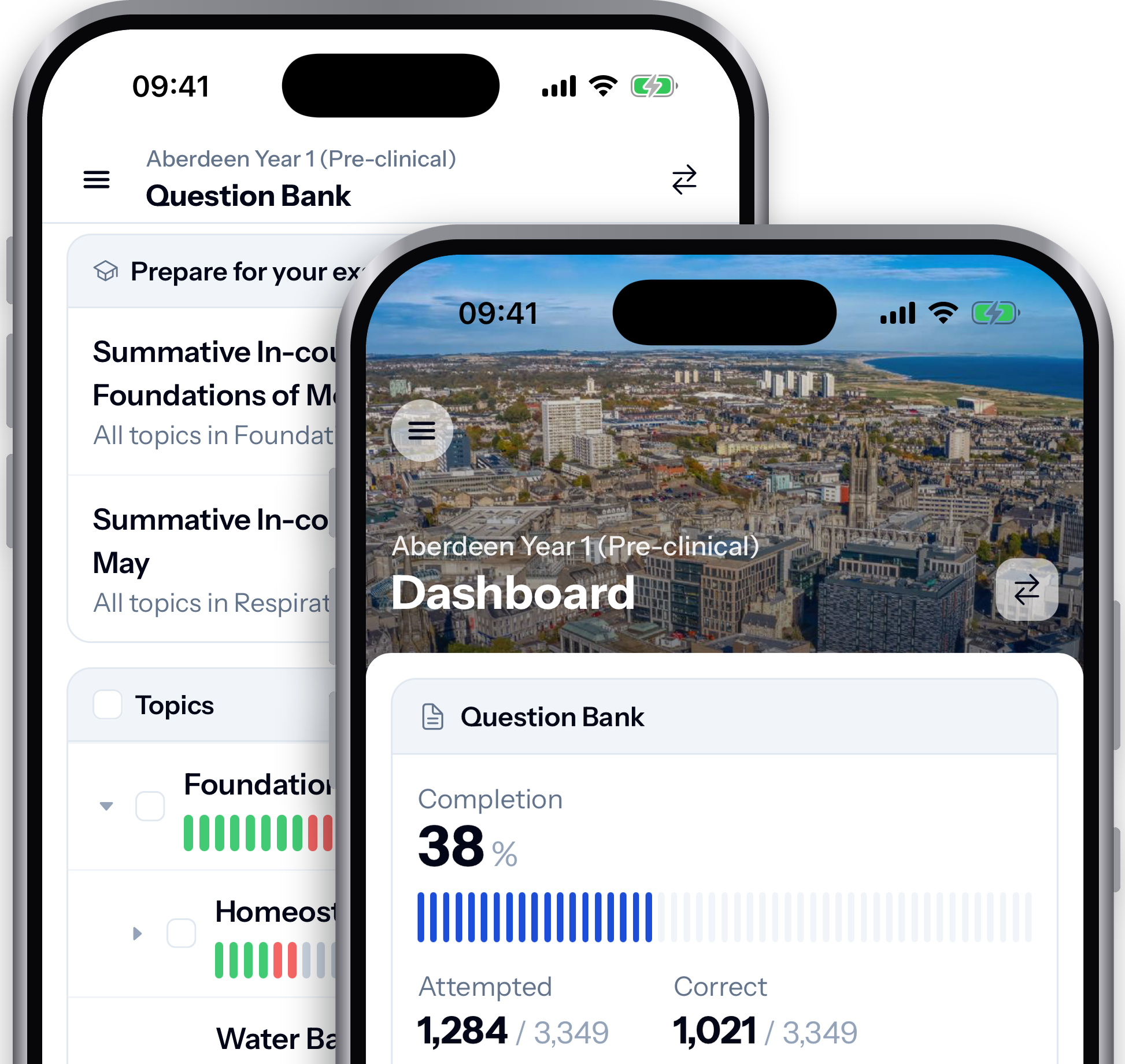
Take your subscriptions with you
Our mobile app allows you to access your interview and exam question banks wherever you are.