Close
Close

 21st September 2026
Complete Guide to Cardiothoracic Surgery ST1 Application and Recruitment (2026)
Written by Medibuddy. Last updated: September 2026.
If you’re planning your Cardiothoracic Surgery ST1 Application for 2027, this guide will provide you with everything you need to know. We’ll walk you through the application process and timeline, eligibility, self‑assessment and portfolio scoring, and how offers and upgrades work.
Key Facts at a Glance
- Competition ratio (2025): 73.70:1 (737 applications, 10 posts)
- Training length: 7 years to CCT, as set out in the 2021 curriculum
- Entry requirement: Full GMC registration and Foundation competence by start date
- Recruitment platform: Oriel; national lead: NHS England Wessex
- Applications window (2026): 23 Oct–20 Nov 2025 via Oriel
- Entry point: ST1 is the only route in from 2027
Table of Contents
Cardiothoracic Surgery ST1 Curriculum
The Cardiothoracic Surgery ST1 curriculum is a capability‑based framework that sets out what you must evidence and how training is delivered day to day. The Intercollegiate Surgical Curriculum Programme (ISCP) is overseen by the Joint Committee on Surgical Training (JCST) and implemented through the ISCP e‑portfolio.
What you’ll evidence is built around Capabilities in Practice and Generic Professional Capabilities mapped to Good Medical Practice. You demonstrate these through portfolio evidence from workplace‑based assessments, reflective practice, logbook activity and supervisor reports, which together inform ARCP progression. The updated ISCP curriculum (version dated August 2026) also requires you to declare a special interest in cardiac or thoracic surgery by around the fourth year of specialty training.
Regional programmes deliver the same national curriculum but differ in emphasis and rotation design. Review local programme adverts and deanery pages to understand the case mix and opportunities where you plan to train.
Note: this section reflects the ISCP cardiothoracic curriculum update published in August 2026. We’ll update this page if ISCP issues material changes for 2027.
Cardiothoracic Surgery ST1 Eligibility Criteria and Entry Requirements
If you’re applying for Cardiothoracic Surgery ST1 in 2027, here’s what you need to be eligible:
- Primary medical qualification: MBBS/BMBS or equivalent medical degree.
- Registration: Full GMC registration with a licence to practise by the post start date. The GMC also requires evidence of English language proficiency; accepted routes include IELTS Academic or OET (Medicine), with thresholds set by the GMC rather than the specialty.
- Foundation competence: Evidence of completion of the UK Foundation Programme or foundation-equivalent competences by the post start date. If you have not completed the UK Foundation Programme, you’ll need formal evidence of equivalence (for example, via the current national certificate used for foundation-equivalent sign-off).
- Prior experience cap: No more than 18 months of combined experience in cardiac and/or thoracic surgery (excluding Foundation). The NHS England 2026 person specification contains this limit; the precise timing point at which it is measured is defined in the person specification and should be followed.
- Immigration/right to work: Eligibility to work in the UK and the ability to provide valid right-to-work documentation at offer stage. Applicants who need sponsorship will usually require a Skilled Worker visa issued by the employing trust.
- Professional standards: Fitness to practise, health and conduct in line with GMC Good Medical Practice, and the ability to take up the post on the advertised start date.
What’s not required at application:
- Core Surgical Training is not required for ST1 entry (this is a run-through route).
Note: The 2027 person specification has not yet been published. We’ll update this page when the 2027 document is released.
How to Apply for Cardiothoracic Surgery ST1 National Recruitment
If you’re applying for the 2027 recruitment round, the following guide will help you to begin planning your application:
- Start with eligibility. Check the details in the Cardiothoracic Surgery ST1 Eligibility Criteria and Entry Requirements section and gather your evidence early.
- Apply via Oriel. Applications are run nationally through Oriel. The application form will include sections such as personal details, right to work, GMC registration, employment/experience, qualifications and achievements, fitness to practise, equality and diversity, and preferences. You’ll also complete a specialty self-assessment.
- Fill in the self‑assessment accurately. Your self‑assessment score determines whether you’ll be shortlisted for interview. You’ll need to score yourself against the published domains (e.g. prizes, additional degrees, exams, publications, presentations, teaching, leadership, operative skills). You’ll need to verify your score, so it’s a good idea to keep clear evidence for each claim, ready to present when required.
- Prepare your supporting documents. Have PDFs to hand for identity, right to work, GMC registration, degree certificates, and evidence for every self‑assessment point (e.g. prize letters, publication proofs, presentation certificates, teaching certificates, leadership appointments).
- Rank programmes and submit before the deadline. You’ll need to rank your locations/programmes by the Oriel deadline. You can find more information about the timeline in the section below.
- Longlisting and shortlisting. Following submission, applications are longlisted by self‑assessment score. Unusually, eligibility is checked at a later stage, so reaching the next stage doesn’t confirm you’re eligible. Candidates with the highest verified self‑assessment scores are then invited to interview. Final appointment is based on self‑assessment plus your interview score.
- Evidence verification. If you score above the cut-off, or within 6 points below it, you’ll be asked to upload evidence for every claim to an online verification portal (8–19 December in the 2026 round). A panel of three assessors confirms or amends your score before the final interview shortlist is released. Have your portfolio files clearly named and ready.
- Offers, upgrades and reapplication. Offers are released and managed in Oriel. You can accept, hold or decline, and may receive upgrades if higher preferences become available. Feedback is normally provided via Oriel, and there is an appeals route for process issues or self‑assessment disputes, but it is based on evidence already submitted, not new material.
Cardiothoracic Surgery ST1 Recruitment Timeline and Key Dates (2027)
While the 2027 application timeline is not yet available, the 2026 (Round 1) dates are a reliable guide to plan your application:
| Stage | Date |
|---|---|
| Advert live (2026 Round 1) | 22 October 2025 |
| Applications open on Oriel | 23 October 2025 |
| Applications close | 20 November 2025 at 4pm |
| Evidence upload window | 8–19 December 2025 |
| Evidence verification day | 5 January 2026 |
| Shortlisting finalised | 6 January 2026 |
| Self-assessment appeal window | 6–9 January 2026 |
| Interview window | 2–3 February 2026 |
| Initial offers released | By 31 March 2026 |
| Offer hold deadline | 2 April 2026 at 1pm |
| Upgrade deadline | Wednesday 8 April 2026 |
Note: We’ll update the above timeline with the 2027 dates once they have been published.
How Competitive Is Cardiothoracic Surgery ST1?
NHS England publishes the official competition ratios each year. Here are the last two published rounds for Cardiothoracic Surgery ST1:
| Year | Applications | Posts | Competition ratio |
|---|---|---|---|
| 2025 | 737 | 10 | 73.70:1 |
| 2024 | 408 | 9 | 45.33:1 |
Figures are from NHS England’s 2025 and 2024 competition-ratios pages. We’ll update this section when the next set of figures is released.
What the figures mean for you
- This is among the most competitive entry points in any specialty. With very few national posts, small differences in portfolio and self-assessment often separate offers from near-misses. 2026 was the final year of separate ST4 Thoracic recruitment, so from 2027 all entry to cardiothoracic training is at ST1, which is likely to keep pressure on ST1 applications.
- NHS England’s 2025 fill-rate data shows 100% of Cardiothoracic Surgery ST1 posts in England were taken up.
- If you’re still in Foundation Programme, start building cardiothoracic exposure, audit/QI and outputs now. If you’re further on, map your evidence against the self-assessment and close gaps methodically.
The takeaway is simple: expect intense national competition and prepare accordingly. Every verifiable point on your application matters.
How Cardiothoracic Surgery ST1 Applications Are Scored (2027)
Cardiothoracic Surgery ST1 uses a formal scoring framework that combines a self-assessment portfolio with a selection centre. The 2026 national materials coordinated by NHS England Wessex contain the self-assessment rubric and scored domains, split into five sections, each with its own score range and required evidence. Your self-assessment is used to rank applicants for shortlisting. Top-scoring applicants then upload their evidence, and a panel verifies it before the final interview shortlist is confirmed. Your verified score also contributes to your final rank order.
Note: Although the 2027 scoring paperwork is not yet published, the 2026 documents are a reliable guide for planning. We’ll update this page when the 2027 guidance is released.
Self-assessment domains (2026 guide)
The 2026 self-assessment outlines the following sections and scored lines:
| Section | Scored line | Score range |
|---|---|---|
| Undergraduate | Academic prizes and awards | 0–6 |
| Undergraduate | Cardiothoracic electives and attachments | 0–5 |
| Postgraduate qualifications | Higher degrees | 0–6 |
| Postgraduate qualifications | Exams (USMLE, ECFMG, MRCP, MRCS Part A, full MRCS) | 0–4 |
| Postgraduate qualifications | PG Cert and PG Dip | 0–3 |
| Professional development | Research | 0–4 |
| Professional development | Quality improvement and audit | 0–3 |
| Professional development | Awards | 0–3 |
| Operative skills | Incisions (as primary surgeon, consultant-signed logbook) | 0–3 |
| Operative skills | Closures (as primary surgeon, consultant-signed logbook) | 0–3 |
| Operative skills | Operations (as primary surgeon, consultant-signed logbook) | 0–4 |
| Supporting activities | Presentations | 0–3 |
| Supporting activities | Publications | 0–4 |
| Supporting activities | Leadership and management | 0–2 |
| Supporting activities | Teaching | 0–4 |
| Supporting activities | Achievements outside medicine | 0–2 |
For guidance on how to score in each domain, common pitfalls, and practical ways to gather evidence see our Self-Assessment & Portfolio section below.
Weighting and final ranking
- Shortlisting uses your self-assessment score.
- Interview performance is added after selection centre.
- 2026 guidance confirmed that your self-assessment score would be carried over and added to your interview score to give the total used for ranking, meaning your portfolio counts at the final stage as well as at shortlisting.
For the evidence upload and verification process, see step 7 of How to Apply for Cardiothoracic Surgery ST1 National Recruitment.
Cardiothoracic Surgery ST1 Self-Assessment and Portfolio: How to Maximise Your Score
Gathering your self-assessment evidence while you’re working full-time can feel daunting, but a clear plan makes a big difference. Using the 2026 self-assessment document as a guide, we’ve outlined below the high‑value areas and where candidates commonly drop easy points, so you can prioritise areas that can make a real difference to your application score.
How to score in each domain
- Undergraduate performance and prizes: evidence of medical school ranking, prizes, distinctions and scholarships. Prioritise getting official letters that state rank/percentile and date.
- Additional degrees: BSc/MSc/PhD score when awarded; upload certificates and transcripts. Partial or “in progress” usually doesn’t score.
- Exams: USMLE, ECFMG, MRCP, MRCS Part A and full MRCS all score, up to 4 points. MRCS isn’t required to apply, but passing Part A before you apply adds to your score. Upload your pass certificates.
- Publications: accepted or published work (higher marks for first/primary author). Acceptance emails with DOI or publication proofs are essential; “submitted” doesn’t count.
- Presentations: regional, national or international presentations score more than local. Keep programmes/abstract books and confirmation emails showing title, date, and your role.
- Teaching: sustained, structured teaching with feedback and a defined role scores higher than ad‑hoc sessions. Collate feedback summaries and any certificates. In the 2026 criteria, attending a training in teaching course doesn’t score points on its own; however, a course such as our Teach the Teacher course can still help you build the regular teaching that does score.
- Quality improvement/audit: closed‑loop projects with presentation or implementation evidence score best. Gather sign‑off from the supervising consultant and proof of dissemination.
- Leadership/organisational roles: rota coordination, committee positions and society posts count when time‑bound and evidenced by appointment letters or minutes.
- Specialty exposure: electives and clinical attachments in cardiothoracic surgery during medical school are scored, up to 5 points, and longer attachments do receive more points. An attachment of more than 2 weeks scores more than a shorter one, an attachment at a cardiothoracic centre not attached to your own medical school scores more again, and two or more separate attachments score the most. Keep a dated letter confirming the length and location of each.
- Operative skills: worth up to 10 points, and only cases where you were the primary surgeon count. Opening and closing a laparotomy, thoracotomy or sternotomy score up to 3 points each (11 or more cases for full marks), and whole procedures such as an appendicectomy, saphenous vein harvest or VATS pleural biopsy score up to 4 points (16 or more cases). Keep a consolidated logbook broken down by type, signed and dated by a consultant surgeon.
Note: Again, this uses the 2026 Self‑Assessment document; we will update this page if there are any changes for the 2027 application round.
Easy points people lose
Do:
- Match your evidence precisely to the descriptor (wording, seniority, venue level).
- Get supervisor‑signed letters for QI/leadership stating your role, dates and outcomes.
- Keep proof of acceptance for papers and presentations.
- Keep a consolidated logbook of cases where you were primary surgeon, signed and dated by a consultant: operative skills are worth up to 10 points.
Don’t:
- Count “submitted” or “in preparation” work.
- Count theatre time or cases you assisted with: only cases as primary surgeon, in a consultant-signed logbook, score.
- Include non‑English documents without certified translations.
- Upload more than one PDF per domain: each domain’s evidence must be a single PDF, or your application won’t be scored.
- Overclaim authorship order or meeting level.
Steps you can take before applications open
- One closed‑loop QI with implementation and presentation.
- A regional or national presentation; aim to submit to a cardiothoracic meeting.
- A structured teaching programme with collected feedback. A training in teaching course can help you set one up, although attending the course doesn’t score on its own.
- A time‑defined leadership role (society/rota/committee) with formal appointment evidence.
- Cardiothoracic tasters or an attachment with a named supervisor and dated letter from your trust (speak to your Foundation Programme team early).
The Cardiothoracic Surgery ST1 Interview: A Brief Overview
Interviews are run nationally. You can find more information about the interview format and preparation in our Cardiothoracic Surgery ST1 Interview Question Bank. This includes the full station-by-station breakdown, scoring detail and practice scenarios with model answers.
Cardiothoracic Surgery ST1 Offers, Preferencing and What Happens Next
Here’s how the offer stage usually runs for Cardiothoracic Surgery ST1, from interview to starting your NTN.
- Preferencing. Before offers are released, you’ll rank programmes and locations in Oriel. Oriel then matches you to the highest available option you’ve ranked, based on your final rank.
- Initial offer. Offers are released through Oriel. You’ll have a defined response window to Accept, Hold or Decline.
- Upgrades. If you opt in to upgrades, Oriel will automatically move you to a higher-ranked preference if one becomes available before the upgrade deadline. After that deadline, no further movement occurs.
- What if you don’t get an offer? You may remain on a reserve list. As candidates decline offers, further waves are issued, and you can still receive an offer if your rank and preferences align.
- Post allocation. Once you accept, the region will contact you for pre-employment checks and contract paperwork. Programmes generally begin in August; read your programme description closely and plan rotas and relocation in good time.
- Before day one. Complete occupational health and statutory training, arrange indemnity, and register with ISCP. Keep an eye on deanery comms for induction dates and any mandatory courses.
Frequently Asked Questions About Cardiothoracic Surgery ST1 Application
Is any region less competitive for Cardiothoracic Surgery ST1?
Recruitment is national with a single applicant pool. Post numbers are very small and hosted in a limited number of centres, so competition is high everywhere. See the Competition section for context and recent ratios.
Do I need Core Surgical Training or MRCS to apply for Cardiothoracic Surgery ST1?
No. You don’t need Core Surgical Training or MRCS to apply at ST1. The 2026 person specification requires a primary medical qualification, full GMC registration by the start date, and evidence of Foundation Programme competencies. ST1 is run-through; the intercollegiate FRCS (C‑Th) comes later in training.
How long does Cardiothoracic Surgery training take from ST1 to CCT?
Under the GMC‑approved 2021 curriculum, run‑through training takes around seven years from ST1 to CCT. Early years consolidate core surgical competencies, then specialty training builds cardiothoracic skills with later sub‑specialisation. You must also pass the FRCS (C‑Th) before certification.
How do I apply and when do applications open?
It’s a single national process on Oriel, coordinated by NHS England (Wessex). For the 2026 round, applications opened 23 October 2025 and closed 20 November 2025, with interviews on 2–3 February 2026. We’ll update this page when 2027 dates are released.
What scores well on the Cardiothoracic Surgery ST1 self-assessment?
Score against the 2026 descriptors: undergraduate prizes and cardiothoracic attachments, higher degrees and exams, research, audit/QI, operative skills from your logbook, presentations, publications, teaching and leadership. Be precise, honest and evidence‑led (certificates, PubMed IDs, programmes, sign‑offs). Organise files to match domains and label clearly.
How many Cardiothoracic Surgery ST1 posts are available each year?
Numbers are small. NHS England recorded 10 posts in 2025. The lead recruiter indicated up to 12 ST1 posts for 2026 across the four nations. Final numbers are confirmed in each live round.
Can I reapply for Cardiothoracic Surgery ST1 if I’m unsuccessful?
Yes. National recruitment runs annually on Oriel. You can apply again if you still meet eligibility and immigration requirements. Use the interval to strengthen self‑assessment domains and gather robust evidence.
How do offers and upgrades work for Cardiothoracic Surgery ST1?
Offers arrive via Oriel with a 48‑hour window (excluding weekends) to Accept, Hold or Decline. If you opt in to upgrades, Oriel will automatically move you to a higher‑ranked preference if it becomes available before the upgrade deadline.
Cardiothoracic Surgery ST1 Useful Resources
Conclusion
We’ve covered the essentials for a strong Cardiothoracic Surgery ST1 application, including eligibility, how the self‑assessment domains are scored and evidenced, the national timetable as a planning guide, and how preferencing and upgrades work. When you’re ready to prepare for the interview itself, the Cardiothoracic Surgery ST1 Interview Question Bank has scenario questions with model answers, put together by high-scoring trainees.
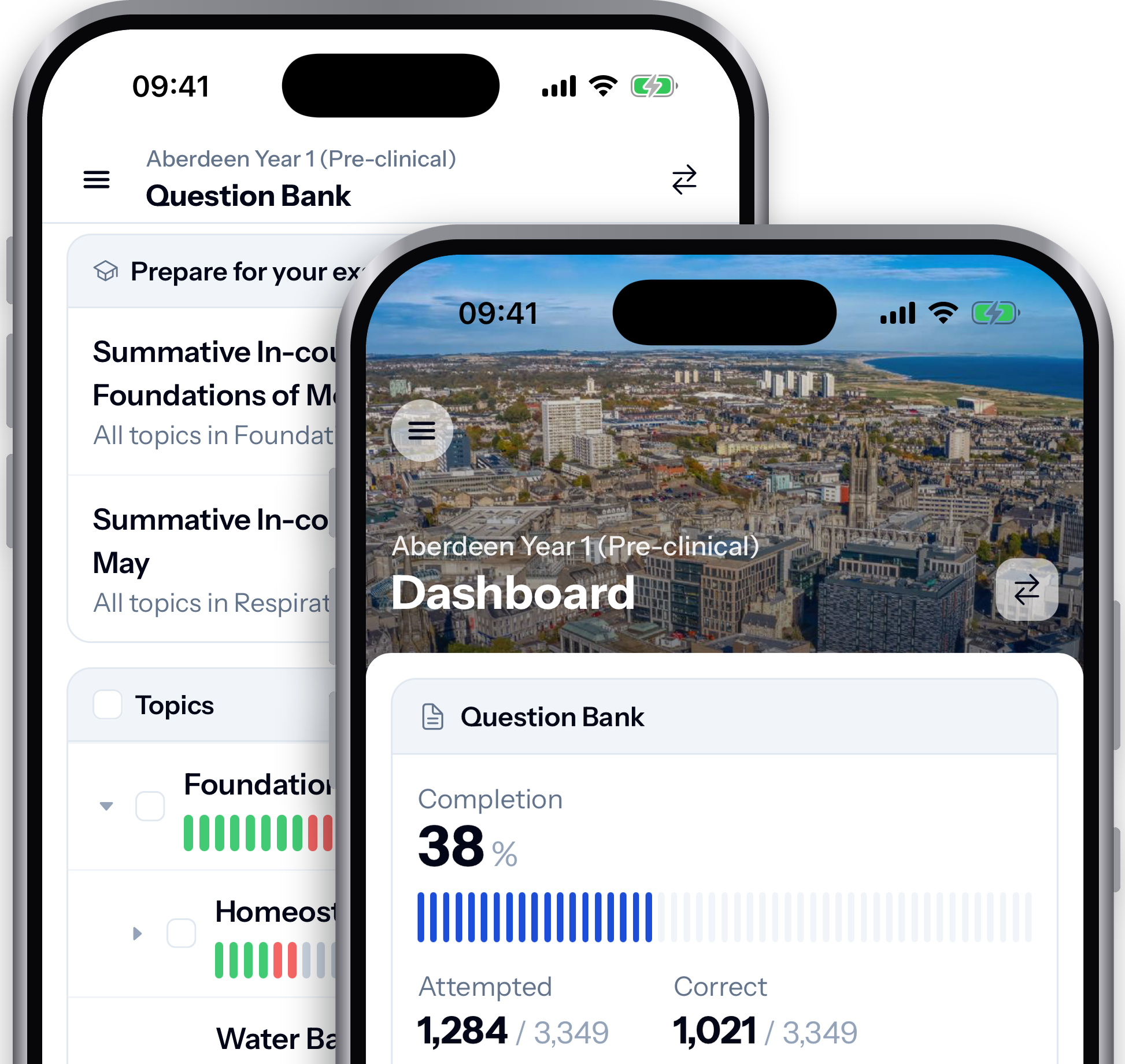
Take your subscriptions with you
Our mobile app allows you to access your interview and exam question banks wherever you are.