The 2027 Public Health Medicine ST1 Interview Revision Platform: Question Bank, Live Practice and Mocks with Other Candidates
The Medibuddy Public Health Medicine ST1 Question Bank includes over 50 scenarios that closely mirror the real interview, each with a model answer written/edited by high-scoring candidates who sat the Public Health Medicine ST1 interview in 2026.
However, knowing a strong answer isn't the same as delivering it well under pressure, which is why we provide:
Study Groups
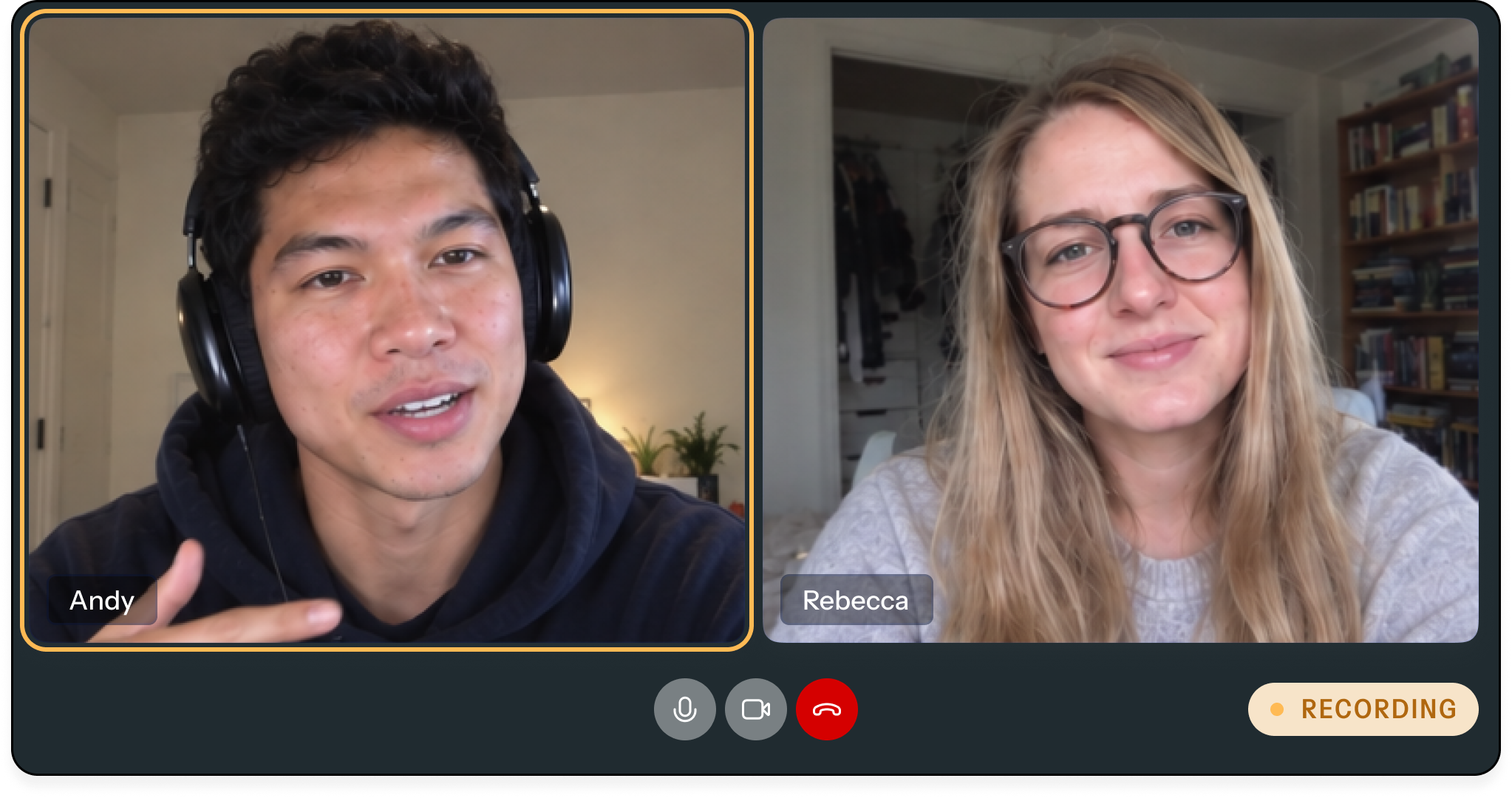
Unlimited Live Mocks with real people
Peer Feedback on your mocks from a wide range of candidates
10 years’ experience preparing doctors for interviews
Users of the Medibuddy Public Health Medicine ST1 Revision Platform have secured some of the most competitive training jobs in recent rounds. Ask around, there's a good chance the trainees in the year above you used us too.
Always up to date
Did you know the interviews change every year? That's why we review and update every Question Bank on the platform twice a year, so you know you're always practising with scenarios based on the latest interview structure.
Network and practise real interview scenarios with other candidates
Question Bank
See every scenario, and how to answer it well
Over 50 scenarios across the person specification, which tell you exactly how to respond to each question.
Study Groups
Connect with candidates across the country
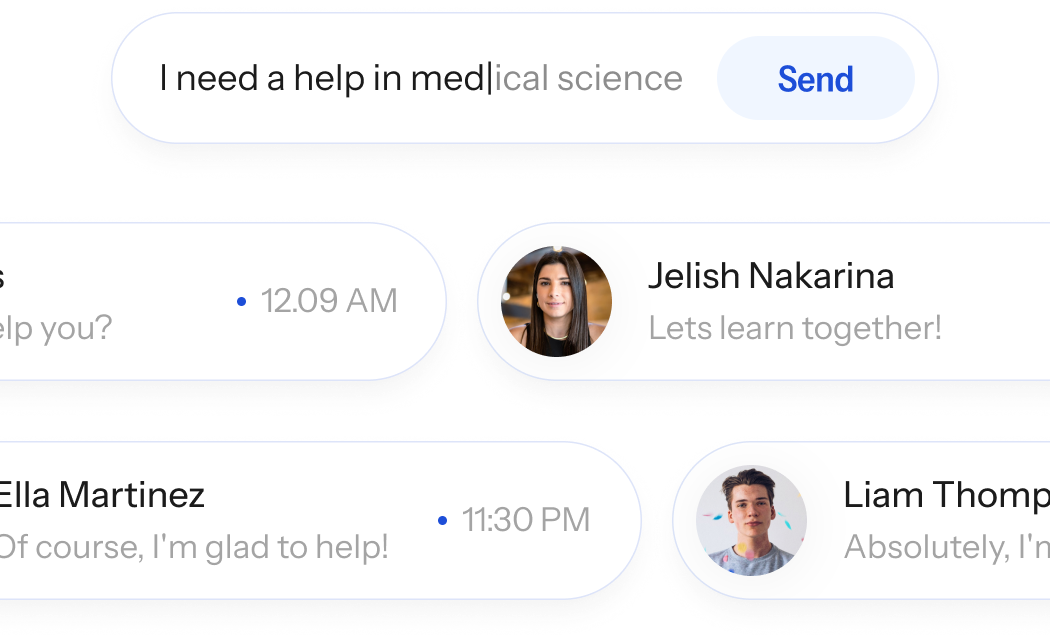
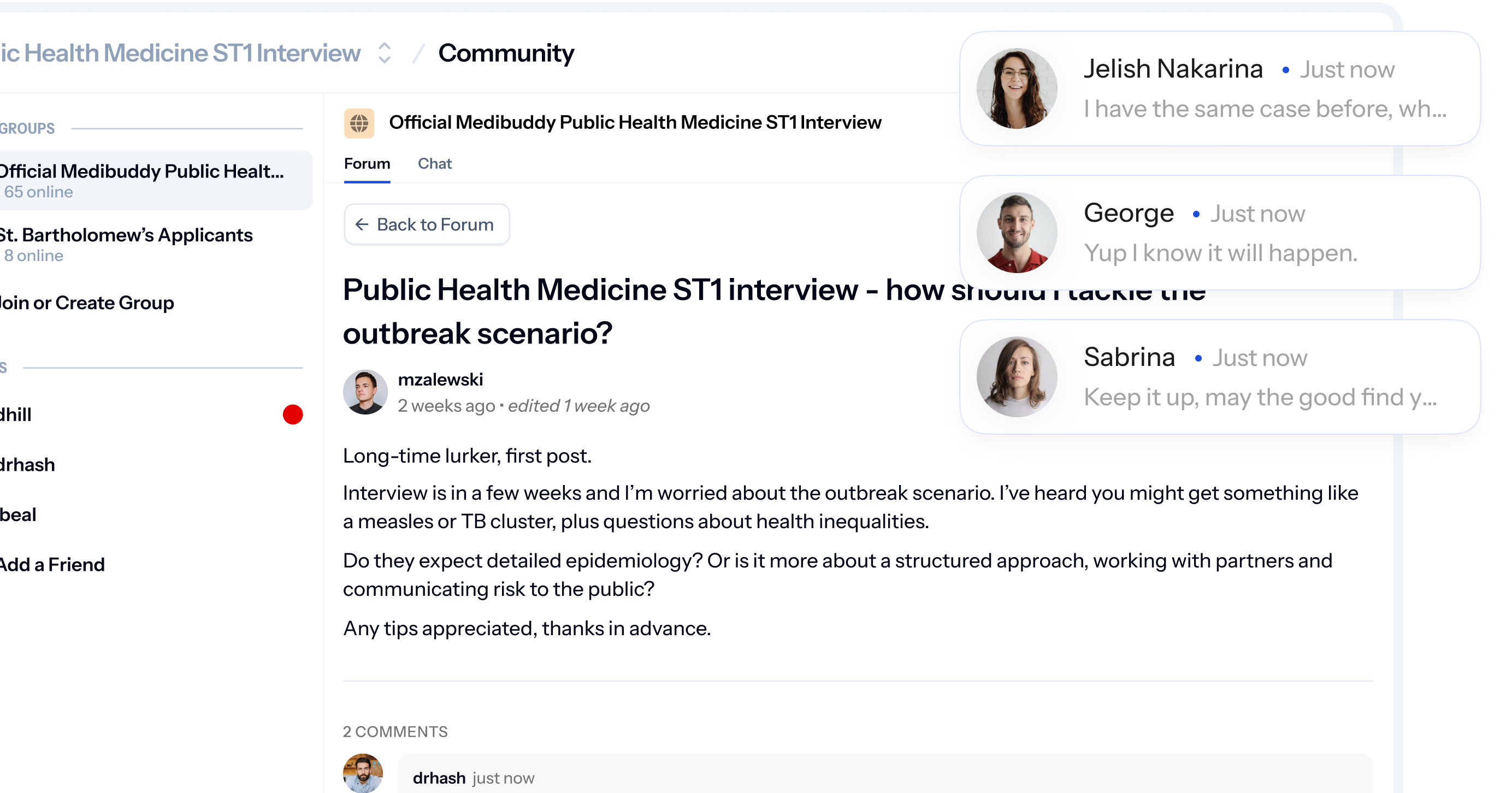
Most people only ever practise with one or two friends. Study Groups connect you with candidates right across the country sitting the same interview.
Live MocksBeta
Practise interview technique with different candidates
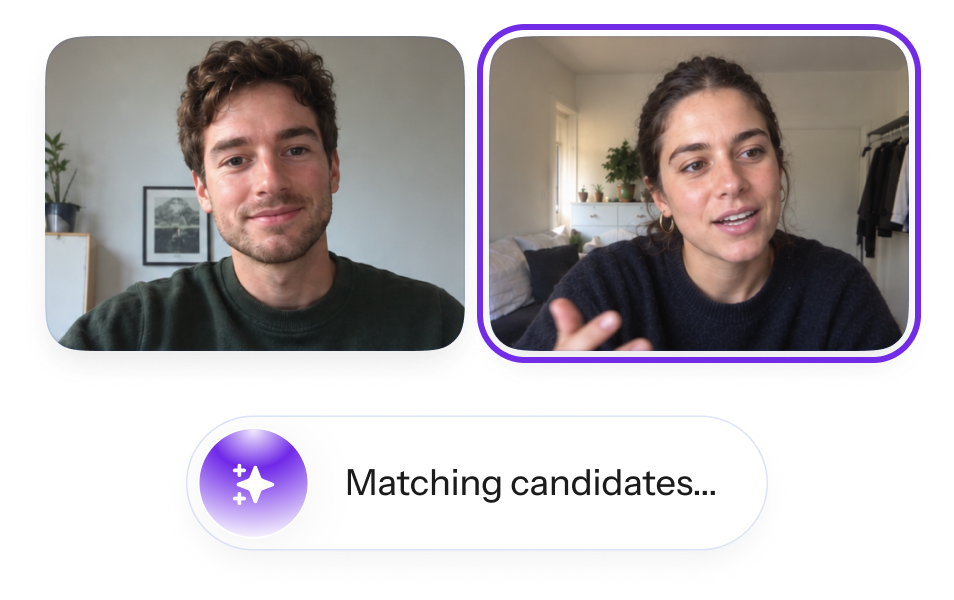
Arrange or get matched on demand with other candidates and run real scenarios out loud under interview conditions. Those who practise with the widest range of people tend to score the highest.
Peer FeedbackBeta
Reviewed by candidates across the platform
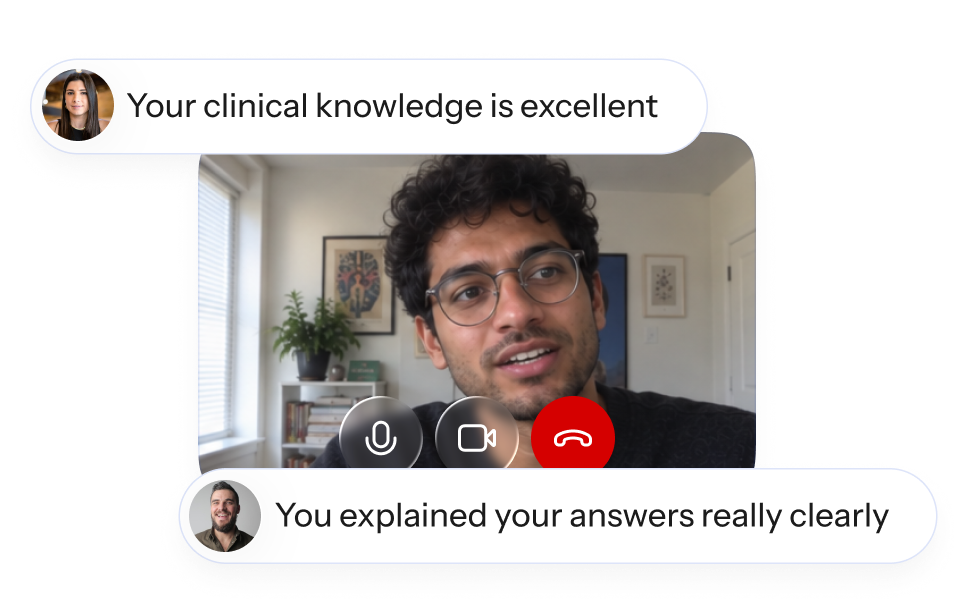
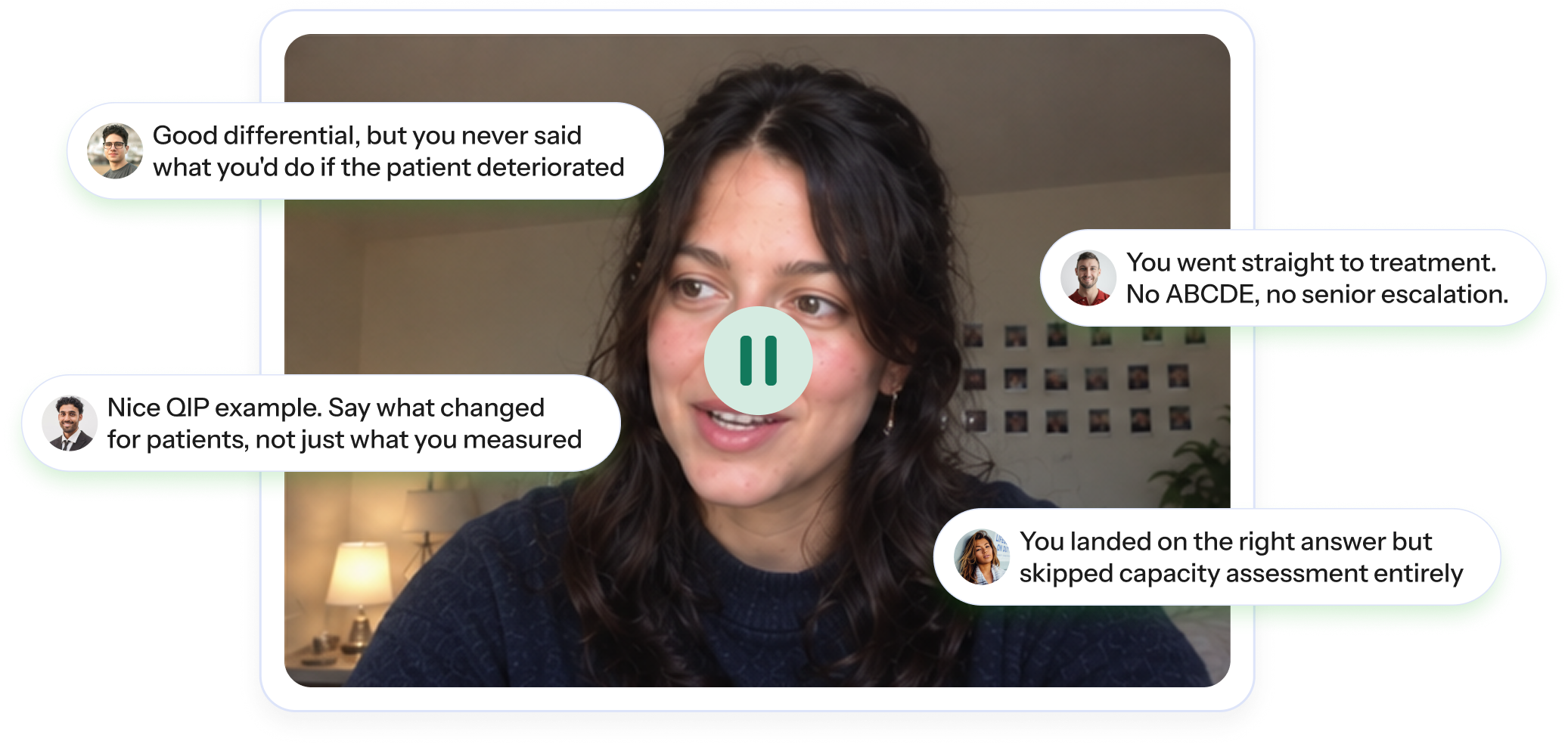
Submit your recorded mocks to candidates across the platform and get honest, varied feedback. Reviewing other people's mocks teaches you just as much.
The question bank, and other candidates to practise with, all in one platform.
Public Health Medicine ST1 Revision Platform • £89.99
Gain access to over 50 scenarios across the person specification, and collaborate with other candidates through Study Groups, Live Mocks and Peer Feedback.
A few of the candidates who prepared with us for the Public Health Medicine ST1 interview.
Verified candidateInterviewed 2026
"I ranked very highly and I think the question bank definitely helped. The scenarios were very close to what came up on the day."
Ranked very highly
Verified candidateInterviewed 2026
"I got my top-ranked post and I scored highly in all stations. The scenarios were very similar to those on the Medibuddy website."
Top-ranked post
Part 1 • See the questions
The Medibuddy 2027 Public Health Medicine ST1 Question Bank
The interview has six questions, each lasting six minutes, so you have a limited window to deliver the high-scoring answers you need to do well. That means every point has to land, and knowing how to structure each answer is essential. That's why each of our 50-plus scenarios comes with a model answer, written by candidates who scored highly in the Public Health Medicine ST1 interview, so you know exactly how to approach every question the interviewers throw your way.
What's inside
What's included in the Public Health Medicine ST1 Question Bank
There's nothing worse than getting to the interview and being handed a scenario you've never seen before. The panel has a huge range of topics to draw on, so the safest approach is to revise across all of them. We provide scenarios across the whole person specification, including the common ones and the more unusual ones that have come up before, so you don't get caught out.
Technical Knowledge and Public Health Concepts
Scenarios on the concepts of health, disease and illness, the determinants of health, core public health concepts and the key public health issues, each with a model answer so you can show the depth the panel is looking for.
Academic and Research Skills
Questions on your academic and research experience and how you apply evidence, with worked answers so you can present your work clearly and score well.
Conceptual Thinking and Problem Solving
Scenarios that test how you reason through complex public health problems, with model answers showing a clear, structured approach.
Professional Attributes
Questions on managing others and team involvement, organisation and planning, and coping with pressure, with answers that show the professional qualities the panel is assessing.
Commitment to Specialty
Your chance to show your motivation for public health and why you're suited to it. We provide example questions and answers so you can present your experience and achievements clearly.
Updated for 2027
Fully restructured with 29 new scenarios to match the person specification.
Try it
Try an example Public Health Medicine ST1 question
You are the public health registrar and are informed by a local hospital of an unusual cluster of Salmonella cases linked to a local care home.
How would you manage this outbreak, from first notification through to declaring it over?
Question
How would you confirm the outbreak and the diagnosis?
Example answer
I'd use a structured outbreak-control approach. First, confirm the outbreak exists by comparing the number of Salmonella cases against the expected baseline for that area and time of year, reviewing historical surveillance data and speaking to local labs and clinicians. Alongside that, I'd confirm the diagnosis: ensure stool specimens are collected and laboratory-confirmed, with serotyping and sequencing to understand the species and the links between cases.
Question
How would you define, count and describe the cases?
Example answer
With the Outbreak Control Team, I'd agree a case definition using clinical criteria such as diarrhoea and fever, laboratory confirmation, and an epidemiological link like residence in the care home or contact with a confirmed case. I'd count cases by building a line list with demographics, onset dates, exposures and outcomes, calculate attack rates and start active surveillance. Then I'd describe the outbreak by time, using an epidemic curve to see whether it's point-source or propagated, by place, mapping cases within the home, and by person, looking at age, comorbidities and resident versus staff status.
Question
How would you generate and test a hypothesis?
Example answer
From the descriptive data I'd form hypotheses about the likely source and mode of transmission, for example contaminated food served in the home or person-to-person spread via staff. To test them, I'd work with environmental health officers on an analytical study: a cohort study if all residents shared meals, or a case-control study if only some were affected, assessing food histories, hygiene practices and staff movements. I'd also test food and environmental samples for Salmonella.
Question
What control measures would you put in place?
Example answer
I'd start immediate control measures while the investigation continues: isolating symptomatic individuals, reinforcing hand hygiene and food-safety protocols, suspending communal meals if foodborne transmission is suspected, and excluding symptomatic staff from work. Longer-term measures would follow once the source and route are confirmed.
Question
How would you handle communication and reporting, and declare the outbreak over?
Example answer
I'd convene or contribute to an Outbreak Control Team with UKHSA, the care home, local authority environmental health and infection prevention and control. I'd give regular updates to residents, families and staff, coordinate with local NHS partners and report to the UKHSA regional team, keeping communication transparent, including handling the media if needed, while protecting patient confidentiality. The outbreak is declared over once the appropriate number of incubation periods has passed with no new linked cases, followed by a debrief and lessons learned.
That's one scenario. There are over 50 more.
Public Health Medicine ST1 Revision Platform • £89.99
Includes every scenario in the Question Bank, and access to Study Groups, Live Mocks with other candidates and Peer Feedback.
The Public Health Medicine ST1 interview changes from year to year, and the biggest fear for any candidate is getting to interview day and realising you've revised with a question bank that's totally outdated.
That's why we review and update every Question Bank twice a year, so you know you're revising with scenarios that are likely to come up. We do this in April after the previous year's interviews, and again in October when the new recruitment guidance is published.
We recently restructured the Question Bank around the person specification and added 29 new scenarios, keeping it aligned with the real interview.
Updated for 2027 Interviews
Part 2 • Practise them live
The only interview resource where you can practise live with other candidates from across the country
Our Public Health Medicine ST1 Question Bank tells you exactly how to answer real interview scenarios. But how you practise with them will determine how many marks you score. Simply reading answers off a screen won't prepare you for the intense scrutiny you'll face in the interview. And only practising with the same few colleagues or friends limits the amount of feedback you'll get. Medibuddy gives you unique access to Public Health Medicine ST1 candidates across the country, so you can learn from a variety of perspectives and hear a far wider range of feedback than your own circle could ever give you.
Study Groups
When you prepare in isolation, you're relying on your own interpretation of the interview process, which is one of the quickest ways to get found out on the day. Study Groups connect you with other doctors across the country who are also applying to Public Health Medicine ST1, so you can engage and network with people preparing for the same interview as you. Everyone brings different experience from different hospitals and deaneries, meaning you won't ever miss out on the key bits of information that could swing the interview in your favour.
Live MocksBeta
Candidates who don't take part in mocks often struggle to adapt to the pressure of the interview. Your knowledge might be correct, but without convincing delivery the interviewers will score you poorly. The best way to improve your delivery is to take part in as many live mocks as possible, which is why we haven't put a cap on how many you can do. We also know how difficult it can be to organise mocks with other people, so all you have to do is join the waiting room and we'll match you with a different Public Health Medicine ST1 candidate each time. Take turns as both the interviewer and candidate on real Question Bank scenarios, so you can see exactly how other candidates perform in real time, while refining your own interview technique.
Peer FeedbackBeta
Preparing alone means you won't know how you're coming across during the interview. And preparing with the same few candidates means you'll miss opportunities to improve, which is why it's so important to get as many opinions as possible on your performance. With Medibuddy, you can record a mock and submit it for feedback from other candidates on the platform, so you receive a wider range of feedback and refine your answers with each person you practise with. Reviewing other people's mocks is just as valuable, as it shows you how strong candidates handle the same scenarios, which is one of the fastest ways to improve.
The interview
What to expect from the Public Health Medicine ST1 interview
Public Health Medicine ST1 is extremely competitive, with 28 candidates applying for every post in 2025. That makes how well you prepare for the interview more important than ever.
Station 1
Three six-minute questions
You'll face three questions lasting six minutes each, from across the Public Health ST1 person specification. Three assessors will mark you for this station, so use our scenarios to cover the full range and practise a structured answer for each.
Station 2
Three six-minute questions
A further three six-minute questions, again marked by three assessors, covering the remaining person-specification areas.
How the interview is scored
Expect the interview questions to cover technical public health knowledge, academic and research skills, conceptual thinking and problem-solving, managing others, organisation, coping with pressure, and commitment to the specialty. Our model answers are structured against the person specification criteria, so you know exactly what a strong, well-organised answer looks like.
Get ready
How to prepare for the Public Health Medicine ST1 interview
Start with the Question Bank
Work through 50+ scenarios across the person specification, each with a worked answer from a candidate who scored well in the 2026 interview. Start by reading how a strong answer is formed, then think about how you'd deliver it.
Talk the hard ones through in Study Groups
Study groups are your biggest opportunity to network and connect with other candidates sitting the same interview as you. Everyone on the platform is in the same boat as you, so don't be scared to get involved and ask questions. After all, someone in your study group might just help you work through a scenario you've been struggling with.
Rehearse out loud in Live Mocks
Live mocks are where you begin to put everything you've learned into practice, and we know from experience that those who practise with a wide range of candidates usually do the best. So organise mocks with people from one of your study groups, or get matched with a random Public Health Medicine ST1 candidate, then take turns as interviewer and candidate using real scenarios until answering out loud under pressure feels normal.
Get reviewed with Peer Feedback before the day
Once you've recorded a mock, you can have other community members review it. This allows you to see how you come across to other people, and gives you time to refine your delivery as you revise, rather than being caught out on the day. Reviewing other people's mocks is just as crucial, as you can see how other candidates navigate the same scenarios as you.
Questions
Frequently asked questions
What does the Public Health Medicine ST1 interview involve?
The interview is around 60 minutes: six questions of six minutes each, arranged as two stations of three questions, with three assessors per station. The questions are drawn from across the Public Health ST1 person specification.
How competitive is the Public Health Medicine ST1 interview?
Very. In 2025 there were 28 candidates for every post, so how well you prepare for the interview often makes the difference.
Who writes the model answers?
High-scoring candidates who sat the Public Health Medicine ST1 interview and secured competitive training posts.
Can I practise with other candidates?
Yes. Every Revision Platform purchase gives you the opportunity to connect with other candidates through Study Groups, Live Mocks and Peer Feedback.
How do the Live Mocks work?
All you have to do is join the waiting room, and we match you with another Public Health Medicine ST1 candidate. You can then take turns as interviewer and candidate on real Question Bank scenarios, allowing you to gain experience answering out loud to a real person before you ever sit in front of the panel.
What are Study Groups and how do they help?
Study groups are community forums for doctors across the country preparing for the same Public Health Medicine ST1 interview. You can ask questions, share what you're struggling with, and compare how you'd approach a scenario.
Can I get feedback on my interview performance?
Yes. After you've recorded a mock, you can ask other members to review it, allowing you to see which part of your answer needs fine-tuning.
Why use Medibuddy over other Public Health Medicine ST1 question banks?
We've been preparing doctors for specialty interviews for 10 years, and the Question Bank is updated every year by editors who've recently scored well in this interview. That means the scenarios always reflect this year's interview. And it doesn't just stop at a question bank. Every purchase includes access to Study Groups, Live Mocks and Peer Feedback, so you can revise alongside candidates across the country.
How do you keep the Public Health Medicine ST1 Question Bank up to date?
We review and update it twice a year. In April after that year's interviews, and again in October when the new recruitment guidance is published. We recently restructured the Question Bank around the person specification and added 29 new scenarios.
How long do I get access for?
Access runs for 12 months from the purchase date.
Start preparing for the Public Health Medicine ST1 interview
The Revision Platform gives you over 50 scenarios to practise and refine with other candidates through Study Groups, Live Mocks and Peer Feedback.
Written by candidates who recently scored well in this interview, and updated every year, it's built to reflect the interview you're about to sit.
Instant access on web and the Medibuddy app • Study Groups, Live Mocks and Peer Feedback with every purchase • 12 months' access
Public Health Medicine ST1 Revision Platform • £89.99



 Close
Close