Close
Close
Prepare for the 2026 Chemical Pathology ST3 Interview with Structured, Specialty-Specific Practice Questions
Chemical Pathology Interview Questions for doctors preparing for the 2026 ST3 round. We’ve built this question bank around the virtual interview on 20 March 2026, with comprehensive coverage of every station you’ll face. Written by high-scoring Chemical Pathology registrars who recently sat the interview and understand how the panel assesses candidates.

“I was successful at interview and the scenarios were very similar to those on the Medibuddy website. The information on Medibuddy was really useful for interview preparation.”
“I wanted to say thank you for your wonderful site. I got my top ranked post and I scored highly in all stations.”
Updated for 2026
This question bank reflects the current 2026 Chemical Pathology ST3 interview format, with content reviewed against the latest published guidance and recent candidate feedback.
What to Expect from the Chemical Pathology ST3 Interview
Chemical Pathology ST3 is a small, nationally recruited round led by the East Midlands office of NHS England on behalf of posts across England, Scotland, Wales and Northern Ireland. The most recent published competition ratio (NHS England, 2025) was 46 applications for 20 posts, around 2.3 applicants per post, up on the 2024 ratio of 1.44. Numbers are modest by ST3 standards, but fill rates have run at or near 100%, so a strong interview performance matters: posts go to candidates who convert at interview, not to those who simply make the shortlist.
For the 2026 round, interviews are delivered virtually on 20 March 2026, with applications submitted through Oriel. Candidate-facing guidance indicates the virtual platform is Qpercom, though this is not formally confirmed in official NHS England sources. Candidate-facing guides report four stations covering a presentation, a clinical scenario, ethics and professionalism, and suitability and commitment to specialty; the definitive blueprint and scoring matrix are published by the lead recruiter ahead of interview day. The descriptions below draw on candidate-reported detail and the assessment areas named in the 2026 person specification, since NHS England does not publish a definitive station-by-station blueprint for Chemical Pathology ST3.
Clinical and Laboratory Scenarios
You’ll be asked to work through applied biochemistry cases drawn from the GMC-approved curriculum: electrolyte and acid-base disturbances, endocrinology and dynamic function testing, and metabolic medicine. Expect to interpret a results pattern, suggest further investigations, and reason through differentials under time pressure. Marks reward structured reasoning, justified investigation choices and recognition of the limits of an assay.
Communication and Professional Scenarios
Available guidance suggests communication is assessed as a domain within the structured interview rather than through an acted role-play, though the definitive station format is confirmed by the lead recruiter. Scenarios candidates report typically involve discussing abnormal biochemistry with a non-specialist clinician, handling a disagreement with a requesting team, or explaining a metabolic diagnosis to a patient or family. Frameworks (SPIKES, SBAR), active listening and clear escalation thinking score well.
Commitment to Specialty and Motivation
Because the cohort is small and the discipline niche, panels probe motivation closely: why chemical pathology, your understanding of its dual laboratory-and-clinical role, taster experience, and engagement with a biochemistry team. Generic "I like science" answers don’t land. Specific, evidenced reasons do.
What the Panel Is Looking For
Across stations, the assessment maps to the 2026 person specification: clinical knowledge and expertise, problem solving and decision making, communication, and professionalism. Each station is scored by two assessors independently against an expected performance level, and candidate-reported guidance describes an appointability rule under which no more than two station scores may fall at 2/5; confirm the exact rule against the lead recruiter’s applicant guidance. Panels reward structured, evidenced answers over breadth: clear reasoning, awareness of laboratory-clinical interface, and a credible account of why you want this specialty.
The Medibuddy 2026 Chemical Pathology ST3 Interview Question Bank
We’ve built the question bank around the way the Chemical Pathology ST3 interview is actually run: a structured panel format anchored in the RCPath curriculum and GMC Good Medical Practice, with reasoning, reflection and professionalism weighted as heavily as clinical knowledge. It covers every part of the interview comprehensively, from clinical and laboratory scenarios through to reflective practice, ethics and commitment to specialty. Each question is written by high-scoring trainees and registrars who recently sat the interview, and the bank is updated every year using feedback from the most recent cohort so the content tracks how panels are marking now.
What’s Included in the Chemical Pathology ST3 Interview Question Bank
The bank is organised around the four stations reported in candidate-facing guidance for the Chemical Pathology ST3 selection centre, so your practice maps directly onto how you’ll be assessed.
Presentation station
Structured prompts and worked frameworks for delivering a concise, well-argued presentation under time pressure, with practice on handling follow-up questions from the panel.
Clinical station
Scenarios across the core clinical territory: electrolyte and acid-base disturbances, dynamic endocrine testing, lipid disorders, nutrition, and inborn errors of metabolism, plus laboratory governance, assay choice and result interpretation.
Ethics and professionalism station
Scenarios built around GMC Good Medical Practice and the four principles, covering consent, confidentiality, capacity, probity and raising concerns in a laboratory-clinical context.
Suitability and commitment to specialty station
Practice on articulating why Chemical Pathology, demonstrating engagement with the lab, awareness of Metabolic Medicine in the curriculum, and reflecting on portfolio evidence including audit, QI and teaching.
How to Prepare for the Chemical Pathology ST3 Interview
Chemical Pathology ST3 preparation differs from generic specialty interview prep in two important ways: the format is virtual and station-based, and the clinical content sits at the interface of laboratory medicine and acute clinical practice. Treat both elements seriously and build your preparation around the structure you’ll actually meet on 20 March 2026.
Understand the format before you start practising
Familiarity with the platform is part of the preparation. Interviews are delivered virtually, with stations scored by two interviewers (sometimes a third clinician). Before you rehearse content, set up the environment you’ll sit the interview in: a quiet room, a stable connection, a camera at eye level, and a clock visible without breaking eye contact. Practise reading a scenario on screen and then speaking to a panel you can’t see in the room. Candidates who only practise face-to-face are caught out by the lag, the gallery layout and the lack of cues from interviewers looking down to score.
Focus on knowledge and delivery equally
Strong answers in Chemical Pathology interviews need both clinical substance and structured delivery. The specialty is small, the panel will be consultants who know the field deeply, and vague answers on areas like electrolyte disturbances or dynamic endocrine testing are spotted immediately. Equally, candidates who know the science but ramble lose marks they shouldn’t. Build the knowledge from the RCPath curriculum and Chemical Pathology Specialty Specific Guidance; train the delivery by answering aloud, against the clock, in a station-by-station structure.
Build preparation around each station
For the clinical scenario station, drill the bread-and-butter chemical pathology topics: hyponatraemia and hypernatraemia, hyperkalaemia, acid-base disorders, calcium and bone biochemistry, lipid disorders, adrenal insufficiency and dynamic function tests (short Synacthen, dexamethasone suppression, OGTT, water deprivation). Practise structuring an answer as initial assessment, investigation, interpretation and management, then liaison with the requesting clinician.
For the commitment to specialty station, anchor your answer in concrete evidence: tasters in a chemical pathology lab, MDT attendance, audit or QI in a biochemistry service, RCPath welcome days or careers webinars, and contact with current registrars. Generic "I like science and patient contact" answers don’t differentiate.
For the ethics, professionalism and communication station, prepare around the situations chemical pathologists actually face: advising a clinician on an unexpected result, dealing with a duty biochemist call out of hours, handling a disagreement with a requesting consultant, and managing errors in laboratory reporting. Map your reasoning to GMC Good Medical Practice.
Practise under timed conditions
Each station has fixed reading and answer times, and pacing is what most under-prepared candidates get wrong. Rehearse to a stopwatch, record yourself, and cut filler. A polished 90-second answer scores better than a meandering three-minute one.
Start earlier than you think
We recommend starting structured preparation at least 8 to 10 weeks before 20 March 2026, ideally from early January, though starting in December as soon as applications close on 11 December 2025 gives the fullest runway. Earlier is better if you’re rotating through a non-pathology post and need to rebuild specialty-specific knowledge. Cramming in the final fortnight rarely works for a station-based format where breadth matters.
Practise with a structured question bank
Reading about the format only takes you so far. The principles above convert into marks when you’ve rehearsed them out loud, against the clock, across every station type. Our question bank gives you that structure: scenarios written for the Chemical Pathology ST3 stations, model answers built from how panels score, and a way to track which areas still need work before March.
Frequently Asked Questions
What does the Chemical Pathology ST3 interview involve?
The interview is delivered virtually through a multi-station format, with each station scored by two interviewers (occasionally a third clinician). Stations are designed around the NHS England person specification and the RCPath Chemical Pathology curriculum, covering clinical knowledge, commitment to specialty, portfolio, and professional domains such as communication and ethics. For the 2026 round, interviews are scheduled for 20 March 2026.
How competitive is Chemical Pathology ST3?
NHS England’s 2025 competition ratios recorded 46 applications for 20 posts, a ratio of around 2.3:1, up on the prior cycle. Recruitment is led nationally by the East Midlands NHS England office and covers England, Scotland, Wales and Northern Ireland. Absolute numbers are small and fill rates have consistently sat at or near 100%, so every interview slot matters.
What topics come up in the Chemical Pathology ST3 interview?
Clinical knowledge stations typically probe areas central to the specialty: electrolyte disturbances, endocrine dynamic function testing, and laboratory interpretation. Beyond clinical content, expect questions on commitment to chemical pathology (tasters, projects, RCPath engagement), and candidates may also encounter questions on reflective practice or professional scenarios covering ethics, communication and teamwork.
Does the question bank cover every station?
Yes. The bank is structured around each component of the Chemical Pathology ST3 interview: clinical and laboratory scenarios, portfolio and commitment to specialty, ethics and professionalism, and motivation. It’s built by registrars who recently sat the interview and is refreshed each cycle so the questions reflect the current format and the themes panels are actually scoring against.
When should I start preparing for the Chemical Pathology ST3 interview?
We recommend starting eight to twelve weeks before the March interview date. Applications close on 11 December 2025, which gives you a natural runway through January and February to revisit core chemical pathology knowledge, build structured answers around the person specification, and practise delivery under timed conditions on a virtual platform.
Start Preparing for the Chemical Pathology ST3 Interview
Most candidates prepare by reading broadly across biochemistry and hoping the panel asks something familiar. Strong candidates prepare differently. They rehearse clinical biochemistry scenarios, lab management dilemmas and ethical cases out loud, against the clock, in the format the ST3 panel actually marks.
Take your subscriptions with you
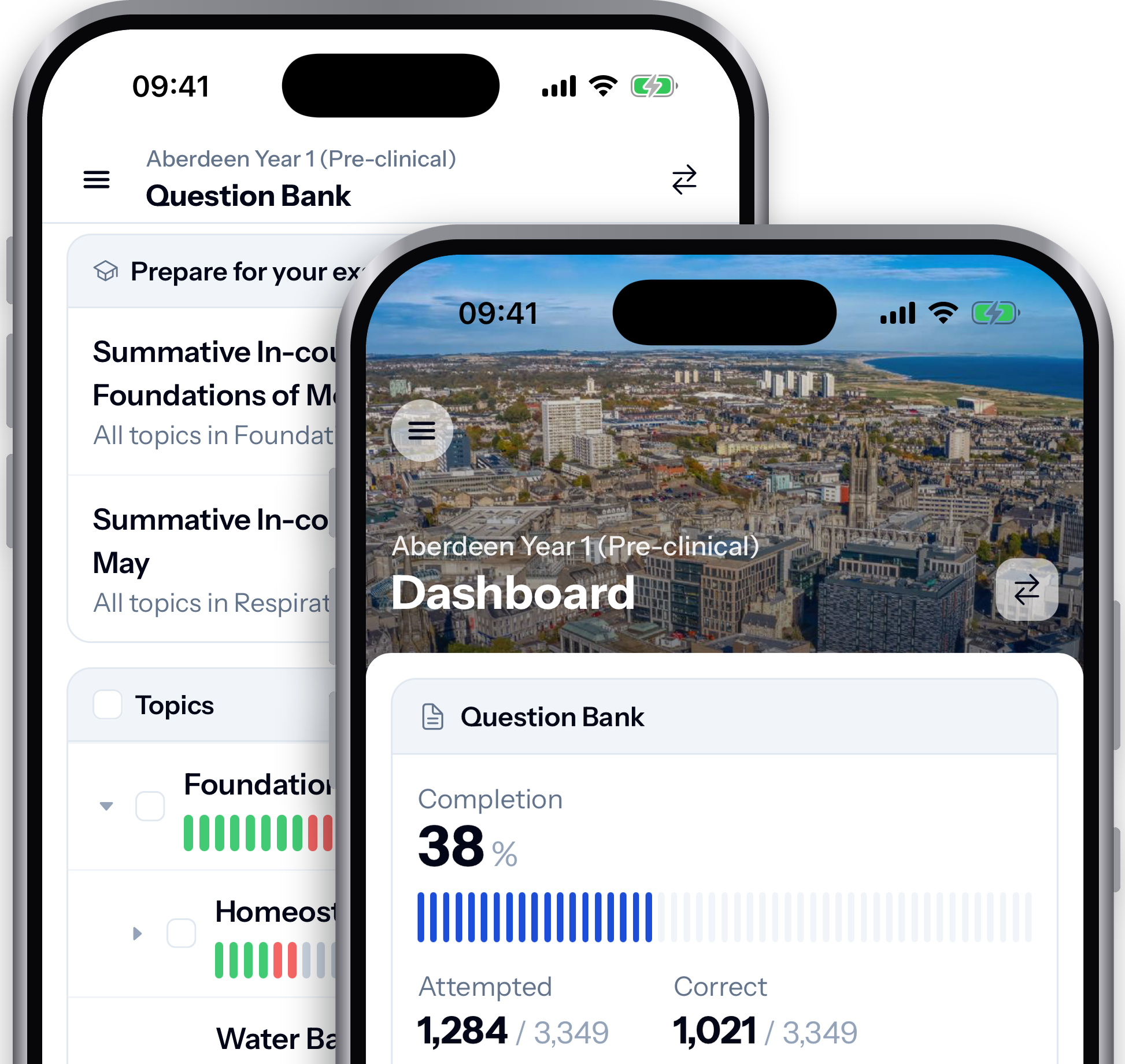
Our mobile app allows you to access your interview and exam question banks wherever you are.