Close
Close

 20th July 2026
Complete Guide to Clinical Neurophysiology ST3 Application and Recruitment (2026)
If you’re applying for Clinical Neurophysiology ST3 in 2026, this Clinical Neurophysiology Application guide walks you through everything on the recruitment side: eligibility, the person specification, self-assessment, portfolio evidence, and how national selection through Oriel actually works. It’s an uncoupled Group 2 specialty entered after a recognised core programme (Internal Medicine Stage 1, ACCS-IM, Paediatrics or Neurology) plus MRCP(UK) or equivalent, with four years of higher training run under the JRCPTB curriculum. We’ll focus on getting your application competitive; the interview itself is covered in depth on the Clinical Neurophysiology ST3 Interview Question Bank page. Here’s the snapshot before we dig in.
Key Facts at a Glance
- Competition ratio (2025): 4.56:1 (41 applications, 9 posts)
- Training length: 4 years higher specialty training from ST3
- Entry requirement: MRCP(UK), MRCPCH or MRCS plus Foundation and core training
- Recruitment platform: Oriel, with Yorkshire and Humber as lead recruiter
- 2026 application window: 20 November – 11 December 2025
- 2026 interview date: 13 March 2026 (online)
Table of Contents
- What Is Clinical Neurophysiology ST3 Higher Specialty Training?
- Is Clinical Neurophysiology ST3 Competitive and What Is the Lifestyle Like?
- Clinical Neurophysiology ST3 Eligibility Criteria and Entry Requirements
- How to Apply for Clinical Neurophysiology ST3 National Recruitment
- Clinical Neurophysiology ST3 Recruitment Timeline and Key Dates (2026)
- Clinical Neurophysiology ST3 Competition Ratios and Application Trends
- How Clinical Neurophysiology ST3 Applications Are Scored (2026)
- Clinical Neurophysiology ST3 Self-Assessment and Portfolio: How to Maximise Your Score
- The Clinical Neurophysiology ST3 Interview: A Brief Overview
- Clinical Neurophysiology ST3 Offers, Preferencing and What Happens Next
- Frequently Asked Questions About Clinical Neurophysiology ST3 Application
- Clinical Neurophysiology ST3 Useful Resources
What Is Clinical Neurophysiology ST3 Higher Specialty Training?
Clinical Neurophysiology is a small, GMC-approved higher specialty focused on diagnosing disorders of the brain, spinal cord, nerves and muscles using techniques like EEG, nerve conduction studies, EMG, evoked potentials and intraoperative monitoring. It’s a Group 2 (uncoupled) specialty, meaning you apply nationally at ST3 after completing a core programme rather than progressing run-through from day one.
The programme lasts four years (ST3–ST6) and is delivered under the Joint Royal Colleges of Physicians Training Board (JRCPTB), part of the Federation of the Royal Colleges of Physicians, with the Specialist Advisory Committee providing specialty oversight. National recruitment runs through Oriel, currently hosted by the Yorkshire and Humber Deanery on behalf of NHS England, with a single person specification covering England, Northern Ireland, Scotland and Wales.
To enter at ST3 you’ll need to have completed a recognised core route (Internal Medicine Stage 1, ACCS Internal Medicine, Paediatrics, or Neurology run-through) and hold MRCP(UK), MRCPCH or an accepted equivalent. Once in the programme, at least two years must be spent in neurophysiology-specific techniques.
Training follows the 2021 Clinical Neurophysiology curriculum (updated November 2024), built around the Generic Professional Capabilities framework and specialty Capabilities in Practice, assessed through workplace-based assessments, a Multiple Consultant Report and annual ARCPs. Successful completion leads to a Certificate of Completion of Training (CCT) in Clinical Neurophysiology and eligibility for the GMC Specialist Register, the gateway to substantive consultant posts. Applicants should work from the 2024-updated curriculum and the 2026 person specification rather than older versions floating around online.
Is Clinical Neurophysiology ST3 Competitive and What Is the Lifestyle Like?
Clinical Neurophysiology is a small, largely diagnostic specialty, so post numbers each year are modest and the field is genuinely selective. Detailed year-on-year competition ratios specific to CN ST3 aren’t well documented in the public domain (this is a recurring gap in candidate accounts), but with only a handful of national training numbers advertised each round, you’re competing against a self-selected group who often already have neurology or neurosciences experience.
Where the specialty really stands out is lifestyle. The PHST recruitment guidance and the RCPE describe it as predominantly outpatient-based with broadly 9-to-5 working, and there is no mandatory acute on-call rota for CN itself. Many trainees opt into the neurology on-call rota to keep their general neurology skills sharp, but this is voluntary. LTFT training is explicitly supported on a pro rata basis, with the four-year full-time-equivalent minimum simply extended proportionately.
Day to day, you’ll be running EEG, EMG, nerve conduction studies and evoked potentials clinics, reporting studies, and liaising closely with neurology, neurosurgery, orthopaedics and rheumatology. More senior trainees pick up intra-operative monitoring and epilepsy telemetry work.
On pay, ST3 sits at nodal point 4 of the resident doctor scale, around £61,825 basic (2024/25 gov.uk figure), with a further 3.5% DDRB uplift accepted from 1 April 2026. London weighting, additional hours and any opted-in on-call push earnings higher.
After CCT, most trainees move into NHS consultant neurophysiologist posts, often integrated within neurosciences departments. A small number of centres offer dual accreditation with neurology, which broadens consultant job options considerably.
Clinical Neurophysiology ST3 Eligibility Criteria and Entry Requirements
Clinical Neurophysiology is one of the more unusual specialties to apply for, because it opens its doors to three different core backgrounds: physicians, paediatricians and surgeons. That widens the pool but also means the eligibility rules are slightly different depending on which route you’re coming from. Everything below is drawn from the NHS England 2026 ST3 person specification, which is the authoritative document you should cross-check before hitting submit.
To be eligible for the 2026 round, you’ll need to evidence all of the following:
- Primary medical qualification: MBBS or an equivalent qualification acceptable to the GMC.
- GMC registration: Full General Medical Council registration with a licence to practise at the time of application.
- Foundation competences: Completion of the UK Foundation Programme or demonstrable equivalent foundation-level competences signed off within the last three years of application (or since last signed off).
- Core training competences: Completion of Internal Medicine Training, ACCS, core paediatric training or Core Surgical Training, depending on your route. Helpfully, physician-route applicants do not need to complete IMT3 before entering CN.
- Postgraduate exam by offer date: Full MRCP(UK) diploma, MRCPCH, or MRCS, with MRCP(UK) Part 1 needed at application for physician-route candidates. Irish BST with MRCPI, or GIM specialist register eligibility, are also accepted.
- Right to work: Eligibility to work in the UK by the intended start date (Skilled Worker/Health and Care Worker visa is the usual sponsorship route for IMGs).
- English language proficiency: Evidenced via GMC-accepted routes (IELTS, OET or an approved alternative) as part of registration.
One quirk worth knowing: doctors who already hold a CCT in Neurology or Paediatric Neurology can still apply in open competition, which is unusual and reflects the diagnostic overlap between these specialties. If you’ve spent significant time in LAT posts, check the current handbook carefully. Sibling specialties like Neurology apply explicit LAT caps, and rules can shift year to year.
How to Apply for Clinical Neurophysiology ST3 National Recruitment
Clinical Neurophysiology ST3 is recruited nationally through Oriel, with the Yorkshire and Humber Deanery acting as lead recruiter on behalf of all four UK nations. The applicant handbook and person specification (published on the NHS England 2026 recruitment pages) are the definitive references. Check them once at the start of your prep and use them as your source of truth for anything below.
Here’s the practical sequence for the 2026 Round 1 cycle:
- Confirm eligibility against the 2026 person specification. You’ll need full GMC registration with a licence to practise, evidence of Foundation competence (or equivalent), and MRCP(UK) Part 1 at the time of application, with the full MRCP(UK) diploma achieved by the offer date. Entry via MRCPCH or Irish BST equivalents is also accepted. The Foundation Programme guide covers the competence sign-off if you’re currently in FY2.
- Register or log in on Oriel. Applications for the 2026 intake opened at 10:00 on 20 November 2025 and closed at 16:00 on 11 December 2025. Miss the deadline by a minute and Oriel won’t accept the form. There’s no application fee.
- Complete the Oriel application form. The main sections cover personal details, immigration and right-to-work status, qualifications, employment history, fitness to practise declarations, referee details (references themselves aren’t pulled until you accept an offer), and, the section that actually scores you, the Clinical Neurophysiology ST3 specialty-specific supporting information and self-assessment. Take this section seriously; it’s what drives shortlisting.
- Prepare your supporting documents. You don’t upload most evidence at application, but you’ll need it at interview and pre-employment checks: primary medical qualification (MBBS), MRCP(UK) certificates, Foundation Programme Certificate of Completion, evidence of English language competence, and documentary proof of every self-assessment claim (publications, presentations, teaching, quality improvement, neurophysiology experience).
- Rank your programme choices. Round 1 permits a maximum of five specialty applications across the round, so use them deliberately. Within Clinical Neurophysiology, you can rank the available deanery locations in order of preference.
- Interview and offers. Shortlisted candidates are invited to an online interview after the window closes, delivered nationally by the Yorkshire and Humber lead recruiter. Feedback is provided at longlisting, shortlisting and interview stages.
Reapplication. If you’re unsuccessful, you can reapply in future cycles; there’s no numerical cap. If you’ve previously held, resigned from or been removed from any national training programme, you must submit a completed Support for Reapplication to Specialty Training form signed by your previous Postgraduate Dean, or your application will be rejected. The self-assessment score itself cannot be appealed, though procedural complaints routes exist.
Clinical Neurophysiology ST3 Recruitment Timeline and Key Dates (2026)
Clinical Neurophysiology ST3 recruitment runs to the national Physician Higher Specialty Training (PHST) calendar, with Yorkshire and Humber Deanery as the lead recruiter. Because the specialty is small (just 9 posts nationally in 2025), the timeline is tight and easy to miss if you’re juggling other applications. Here are the confirmed 2026 dates:
| Stage | Date/Window |
|---|---|
| Academic (NIHR) applications open | 2 October 2025 |
| Academic (NIHR) applications close | 30 October 2025 |
| Main applications open (Oriel) | 10am, Thursday 20 November 2025 |
| Main applications close (Oriel) | 4pm, Thursday 11 December 2025 |
| Self-assessment evidence upload window | After applications close (deadline shown as 1pm on lead recruiter page) |
| Shortlisting outcomes / interview invitations | No later than 7 days before interviews (late Feb – early March 2026) |
| Interview date (online) | 13 March 2026 |
| Initial offers released via Oriel | By 5pm, Tuesday 14 April 2026 |
| Holding deadline | 22 April 2026 |
| Typical post start dates | Early August (Round 1) / early February (Round 2) |
Dates are for the 2026 intake as published by PHST Recruitment and Yorkshire and Humber Deanery. Always check the lead recruiter page for the current round, as timings shift slightly year to year.
Two easy things to trip on: the academic (NIHR) route runs several weeks earlier than the main window, and the evidence upload deadline sits separately from the application close. Miss it and your self-assessment scores won’t be verified.
Clinical Neurophysiology ST3 Competition Ratios and Application Trends
Clinical Neurophysiology is one of the smallest specialties in UK national recruitment, with post numbers in single digits and applicant pools of around 40 people. That makes the competition ratio genuinely useful, but also volatile: a swing of a few applicants either way can move the ratio noticeably.
Here’s how the last few confirmed cycles have looked, based on NHS England’s official competition ratios pages:
| Year | Applications | Posts | Ratio |
|---|---|---|---|
| 2025 | 41 | 9 | 4.56:1 |
| 2024 | 44 | 8 | 5.50:1 |
| 2019 | 23 | 7 | 3.29:1 |
The 2025 round is the most recent completed cycle. Applications for 2026 opened in November 2025, so ratios for the current round won’t be published until after recruitment closes.
A few things worth pulling out. Application volumes and post numbers have both crept up modestly since 2019, but with such small absolute numbers we’d be cautious about calling this a firm upward trend. Fill rates are consistently high: NHS England’s 2025 fill-rate data shows all 7 England posts were accepted (100%), and Scotland’s small allocation also filled.
Recruitment is coordinated as a single national process by the Yorkshire and Humber deanery, so you apply once rather than region-by-region, and there’s no meaningful public breakdown of competitiveness by programme. Rank position at interview is what ultimately determines which region you’re offered.
How Clinical Neurophysiology ST3 Applications Are Scored (2026)
Clinical Neurophysiology ST3 recruitment is run nationally by the Physician Specialty Recruitment Office (PSRO/PHST), with NHS England North East and Yorkshire as the lead deanery. Unlike some specialties, there’s no standalone written entry paper. Your score is built from a self-assessment on Oriel and an interview, both graded against a published framework.
The two scored components
The self-assessment (also called supporting information) sits inside your Oriel form. You grade yourself against defined domains, upload evidence, and shortlisters can adjust your scores up or down after verification. This determines whether you make it through to interview. PHST guidance for the 2026 round references 38 points available across the self-assessment domains. Confirm this figure in the published 2026 applicant guide, as it may reflect a minor tweak versus prior years.
The interview then produces a Raw Interview Score (RIS): eight domains, each scored 1–5. The interview shape is covered briefly further down the guide. For the full station-by-station breakdown and practice questions, head to the Clinical Neurophysiology ST3 Interview Question Bank.
Weighting and how scores combine
PHST applies a common scoring template across its physician specialties. Based on the current PHST guidance for Clinical Neurophysiology, the two components combine into a total out of 100:
| Component | Weighted score |
|---|---|
| Self-assessment (application) | /20 |
| Interview (weighted RIS) | /80 |
| Total | /100 |
So the interview carries roughly 80% of the final ranking and the self-assessment around 20%. That said, the self-assessment isn’t something to coast on. It’s the gate to interview in the first place, and a low score here can end your application before you get to show what you can do in person.
The PHST Clinical Neurophysiology page describes the raw interview score being scaled to /80 and the raw application score (/40) halved to /20. Per-domain interview weightings within the eight stations are not explicitly published for Clinical Neurophysiology in the retrieved guidance, so treat any specific multipliers you see quoted for sibling specialties as indicative rather than confirmed for CN. Confirm the exact scoring model, including the 38-point self-assessment total and the per-domain interview weights, against the 2026 PHST applicant handbook for Clinical Neurophysiology once it’s published.
To be classed as appointable, the PHST guidance is clear: none of the eight interview scores may be 1/5, no more than two may be 2/5, and the RIS must be at least 24.
What the self-assessment actually covers
The self-assessment domains for Clinical Neurophysiology ST3 include postgraduate degrees and qualifications, publications, presentations and posters, quality improvement and audit, teaching experience, prizes and distinctions, and commitment to specialty. Each domain contributes to the raw self-assessment total before weighting is applied.
We’ve broken down what each of these domains actually rewards, and where candidates lose easy points, in the next section.
Clinical Neurophysiology ST3 Self-Assessment and Portfolio: How to Maximise Your Score
Clinical Neurophysiology ST3 is a small, competitive specialty (around 4.56:1 in 2025), so a well-evidenced self-assessment is often what separates candidates by a point or two. Shortlisting runs through the Physician Higher Specialty Training (PHST) portal, hosted by the Yorkshire and Humber Deanery on behalf of the Physician Specialty Recruitment Office.
What the self-assessment actually scores
The form covers the familiar PHST/physician domains: additional qualifications, publications, presentations, teaching experience and qualifications, quality improvement, prizes and distinctions, leadership/management, and commitment to specialty. Notable points for neurophysiology:
- Additional degrees and teaching qualifications are tiered. Based on the analogous PHST scoring framework used across ST3 specialties, a PGCert in medical education tends to score around 1 point, a PGDip around 2, and an MSc/MA higher, with MD/PhD at the top tier for research qualifications. Confirm exact values in the 2026 applicant handbook.
- Commitment to specialty is where neurophysiology exposure lands: tasters, EEG/EMG lab attachments, neurophysiology audit or QI, and attendance at BSCN meetings. There’s no published minimum duration; the tier you claim must match the evidence you can upload.
- Procedural logbooks are not scored at entry. Logbook numbers matter at ARCP once you’re in the programme, not at shortlisting.
- No sole-application bonus is published for this specialty (unlike IMT, which does award extra points for single-specialty applicants).
How evidence is verified
Every self-assessment claim must be backed by a document uploaded to Oriel by the evidence deadline. Anything late simply isn’t scored. Expect to upload: certificates for degrees, prizes and courses; PubMed IDs/DOIs plus the paper for publications; programme covers or acceptance emails for presentations; supervisor letters for QI and leadership; and attendance or feedback records for teaching. Eligibility items (MBBS, MRCP(UK) or the paediatric route, Foundation competence, English language) must be evidenced by the post start date.
Where candidates lose easy points
- Do gather PubMed IDs, DOIs and named-author confirmation now. Chasing a supervisor for a QI sign-off letter in the final week is the classic own goal.
- Do get a formal taster or lab attachment logged with a dated letter from the neurophysiology consultant.
- Don’t claim a tier you can’t evidence. Verification downgrades hurt more than claiming one tier lower honestly.
- Don’t rely on a poster certificate alone if the conference programme also lists you; upload both.
- Don’t leave teaching experience unstructured. A short accredited “Train the Trainer” course plus a feedback log usually outscores ad-hoc bedside teaching.
The Clinical Neurophysiology ST3 Interview: A Brief Overview
Once your application form is scored and you’re shortlisted, the next stage is a national selection interview coordinated through the Physician Higher Specialty Training (PHST) office. For 2026, interviews are held online and last around 40 minutes in total, split across two stations of roughly 15 minutes each, with a separate pair of interviewers scoring each station. Broadly, one station centres on a clinical and communication scenario, and the other combines a short ethical scenario with questions on your suitability and commitment to Clinical Neurophysiology.
That’s the high-level shape. The detailed station structure, what interviewers are actually looking for, and worked practice questions sit on our dedicated interview page.
Ready to prepare for the interview? Head to the Clinical Neurophysiology ST3 Interview Question Bank for the full station-by-station breakdown, scenario questions, and model answers written by high-scoring trainees.
Clinical Neurophysiology ST3 Offers, Preferencing and What Happens Next
Once interviews are done, offers in Clinical Neurophysiology ST3 flow through Oriel in strict rank order. With only around 9 national posts on offer in recent rounds, the cohort is small and the process moves quickly. Here’s roughly how it unfolds:
- Interview scores are combined and ranked. Your total station score determines your position; individual station scores are used to break ties.
- Posts are allocated by rank against your preferences. The top-ranked applicant gets their first-choice location, the next-ranked candidate gets their highest available preference, and so on down the list.
- You receive your offer via Oriel with a hold-down period (typically 48 hours) to accept, hold, decline, or accept with upgrades.
- Opt in to upgrades when you respond. If you accept or hold with upgrades enabled and a higher-preferenced post frees up (because someone above you declines), your offer moves up automatically. No email, no action needed from you.
- Upgrades continue until the published upgrade deadline (historically around 4pm on a set Thursday in April), after which allocations become final.
- Pre-employment checks and start date follow with your allocated deanery, ready for the August start.
One thing worth flagging: the Medical Training (Prioritisation) Bill is expected to change how offers are distributed from 2027, so check the Yorkshire and Humber lead recruiter page for the current-round rules before you preference.
Frequently Asked Questions About Clinical Neurophysiology ST3 Application
How competitive is Clinical Neurophysiology ST3?
Clinical Neurophysiology ST3 is a small but consistently contested specialty. NHS England’s official figures show a competition ratio of 4.56:1 in 2025 (41 applications for 9 posts), following 5.50:1 in 2024 (44 applications, 8 posts) and 3.29:1 back in 2019. With single-digit post numbers nationally, ratios swing noticeably year to year on small changes.
Who is eligible to apply for Clinical Neurophysiology ST3?
You need MBBS (or equivalent), full GMC registration, and completion of the UK Foundation Programme (or equivalent competences). You must also hold a recognised core training route: MRCP(UK) via Internal Medicine Training, MRCPCH via core paediatric training, or MRCS via a surgical route. Full details are in the NHS England 2026 person specification.
Do I need the full MRCP by the application deadline?
No. For physician applicants, you need MRCP(UK) Part 1 at the point of application, with the full MRCP(UK) diploma achieved by the offer/post start date. Paediatric applicants apply via MRCPCH, and surgical applicants via MRCS. This gives you some flexibility to complete written and clinical components alongside submitting your application.
How does the Clinical Neurophysiology ST3 application process work?
Recruitment is run as a single national process, with Yorkshire and Humber acting as lead recruiter for all four UK nations. You apply through the Oriel portal against the NHS England person specification. For the 2026 round, applications opened on 20 November 2025 and closed on 11 December 2025, with interviews scheduled for 13 March 2026 (online).
What scores well on the Clinical Neurophysiology ST3 self-assessment?
Shortlisting is based on a validated self-assessment where you score yourself against defined domains and upload evidence to verify each claim. Strong scorers typically demonstrate additional degrees, published peer-reviewed research, quality improvement work with completed cycles, teaching qualifications (PGCert, PGDip or Masters in medical education), and specialty-specific experience in neurology or clinical neurophysiology.
How many Clinical Neurophysiology ST3 posts are available?
Post numbers are small and vary by year: 9 nationally in 2025, 8 in 2024, and 7 in 2019. Final regional allocations are confirmed by the lead recruiter (Yorkshire and Humber) and PHST Recruitment during the round. Because volumes are low, being flexible about geography significantly improves your chances of receiving an offer you’d accept.
Can I reapply if I’m unsuccessful?
Yes. There’s no cap on reapplication for Clinical Neurophysiology ST3. Between rounds, focus on the gaps that cost you points last time: publish outstanding research, complete a QI cycle, or gain neurophysiology exposure through taster weeks or an LAT/clinical fellow post.
How does the offer and upgrade process work?
Offers are made via Oriel in interview rank order after the 13 March 2026 interviews. If you accept or hold a post with upgrades enabled, you’re automatically moved to a higher-preferenced post if one becomes available. No action needed. Upgrades continue until the published deadline (22 April 2026 for the 2026 round), after which allocations are final.
Clinical Neurophysiology ST3 Useful Resources
We’ve pulled together the sources worth bookmarking before you start your Clinical Neurophysiology ST3 application. Because this is such a small specialty, most of what you need sits on official pages rather than in commercial guides.
Official recruitment and person specification
- NHS England Clinical Neurophysiology ST3 2026 Person Specification: the definitive entry criteria
- Yorkshire and Humber Deanery national recruitment page: lead recruiter, timelines and applicant handbook
- PHST Recruitment: Clinical Neurophysiology: central Physician Higher Specialty Training hub
- Oriel: the application portal itself
Curriculum and progression
- Federation Clinical Neurophysiology Curriculum (2021, updated Nov 2024) and the JRCPTB ARCP Decision Aid
- GMC Clinical Neurophysiology curriculum
Professional networks
- British Society for Clinical Neurophysiology (BSCN) and its trainee arm, the Association of Trainees in Clinical Neurophysiology (ATCN)
- r/doctorsUK for occasional cycle chatter (low volume, given only ~40 applicants nationally)
Medibuddy guides
- Clinical Neurophysiology ST3 Interview Question Bank for interview preparation with model answers
- Foundation Programme guide, MRCP guide and the wider Medibuddy blog for cross-specialty application tips
Putting together a strong Clinical Neurophysiology ST3 application is a long game: mapping your evidence against the NHS England person specification, getting your neurology and neurophysiology exposure logged, and making sure your self-assessment claims are properly verified before you hit submit on Oriel. Get those foundations right and you’ll go into selection in a much stronger position than most.
When you’re ready to turn your attention to interview day, the Clinical Neurophysiology ST3 Interview Question Bank walks you through scenario questions with model answers from high-scoring trainees, so you can practise with the same rigour you’ve put into the rest of your application.
Take your subscriptions with you
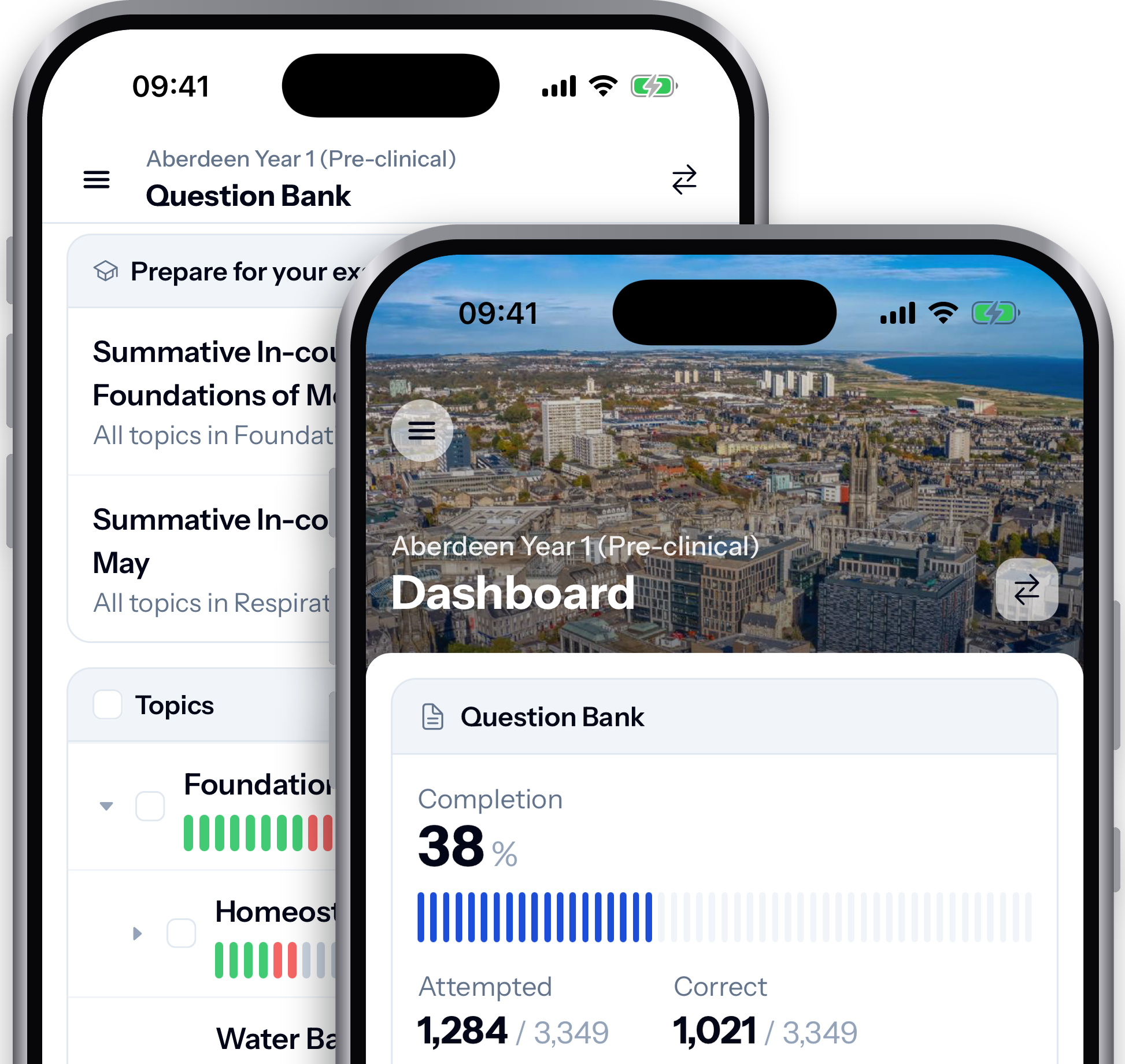
Our mobile app allows you to access your interview and exam question banks wherever you are.