The 2027 Medical Oncology ST3 Interview Revision Platform: Question Bank, Live Practice and Mocks with Other Candidates
The Medibuddy Medical Oncology ST3 Question Bank includes over 60 scenarios that closely mirror the real interview, each with a model answer written/edited by high-scoring candidates who sat the Medical Oncology ST3 interview in 2026.
However, knowing a strong answer isn't the same as delivering it well under pressure, which is why we provide:
Study Groups with candidates across the country
Unlimited Live Mocks with real people
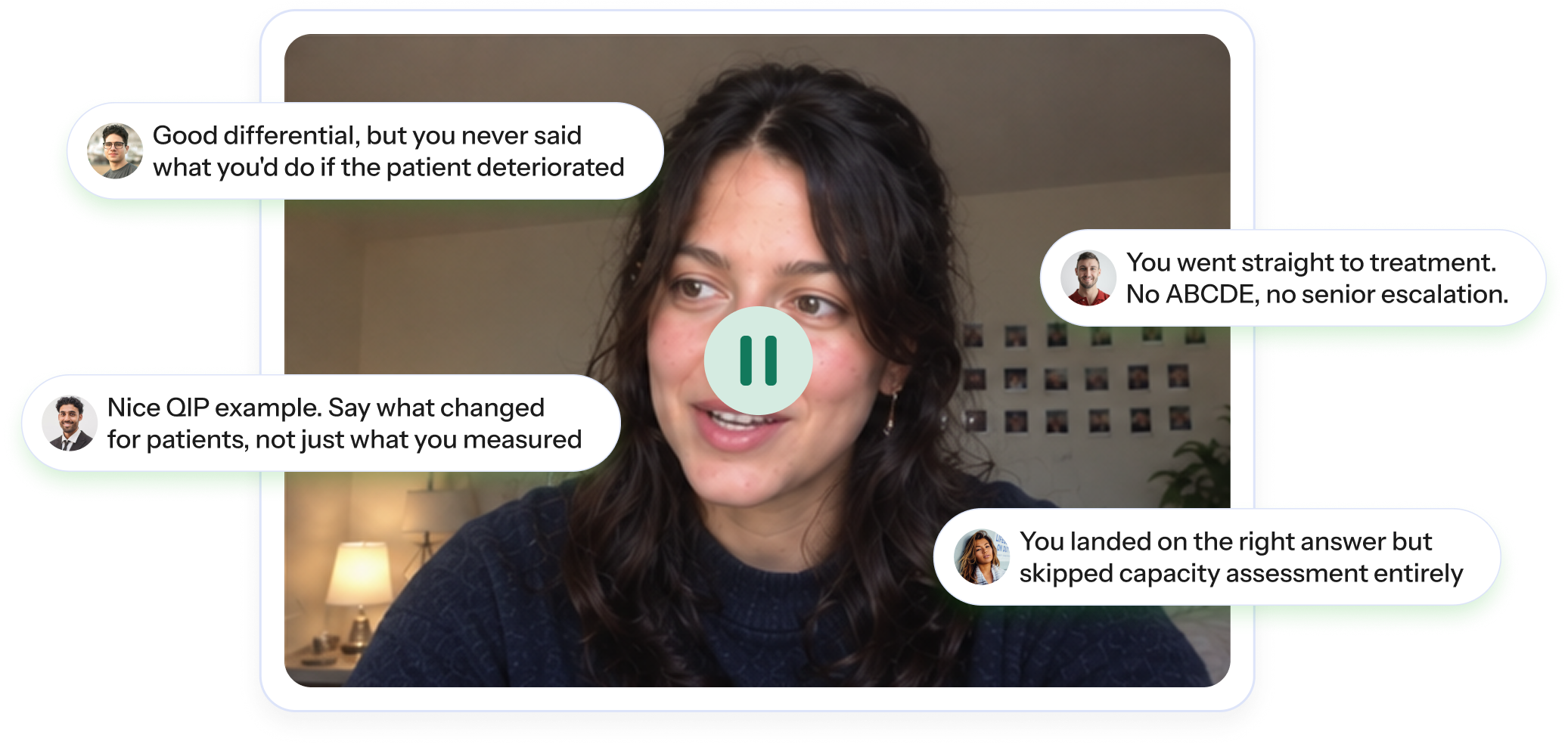
Peer Feedback on your mocks from a wide range of candidates
10 years’ experience preparing doctors for interviews
Users of the Medibuddy Medical Oncology ST3 Revision Platform have secured some of the most competitive training jobs in recent rounds. Ask around, there's a good chance the trainees in the year above you used us too.
Always up to date
Did you know the interviews change every year? That's why we review and update every Question Bank on the platform twice a year, so you know you're always practising with scenarios based on the latest interview structure.
Network and practise real interview scenarios with other candidates
Question Bank
See every scenario, and how to answer it well
Over 60 scenarios across both interview stations, which tell you exactly how to respond to each question.
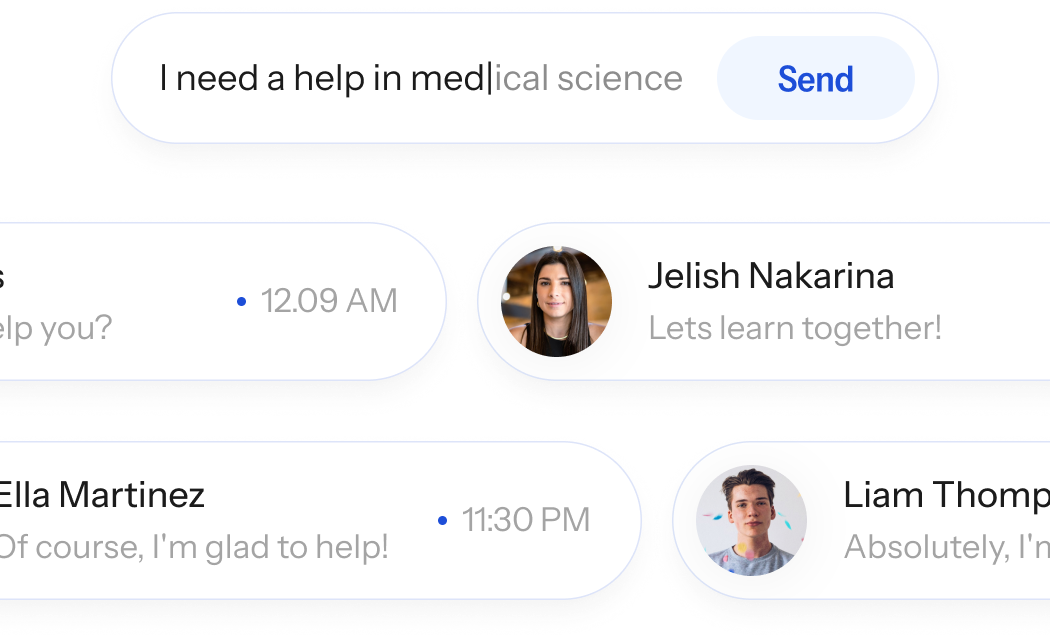
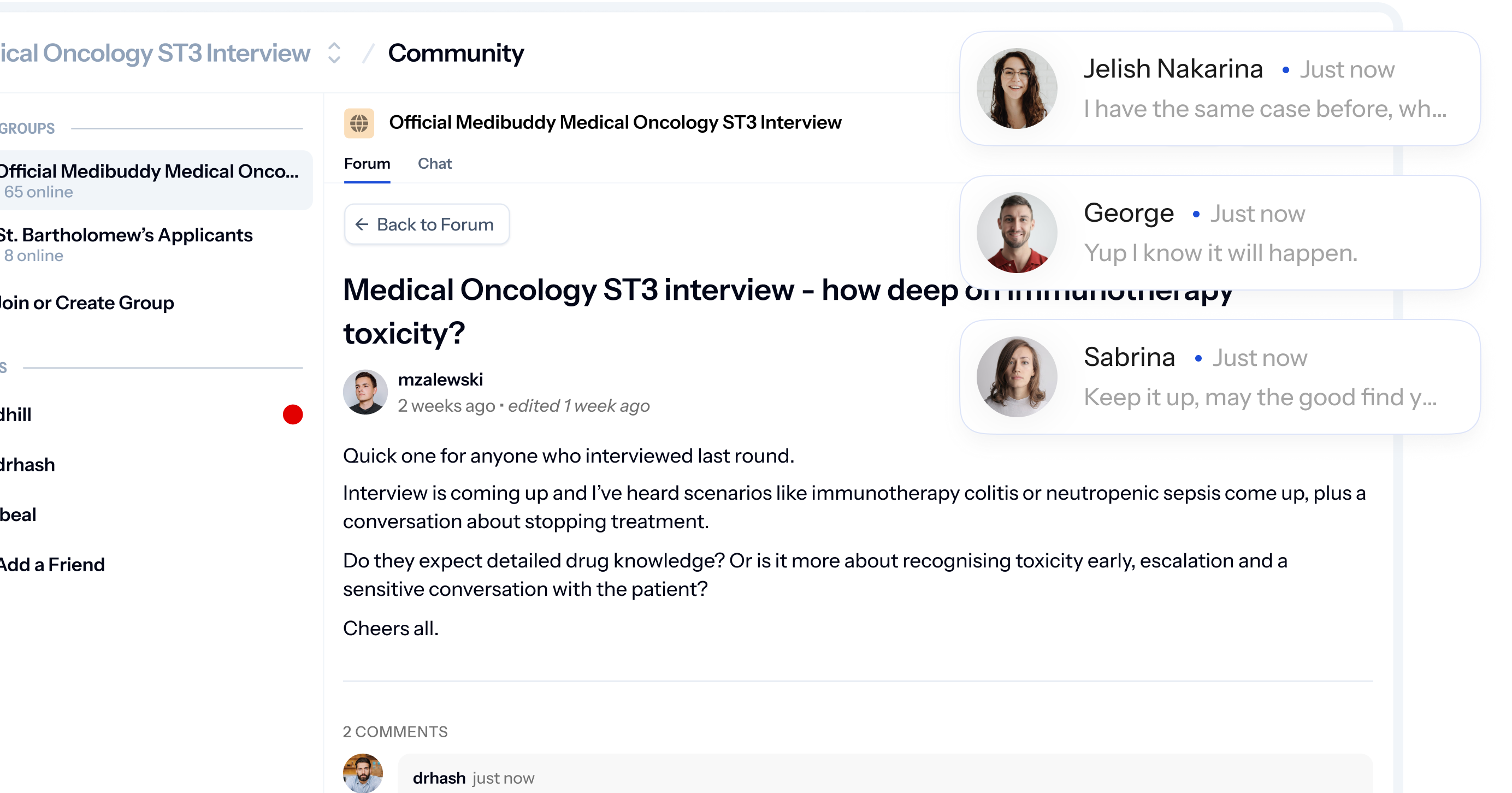
Study Groups
Connect with candidates across the country
Most people only ever practise with one or two friends. Study Groups connect you with candidates right across the country sitting the same Medical Oncology ST3 interview.
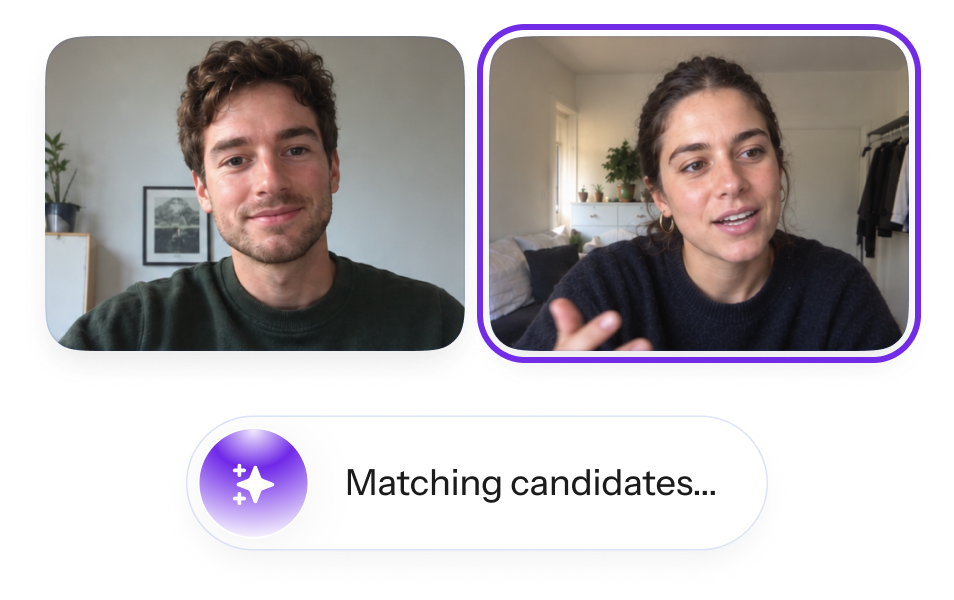
Live MocksBeta
Practise interview technique with different candidates
Arrange or get matched on demand with other candidates and run real scenarios out loud under interview conditions. Those who practise with the widest range of people tend to score the highest.
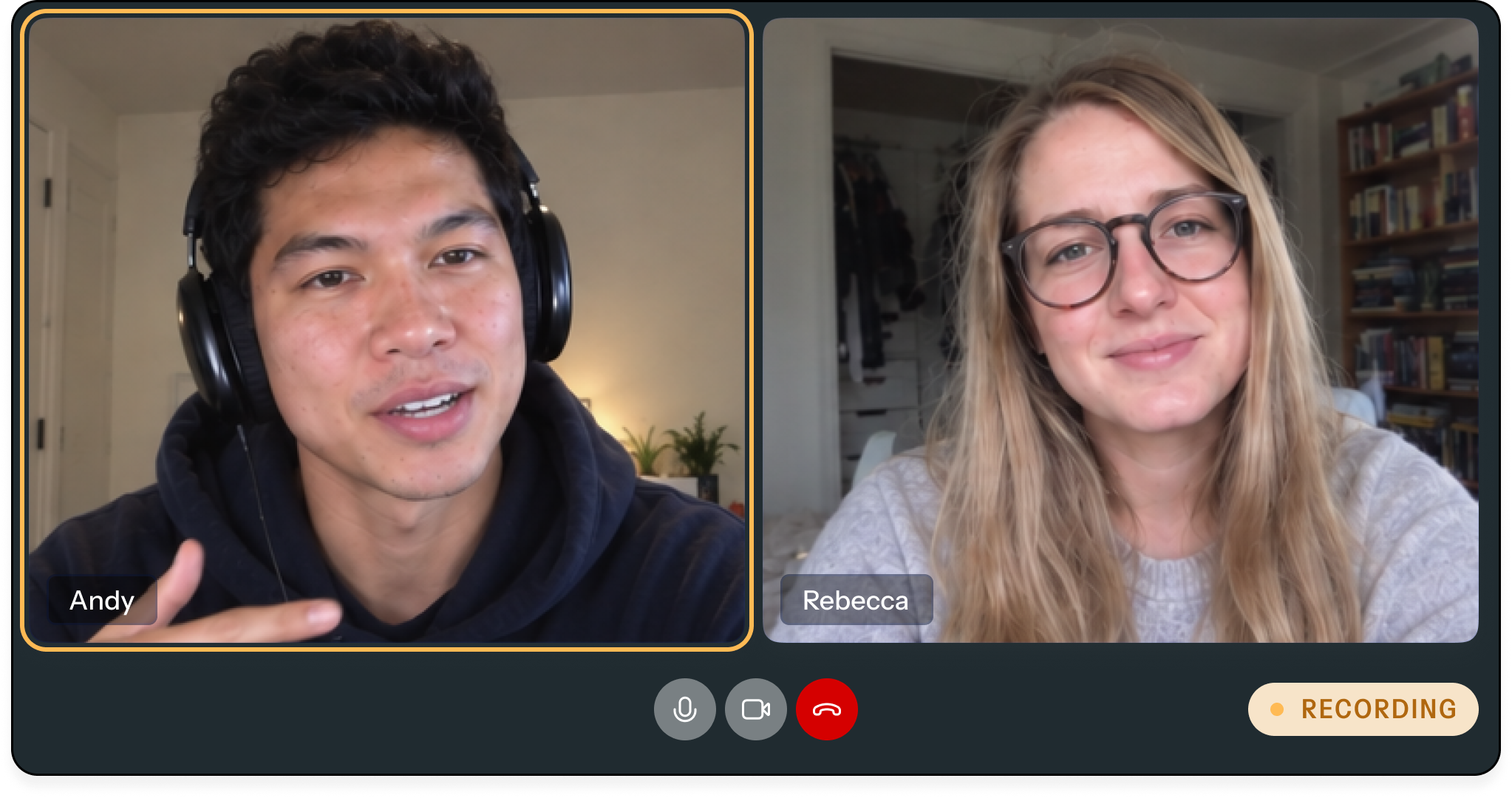
Peer FeedbackBeta
Reviewed by candidates across the platform
Submit your recorded mocks to candidates across the platform and get honest, varied feedback. Reviewing other people's mocks teaches you just as much.
The question bank, and other candidates to practise with, all in one platform.
Medical Oncology ST3 Revision Platform • £144.99
Gain access to over 60 scenarios across both stations, and collaborate with other candidates through Study Groups, Live Mocks and Peer Feedback.
The Revision Platform, plus the Medical Oncology ST3 Knowledge Course. A model answer shows you how to structure your response, while each Knowledge Course module teaches one oncology topic in depth, so you can keep going when the panel asks challenging follow-up questions.
A few of the candidates who prepared with us for the Medical Oncology ST3 interview.
Verified candidateInterviewed 2026
"The clinical scenarios were pitched exactly right. Having a structure ready meant I could work through an oncological emergency calmly under pressure."
Secured first-choice deanery
Verified candidateInterviewed 2026
"Practising the research and suitability questions out loud with other candidates was the single most useful thing I did before the day."
Ranked highly
Part 1 • See the questions
The Medibuddy 2027 Medical Oncology ST3 Question Bank
The interview has two stations with four questions and takes about 30 minutes, so you have a limited window to deliver the high-scoring answers you need to do well. That means every point has to land, and knowing how to structure each answer is essential. That's why each of our 60-plus scenarios comes with a model answer, written by candidates who scored highly in the 2026 Medical Oncology ST3 interview, so you know exactly how to approach every question the interviewers throw your way.
What's inside
What's included in the Medical Oncology ST3 Question Bank
There's nothing worse than getting to the interview and being handed a scenario you've never seen before. The panel can draw on clinical, ethical, suitability and research themes across both stations, so the safest approach is to revise across all of them. We provide scenarios for every part of the interview, including the common ones and the more unusual cases that have come up before, so you don't get caught out.
Clinical Scenarios
Oncological presentations and emergencies where you play the registrar, each with a worked answer showing how to structure your response.
Ethics, Professionalism & Governance
Questions based on GMC principles, covering consent, capacity, patient safety and professional conduct, with structured model answers so you can reason through them on the day.
Suitability & Commitment
Your chance to build on your application and show your motivation for medical oncology and why you're suited to ST3, with example questions and model answers.
Research & Academic Medicine
A discussion of research and academic medicine, covering the costs, challenges and benefits of research, with model answers so you can speak about it with confidence.
Reflecting how medical oncology is really assessed
Our scenarios and model answers are written to reflect the current interview structure.
Try it
Try an example Medical Oncology ST3 question
You are the on-call oncology registrar. The emergency department refers a 55-year-old woman with known metastatic breast cancer. Over the past week she has developed worsening back pain, lower limb weakness and urinary incontinence.
How would you approach this?
Question
What is your initial assessment and differential?
Example answer
I would first exclude anything hyperacute with an A to E assessment, then take a focused history and a neurological examination of motor and sensory function, reflexes and sphincter function.
My main concern is malignant spinal cord compression, and I would treat her as having an unstable spine until an MRI and spinal stability are documented.
My differential also includes vertebral metastases, a spinal epidural abscess, a spinal haematoma, and degenerative causes such as a herniated disc or spinal stenosis.
I would review her cancer type and treatment history to gauge the likelihood of metastatic involvement.
Question
What investigations would you order?
Example answer
An urgent MRI of the whole spine to confirm the diagnosis and define the level and extent of any compression.
Bloods including full blood count, electrolytes, renal function, coagulation and inflammatory markers, to help exclude infection or other systemic causes.
A group and save, with crossmatch, in case intervention is needed.
Question
What immediate management would you start while awaiting definitive results?
Example answer
If MSCC is suspected, I would not wait for imaging to begin supportive treatment.
Start high-dose corticosteroids (dexamethasone) to reduce cord oedema, with a PPI for gastric protection.
Provide analgesia, including opioids if needed, and supportive measures: bed rest with spinal precautions, VTE prophylaxis, and bowel and bladder care.
Arrange urgent review by neurosurgery and clinical oncology to plan definitive treatment, surgical decompression or radiotherapy, once the MRI confirms the diagnosis and local policy is followed.
Question
What would your longer-term management involve?
Example answer
The focus shifts to treating the underlying malignancy and supporting her recovery.
Systemic therapy tailored to her breast cancer, such as chemotherapy, targeted therapy or hormonal therapy.
Palliative radiotherapy if not already given, to control local disease and relieve symptoms.
Regular follow-up with neurological assessment and imaging to monitor for recurrence.
Rehabilitation to improve mobility and function, alongside psychosocial support.
Question
How would you communicate the findings and plan to her and her family?
Example answer
I would explain the findings and suspected diagnosis clearly and empathetically, making sure they understand the urgency.
Outline the immediate and longer-term options, discussing the benefits and risks of surgery, radiotherapy and systemic treatment.
Set realistic expectations about the recovery process, possible outcomes and the importance of rehabilitation.
Address their concerns and provide reassurance and emotional support throughout.
Question
What oncological factors guide surgical decompression, and what if the primary were unknown?
Example answer
For surgery, I would weigh several factors:
The tumour type: surgery is favoured for radioresistant tumours such as renal cell carcinoma, melanoma and sarcoma.
The metastatic burden, with oligometastatic disease more suitable, a life expectancy of at least three months, prior radiotherapy failure or recurrence, and whether systemic therapy can control the disease.
If the primary were unknown, I would work it up thoroughly: a CT of chest, abdomen and pelvis or a PET-CT, tumour markers, and a biopsy discussed with neurosurgery. I would assess her performance status, and if lymphoma were suspected I would avoid steroids until a biopsy is taken. This all needs an MDT approach with oncology, radiology and pathology.
That's one scenario. There are over 60 more.
Medical Oncology ST3 Revision Platform • £144.99
Includes every scenario in the Question Bank, and access to Study Groups, Live Mocks with other candidates and Peer Feedback.
Everything above, and the Medical Oncology ST3 Knowledge Course: 7 lectures covering the biology, presentation, investigation and management behind the clinical station, so you're ready when the questions go deeper.
The Medical Oncology ST3 interview changes from year to year, and the biggest fear for any candidate is getting to interview day and realising you've revised with a question bank that's totally outdated.
That's why we review and update every Question Bank twice a year, so you know you're revising with scenarios that are likely to come up. We do this in April after the previous year's interviews, and again in the autumn when the new recruitment guidance is published.
Updated for 2027 interviews
5 new clinical scenarios added.
12 scenarios updated: 10 clinical, 1 in Ethics, Professionalism and Governance, and 1 in Academic and Research.
Updated for 2027 Interviews
Part 2 • Practise them live
The only interview resource where you can practise live with other candidates from across the country
Our Medical Oncology ST3 Question Bank tells you exactly how to answer real interview scenarios. But how you practise with them will determine how many marks you score. Simply reading answers off a screen won't prepare you for the intense scrutiny you'll face in the interview. And only practising with the same few colleagues or friends limits the amount of feedback you'll get. Medibuddy gives you unique access to Medical Oncology ST3 candidates across the country, so you can learn from a variety of perspectives and hear a far wider range of feedback than your own circle could ever give you.
Study Groups
When you prepare in isolation, you're relying on your own interpretation of the interview process, which is one of the quickest ways to get found out on the day. Study Groups connect you with other doctors across the country who are also applying to Medical Oncology ST3, so you can engage and network with people preparing for the same interview as you. Everyone brings different experience from different hospitals and deaneries, meaning you won't ever miss out on the key bits of information that could swing the interview in your favour.
Live MocksBeta
Candidates who don't take part in mocks often struggle to adapt to the pressure of the interview. Your knowledge might be correct, but without convincing delivery the interviewers will score you poorly. The best way to improve your delivery is to take part in as many live mocks as possible, which is why we haven't put a cap on how many you can do. We also know how difficult it can be to organise mocks with other people, so all you have to do is join the waiting room and we'll match you with a different Medical Oncology ST3 candidate each time. Take turns as both the interviewer and candidate on real Question Bank scenarios, so you can see exactly how other candidates perform in real time, while refining your own interview technique.
Peer FeedbackBeta
Preparing alone means you won't know how you're coming across during the interview. And preparing with the same few candidates means you'll miss opportunities to improve, which is why it's so important to get as many opinions as possible on your performance. With Medibuddy, you can record a mock and submit it for feedback from other candidates on the platform, so you receive a wider range of feedback and refine your answers with each person you practise with. Reviewing other people's mocks is just as valuable, as it shows you how strong candidates handle the same scenarios, which is one of the fastest ways to improve.
Pick your plan
Choose the Revision Platform, the Knowledge Course, or both
The Revision Platform gives you access to the Question Bank and the chance to practise alongside other candidates, providing the foundation for your interview preparation. However, when you're doing well, interviewers will often throw in curve-ball questions to test the depth of your clinical knowledge. If you can't answer these questions, you won't get the top marks and your final ranking will suffer. The thing is, you can only answer them well if you really understand the topics, which is why we recommend adding our Medical Oncology ST3 Knowledge Course to your subscription (£44.99 saved if you buy both together).
What the Medical Oncology ST3 Knowledge Course covers
Cancer Biology and General PrinciplesRadiotherapy BasicsBreast CancerColorectal CancerPancreatic and Hepatobiliary CancerHead and Neck CancersOncological Emergencies
Every lecture covers:
Core clinical understanding
Presentation and recognition
Investigation and management principles
Safety considerations and complications
"The presentations were excellent for the purpose of interview preparation. The sessions covered the clinical aspects of the conditions covered."
Instant access on web and the Medibuddy app. The Revision Platform and the Bundle both include Study Groups, Live Mocks and Peer Feedback.
The interview
What to expect from the Medical Oncology ST3 interview
Medical oncology is a competitive specialty, and strong applicants are often separated by narrow margins at interview.
Station 1
Clinical Scenario
You’re given a brief clinical scenario and questioned on your next steps, including potential treatments and how you would communicate. Start with a safe, systematic approach before moving to more specialist management, and be ready to explain when you would escalate.
Station 1
Ethics, Professionalism & Governance
An ethical, professional or governance question based on GMC principles. Explain your reasoning, refer to relevant guidance, and show how you would handle the situation safely and professionally.
Station 2
Suitability & Commitment
You’ll build on your application and be asked about your motivation for medical oncology and why you’re suited to ST3. Go beyond listing achievements and show how your experience demonstrates your commitment.
Station 2
Research & Academic Medicine
A general discussion of research and academic medicine. Be ready to talk about the costs, challenges and benefits of research, even though you don't get information in advance.
How the interview is scored
The questions are marked against the Medical Oncology ST3 person specification. Our model answers are structured against those criteria, so you know exactly what a strong, well-organised answer looks like at each station.
Get ready
How to prepare for the Medical Oncology ST3 interview
Start with the Question Bank
Work through over 60 scenarios across both stations, each with a worked answer from a candidate who scored well in the 2026 interview. Start by reading how a strong answer is formed, then think about how you'd deliver it.
Talk the hard ones through in Study Groups
Study Groups are your biggest opportunity to network and connect with other candidates sitting the same interview as you. Everyone on the platform is in the same boat, so don't be scared to get involved and ask questions. Someone in your study group might just help you work through a scenario you've been struggling with.
Rehearse out loud in Live Mocks
Live mocks are where you begin to put everything you've learned into practice, and we know from experience that those who practise with a wide range of candidates usually do the best. Organise mocks with people from one of your study groups, or get matched with a random Medical Oncology ST3 candidate, then take turns as interviewer and candidate using real scenarios until answering out loud under pressure feels normal.
Get reviewed with Peer Feedback before the day
Once you've recorded a mock, you can have other community members review it. This lets you see how you come across to other people, and gives you time to refine your delivery as you revise, rather than being caught out on the day. Reviewing other people's mocks is just as crucial, as you see how other candidates navigate the same scenarios.
Build the clinical depth behind your answers
When a panel pushes past your first answer, real clinical knowledge is what carries you. The Medical Oncology ST3 Knowledge Course teaches the oncology topics tested in the clinical station in depth, so add it if you want to be ready for the follow-up questions as well as the scenarios themselves.
Questions
Frequently asked questions
What does the Medical Oncology ST3 interview involve?
Two stations with four questions, taking around 30 minutes in total. Station 1 covers a Clinical Scenario and an Ethics, Professionalism and Governance question based on GMC principles. Station 2 covers Suitability and Commitment, and a discussion of Research and Academic Medicine.
How competitive is the Medical Oncology ST3 interview?
Competitive. Strong candidates are frequently separated by small margins at interview, which is why a structured, well-rehearsed approach matters.
Who writes the model answers?
High-scoring candidates who sat the Medical Oncology ST3 interview in 2026, so the answers reflect what came up and what scored this year.
Can I practise with other candidates?
Yes. Every Revision Platform purchase gives you the opportunity to connect with other candidates through Study Groups, Live Mocks and Peer Feedback.
How do the Live Mocks work?
All you have to do is join the waiting room, and we match you with another Medical Oncology ST3 candidate. You then take turns as interviewer and candidate on real Question Bank scenarios, so you gain experience answering out loud to a real person before you ever sit in front of the panel.
What are Study Groups and how do they help?
Study Groups are community forums for doctors across the country preparing for the same Medical Oncology ST3 interview. You can ask questions, share what you're struggling with, and compare how you'd approach a scenario.
Can I get feedback on my interview performance?
Yes. After you've recorded a mock, you can ask other members to review it, so you can see which part of your answer needs fine-tuning.
How do you keep the Medical Oncology ST3 Question Bank up to date?
We review and update it twice a year: in April after that year's interviews, and again in the autumn when the new recruitment guidance is published, so you always practise with the current two-station format.
How long do I get access for?
Access runs for 12 months from the purchase date.
What's the difference between the Question Bank and the Medical Oncology ST3 Knowledge Course?
The Question Bank is over 60 practice scenarios with worked answers and all the live-practice features. The Medical Oncology ST3 Knowledge Course provides the clinical depth behind your answers, with around 4 hours of content across 7 video lectures on the topics tested in the clinical station. Most candidates use both, and the Bundle saves £44.99.
Start preparing for the Medical Oncology ST3 interview
The Revision Platform gives you over 60 scenarios to practise and refine with other candidates through Study Groups, Live Mocks and Peer Feedback.



 Close
Close




 Cancer Biology and General Principles
 Core clinical understanding
 Presentation and recognition
 Investigation and management principles
 Safety considerations and complications

