Close
Close
 2nd October 2026
Complete Guide to Sport and Exercise Medicine ST3 Application and Recruitment (2026)
Written by Medibuddy. Last updated: October 2026.
Sport and Exercise Medicine ST3 is one of the few higher specialties you can enter from emergency medicine or general practice as readily as from internal medicine for the 2027 application round. It is a PHST Group 2 specialty entered at ST3, with four years of training (ST3 to ST6) to CCT across musculoskeletal medicine, exercise medicine and pitch-side care. Competition is sharp for a small intake: 107 applications for 12 posts in the last published round.
This guide covers the 2027 application process, including eligibility, self-assessment scoring, portfolio evidence and verification, how national recruitment works, and the practical steps to submit a strong application.
When you’re ready to prepare for the interview itself, the Sport and Exercise Medicine ST3 Interview Question Bank has the full structure and practice scenarios.
Here are the key facts.
Key Facts at a Glance
- Competition ratio (2025): 8.9:1 (107 applications, 12 posts)
- Training length: Four years (ST3 to ST6) to CCT
- Entry routes and exams (2027): IMT with MRCP(UK) Part 1; EM via ACCS EM; GP with MRCGP
- Recruitment platform: Oriel (applications); recruitment coordinated by PHST nationally.
- 2026 interview date: 17 March 2026; we’ll update when 2027 publishes
- Round 2: Not run since 2017; plan for a single annual round
Table of Contents
- Sport and Exercise Medicine ST3 Curriculum
- Sport and Exercise Medicine ST3 Eligibility Criteria and Entry Requirements
- How to Apply for Sport and Exercise Medicine ST3 National Recruitment
- Sport and Exercise Medicine ST3 Recruitment Timeline and Key Dates (2027)
- How Competitive Is Sport and Exercise Medicine ST3?
- How Sport and Exercise Medicine ST3 Applications Are Scored (2027)
- Sport and Exercise Medicine ST3 Self-Assessment and Portfolio: How to Maximise Your Score
- The Sport and Exercise Medicine ST3 Interview: A Brief Overview
- Sport and Exercise Medicine ST3 Offers, Preferencing and What Happens Next
- Frequently Asked Questions About Sport and Exercise Medicine ST3 Application
- Sport and Exercise Medicine ST3 Useful Resources
- Conclusion
Sport and Exercise Medicine ST3 Curriculum
The GMC-approved 2021 Sport and Exercise Medicine curriculum, set by the Faculty of Sport and Exercise Medicine (FSEM UK), is capabilities-based. You progress by demonstrating the required Capabilities in Practice across musculoskeletal medicine, exercise medicine and team/event care, and by evidencing them in your e-portfolio. Expect to collect high-quality portfolio evidence through workplace-based assessments, reflective case write-ups, documented clinics and field-of-play experience, multi-source feedback, quality improvement and teaching activity, mapped directly to the curriculum outcomes. The FSEM specialty examination is a defined requirement during training, usually achieved by ST5.
Training is delivered by regional postgraduate deaneries (Schools of Medicine) under national oversight, with local Training Programme Directors coordinating placements and supervision. While the curriculum outcomes are the same everywhere, programmes differ in how they deliver them: rotations may include MSK clinics, rheumatology or orthopaedics attachments, exercise-testing services, and structured time with sports teams or national institutes. Scotland’s scheme, for example, includes a dedicated 12-month attachment to the Scottish Institute of Sport for elite-sport competencies, and national training days are shared across deaneries to support consistent teaching.
Note: The precise mix of placements, teaching days and portfolio tools is set locally within the national curriculum. Always review individual programme adverts for how a region structures delivery; we’ll update this page if national curriculum guidance changes.
Sport and Exercise Medicine ST3 Eligibility Criteria and Entry Requirements
If you’re applying for Sport and Exercise Medicine ST3 in 2027, here’s what you need to be eligible:
- Primary medical qualification and registration: You must hold an MBBS or equivalent primary medical degree, have full registration with the General Medical Council (GMC) at the time of application, and hold a licence to practise by the post start date.
- Internal Medicine entry route (physician background): You need the capabilities of year 2 of Internal Medicine Stage 1 (gained via UK Internal Medicine Training Stage 1, UK ACCS Internal Medicine, or a JRCPTB level 3 accredited equivalent). You must have MRCP(UK) Part 1 at application and the full MRCP(UK) diploma by the offer date. Alternatives within this route are eligibility for the GMC specialist register in General Internal Medicine at application, or completion of Irish Basic Specialty Training with full MRCPI by the offer date.
- Emergency Medicine entry route: You must demonstrate ACCS Emergency Medicine competences across 36 months at CT1 to CT3 level, including at least 12 months in Emergency Medicine, 3 consecutive months in Acute Medicine, 6 consecutive months in Anaesthesia, 6 consecutive months in Intensive Care Medicine, and 3 consecutive months in Paediatric Emergency Medicine. You must have MRCEM (or the stated alternative) by the offer date. Applicants without GMC-approved posts must provide the Alternative Certificate of Readiness to Enter Higher Emergency Medicine Specialist Training.
- General Practice entry route: You need at least 36 months whole-time equivalent experience in general practice (excluding the Foundation Programme) and full MRCGP by the post start date.
- English language proficiency: PHST’s English language guidance requires IELTS Academic with an overall 7.5 and at least 7.0 in each domain, or OET with grade B in each domain. Evidence that met GMC registration standards is usually acceptable.
- Right to work and immigration: You must be able to evidence the right to work in the UK by the time you take up post. Many successful international applicants use Skilled Worker visa sponsorship via the employing NHS trust.
- Locum Appointment for Training (LAT) experience cap: If applying for LAT posts, a 24-month cap on prior LAT experience in SEM applies.
- No surgical entry route: There is no Core Surgical Training or MRCS pathway into SEM ST3.
Note: The 2027 NHS England person specification for Sport and Exercise Medicine ST3 is the definitive standard for this round; we’ll update this page if NHS England issues any revisions during the cycle.
How to Apply for Sport and Exercise Medicine ST3 National Recruitment
The steps below reflect the 2026 PHST guidance and NHS England timetable for SEM. They’re a solid guide while you plan your 2027 application. We’ll update this page when the 2027 dates are released.
- Start by confirming eligibility. Before you do anything else, check you meet the entry requirements in our Eligibility for Sport and Exercise Medicine ST3 section. This saves wasted effort later.
- Create or update your Oriel profile. Applications run through Oriel (the national recruitment platform). Make sure your contact details and employment history are current, and set your communication preferences so you don’t miss deadlines.
- Gather evidence and complete your PHST self-assessment. You’ll claim points across the PHST domains and must upload supporting documents for every claim (for example, publication PDFs, conference certificates, degree transcripts, QI reports, leadership letters, and proof of the accepted basic specialty exam for your route). PHST provides pro formas for several domains. For the 2026 round, evidence upload opened the week commencing 22 December 2025. Once verified scores are released, there’s a short appeal window (usually around 72 hours) if you believe an item was mis-scored on the evidence.
- Complete and submit your application on Oriel. Ensure the PHST self-assessment and all required evidence uploads are included. You’ll usually enter referee details at this stage; references themselves are requested later in the process, not at submission.
- Submit before the deadline. In the 2026 round, applications opened at 10am on Thursday 20 November 2025 and closed at 4pm on Thursday 11 December 2025. Use these as planning markers for 2027; we’ll add the new dates when they’re published.
- Shortlisting and verification. PHST verifies your uploads and scores your application using the PHST self-assessment framework. For Sport and Exercise Medicine, shortlisting is based on the self-assessment; there isn’t a separate commitment-to-specialty score at this stage. See Self-Assessment & Portfolio for Sport and Exercise Medicine ST3 for what scores and how to evidence it.
- Preferencing and interview invite. When preferencing opens, rank all programmes you’re willing to accept. For 2026, interviews were held on 17 March 2026.
- Offers, references and pre-employment checks. Offers are released on Oriel based on your final ranked score. If you accept, you’ll complete pre-employment checks and references via Oriel and your employing trust.
- If you’re unsuccessful: feedback, appeals and reapplication. PHST issues feedback (including your verified self-assessment and interview scores). You can appeal verified self-assessment outcomes on evidential grounds within the stated window, and there’s a formal complaints/appeals route for process issues. There’s no stated cap on the number of times you can apply at ST3; many candidates strengthen specific domains and reapply in a later round.
Note: Plan for one annual round. SEM did not run a Round 2 in 2026 and has not taken part in one since 2017.
Sport and Exercise Medicine ST3 Recruitment Timeline and Key Dates (2027)
Although the 2027 timetable isn’t out yet, the 2026 Round 1 dates are a useful guide when planning your 2027 application. NHS England’s recruitment timelines and the PHST Sport and Exercise Medicine specialty page set out the key milestones below. We’ll update this page as soon as the 2027 dates are released.
| Stage | Date |
|---|---|
| Applications open | 20 November 2025 at 10am |
| Applications close | 11 December 2025 at 4pm |
| Evidence upload | Week commencing 22 December 2025 |
| Interview window | 5 January to 10 April 2026 |
| SEM ST3 interview date | 17 March 2026 |
| Shortlisting outcomes and interview invitations issued | By 10 March 2026 |
| Initial offers released | By 31 March 2026 |
Note: These dates reflect the 2026 Round 1 timetable for planning; the 2026 round did not include a Round 2. We’ll update this table when the 2027 timetable is published.
How Competitive Is Sport and Exercise Medicine ST3?
Sport and Exercise Medicine (SEM) is a small national intake with far more applicants than posts each year. NHS England publishes annual competition ratios, and the most recent figures show sustained high demand for a limited number of training numbers.
| Year (Round 1) | Applications | Posts | Competition ratio |
|---|---|---|---|
| 2025 | 107 | 12 | 8.9:1 |
| 2024 | 77 | 9 | 8.5:1 |
What this means for you
- Competition is intense and the margin between candidates is narrow. Your verified self-assessment and portfolio evidence need to be as strong as possible before applications open. See the guidance in our Self-Assessment & Portfolio section.
- Posts are few and they fill. NHS England fill-rate data show 100% fill in England in 2023 (9/9) and 2024 (9/9), with Scotland also filling its small allocation in 2025 (2/2). Plan on being appointable in the single main round rather than relying on a later top-up.
- Year-to-year variability in absolute post numbers is normal in a small specialty. Even when posts increase slightly, applicant interest has kept pace, so a high-quality application remains the decisive factor.
How Sport and Exercise Medicine ST3 Applications Are Scored (2027)
Preparing your SEM application is much easier once you know the scoring framework. National Selection for SEM uses the Physician Higher Specialty Training (PHST) self-assessment matrix to shortlist, and then combines your verified application score with your interview score for final ranking. PHST’s application scoring page sets out the nine domains and their maxima, and the SEM specialty page confirms how the application and interview are weighted overall.
Note: The 2027 scoring guidance has not yet been published. The 2026 PHST matrix below is a reliable planning guide and we’ll update this page as soon as the 2027 detail is released.
Self-assessment domains and maxima
The PHST matrix lists the following domains and their maximum scores for SEM:
| Domain | Maximum points |
|---|---|
| MRCP(UK) or accepted alternative examination | 8 |
| Publications | 8 |
| Presentations and posters | 6 |
| Teaching experience | 5 |
| Postgraduate degrees and qualifications | 4 |
| Quality improvement (QI) and audit | 4 |
| Leadership and management | 4 |
| Additional achievements (e.g. prizes, distinctions) | 3 |
| Training in teaching | 3 |
PHST states the verified self-assessment is worth 40 of the 60 shortlisting marks. Do not add the domain maxima to quote a “total”; PHST verifies and caps the shortlisting score.
How the self-assessment feeds into the final score
- Shortlisting: SEM does not use a separate “commitment to specialty” score at shortlisting; candidates are shortlisted purely on the verified self-assessment score from the domains above, as confirmed on the PHST SEM specialty page.
- Final ranking: At offer stage, SEM weights the interview at 80 and your application at 20, for a total of 100. In other words, your portfolio gets you to interview and still contributes 20% of the final outcome, while the interview decides the majority of your rank.
When you’re ready to prepare for the interview itself, the Sport and Exercise Medicine ST3 Interview Question Bank has scenario questions with model answers, put together by high-scoring trainees.
A couple of quick pointers
- Training in teaching: PHST awards 1 point for completing a live “Teach the Teacher” style course lasting at least six hours. If you need this, our Teach the Teacher live course meets the requirement.
- Evidence and verification: Everything you claim must be supported with documents that match the PHST descriptors for each domain. We cover what counts and how to upload it in the Self-Assessment and Portfolio section that follows.
Sport and Exercise Medicine ST3 Self-Assessment and Portfolio: How to Maximise Your Score
If you’re aiming for SEM in 2027, your portfolio is your engine room. PHST uses a verified self-assessment to shortlist and it also contributes to your final ranking. The 2026 PHST matrix lists nine scored domains with published maxima; point bands and wording can shift slightly year to year, and we’ll update this page as soon as the 2027 scoring is published.
How to score in each domain
- Membership exam (max 8): You score for holding the relevant membership exam for your entry route (for example MRCP(UK) on the Internal Medicine route, MRCEM on Emergency Medicine, or MRCGP on General Practice). Upload your pass letter or certificate. The 2027 person specification requires MRCP(UK) Part 1 at application and the full MRCP(UK) diploma by the offer date for the Internal Medicine route.
- Publications (max 8): Peer-reviewed publications score highest. Provide the journal citation and proof of authorship; acceptance emails are acceptable if the paper is in press.
- Presentations and posters (max 6): Oral presentations at national/international level usually outscore posters and local meetings. Include the conference programme page or letter confirming your role.
- Teaching experience (max 5): Regular, structured teaching with evidence of planning and feedback scores most. Upload a timetable, slides, and anonymised feedback summaries.
- Training in teaching (max 3): A live “Teach the Teacher” style course of at least six hours attracts 1 point. Our live Teach the Teacher course meets this requirement; upload the certificate showing contact hours.
- Postgraduate degrees and qualifications (max 4): Higher degrees (PGCert/PGDip/MSc), especially in SEM, education or research methods, score. Provide certificates and transcripts where relevant.
- Quality improvement (max 4): Closed-loop QI or audit with measurable impact scores best. Include the project plan, data before/after, your role, and sign-off from a supervisor.
- Leadership and management (max 4): Roles with responsibility (e.g. rota lead, trainee rep, committee posts, event medical lead) need a letter outlining your scope and outcomes.
- Additional achievements (max 3): Prizes, competitive scholarships or distinctions count. Upload award letters that name you and the awarding body.
Evidence and verification
Your self-assessment is checked against documents you upload during the PHST evidence window. Evidence must clearly show your name, the exact date, level (local/regional/national/international) and your role. Claims without robust proof are reduced to the verified level or scored zero. Publications need a DOI or acceptance email; presentations need a programme; QI needs the report and sign-off; degrees and exams need certificates.
Common places candidates lose easy points
- Missing acceptance proof: Posters and oral presentations need a programme page or acceptance email with your name and title.
- Unclear authorship/order: Publications must show your name and authorship position; a PubMed link or journal PDF avoids queries.
- QI without closure: Describing a plan without re-audit usually scores lower; demonstrate change and impact with data.
- Teaching with no feedback: Regular sessions but no feedback or timetable evidence attract reduced marks.
- Leadership without scope: “Trainee rep” alone is weak; include a letter describing responsibilities and tangible outcomes.
Actions to build before applications open
- Plan a closed-loop QI now. Choose a feasible SEM-relevant topic (e.g. MSK imaging pathways), collect baseline data, intervene, and re-measure.
- Secure regular teaching. Set up a monthly MSK/SEM teaching series and collect standardised feedback.
- Book a recognised teaching course.
- Target one publishable output. Convert a completed audit, case series or short report into a submission and keep acceptance emails.
- Broaden SEM exposure. While PHST does not publish minimum week counts, showing breadth across MSK clinics, exercise medicine and team/event care reads strongly. We’ll update if 2027 descriptors add duration thresholds.
Note: There’s no published “sole-application” bonus for SEM; focus on scoring domains rather than restricting your application.
The Sport and Exercise Medicine ST3 Interview: A Brief Overview
SEM uses a structured national interview as part of the PHST selection process. For the full format, scoring and realistic practice scenarios, use the Sport and Exercise Medicine ST3 Interview Question Bank.
Sport and Exercise Medicine ST3 Offers, Preferencing and What Happens Next
When you get to the post-offer stage, the mechanics are straightforward once you know what to expect. Here’s how it generally runs from interview to start date.
- Preferencing. Before offers are released, you’ll rank all available regions/locations in Oriel. This list drives both your initial match and any later movement through upgrades, so take time to order every post.
- Offer mechanism. Offers are made in strict rank order of overall score, matching each candidate to the highest-ranked preference still available. With small national cohorts in SEM, a single decline can free up popular posts.
- Responding to an offer. You’ll choose to accept, hold or decline within the stated response window on Oriel. The hold option lets you keep the offer during the hold-down period while you see if something higher on your list becomes available.
- Upgrades. If you opt in to upgrades when you hold or accept, Oriel will automatically move you to a higher-preferenced post if one opens up later, without prior notification. If you don’t opt in, your allocation stays as is.
- End of the hold-down period. When the hold deadline passes, you must accept or decline. Upgrades continue until the published upgrade deadline for the round, so if you have opted in, Oriel will still move you automatically when a higher preference becomes available.
- Post-allocation and onboarding. Your training region will contact you with pre-employment checks, contract paperwork and induction details ahead of the August start.
Note: Exact response windows and upgrade deadlines are set on Oriel each round. PHST has not yet published the 2027 timetable; we’ll update this page when it is released.
Frequently Asked Questions About Sport and Exercise Medicine ST3 Application
How many posts are available and do regions differ?
SEM is a small national intake. Post numbers are limited and can change during a round; PHST notes that post numbers typically rise 20 to 40% during the process. There isn’t a published deanery-level competition breakdown for SEM; preferencing opens later in the process and distribution varies year to year.
What are the eligibility requirements for Sport and Exercise Medicine ST3?
SEM is a PHST Group 2 specialty entered at ST3 after prior core training. Physician-route applicants need the capabilities of year 2 of Internal Medicine Training Stage 1 (or an accepted equivalent) and the required examinations. The other two routes are Emergency Medicine via ACCS Emergency Medicine, and General Practice with full MRCGP. There is no Core Surgical Training or MRCS route into SEM ST3. The 2027 NHS England person specification sets the UK-wide requirements.
Which exams do I need for SEM ST3?
Your exam depends on the route. Internal Medicine applicants need MRCP(UK) Part 1 at application and the full MRCP(UK) diploma by the offer date. Emergency Medicine applicants need MRCEM (or the stated alternative) by the offer date, and GP-route applicants need full MRCGP by the post start date. Always check the 2027 person specification for accepted alternatives and exact timing on your route.
How does the SEM ST3 application process work?
Applications run through a single national round coordinated by Physician Higher Specialty Training (PHST) and submitted via Oriel. You’ll complete the application form, select self-assessment options, and upload evidence for verification. Preferencing of programmes is done in Oriel and used to allocate posts after interviews and ranking. Plan for one annual round; the 2026 cycle did not include a Round 2.
How is shortlisting and scoring done for SEM ST3?
Shortlisting is based on the PHST self-assessment you submit and the evidence that verifies it. PHST states the verified self-assessment contributes 40 of the 60 shortlisting marks. SEM does not score “commitment to specialty” at shortlisting; that’s assessed later at interview. Your verified self-assessment also carries forward into the final application score used for offers.
What scores well on the SEM ST3 self-assessment?
Nine domains are scored. Key maxima include MRCP(UK) or accepted alternative exam (up to 8), Publications (up to 8), Presentations and posters (up to 6), Teaching experience (up to 5), Quality improvement (up to 4), Leadership and management (up to 4), Postgraduate degrees (up to 4), Additional achievements (up to 3), and Training in teaching (up to 3). A live Teach the Teacher course of at least six hours scores 1 point in the training domain.
Can I reapply to SEM ST3 if I’m unsuccessful?
Yes. You can apply again in a future round. Prior attempts don’t disadvantage you, and previous scores don’t carry over. Use feedback to strengthen your self-assessment domains, add verifiable evidence (e.g. submit manuscripts, complete QI cycles), and ensure currency of competencies from Internal Medicine Training or your alternative route.
How do offers, preferencing and upgrades work for SEM ST3?
After interviews, offers are issued in rank order and matched to your Oriel preferencing. If you opt into upgrades when holding or accepting, Oriel will automatically move you to a higher-ranked preference if one becomes available later, without prior notification. If you don’t opt in, you’ll keep your original offer unless you actively change it.
Sport and Exercise Medicine ST3 Useful Resources
When you’re planning and evidencing your 2027 application, these are the core, official links worth bookmarking:
- PHST Sport and exercise medicine (specialty page): lead recruiter guidance, timetable notes and competition data.
- Sport and Exercise Medicine ST3 Person Specification (2027): essential and desirable entry criteria.
- Sport and Exercise Medicine ST3 Interview Question Bank: station-by-station breakdown and realistic practice scenarios from high-scoring trainees.
Conclusion
SEM ST3 is competitive, but there’s a clear path if you focus on what moves the dial: nail the Group 2 entry requirements and maximise your PHST self-assessment with solid, verifiable evidence. We’ve covered how the nine-domain portfolio is scored and what to upload so you don’t leave easy points on the table. With only a few points between candidates, an extra self-assessment mark can make a real difference.
When you’re ready to prepare for the interview itself, work through the Sport and Exercise Medicine ST3 Interview Question Bank for scenario questions with model answers, written by high-scoring trainees.
Take your subscriptions with you
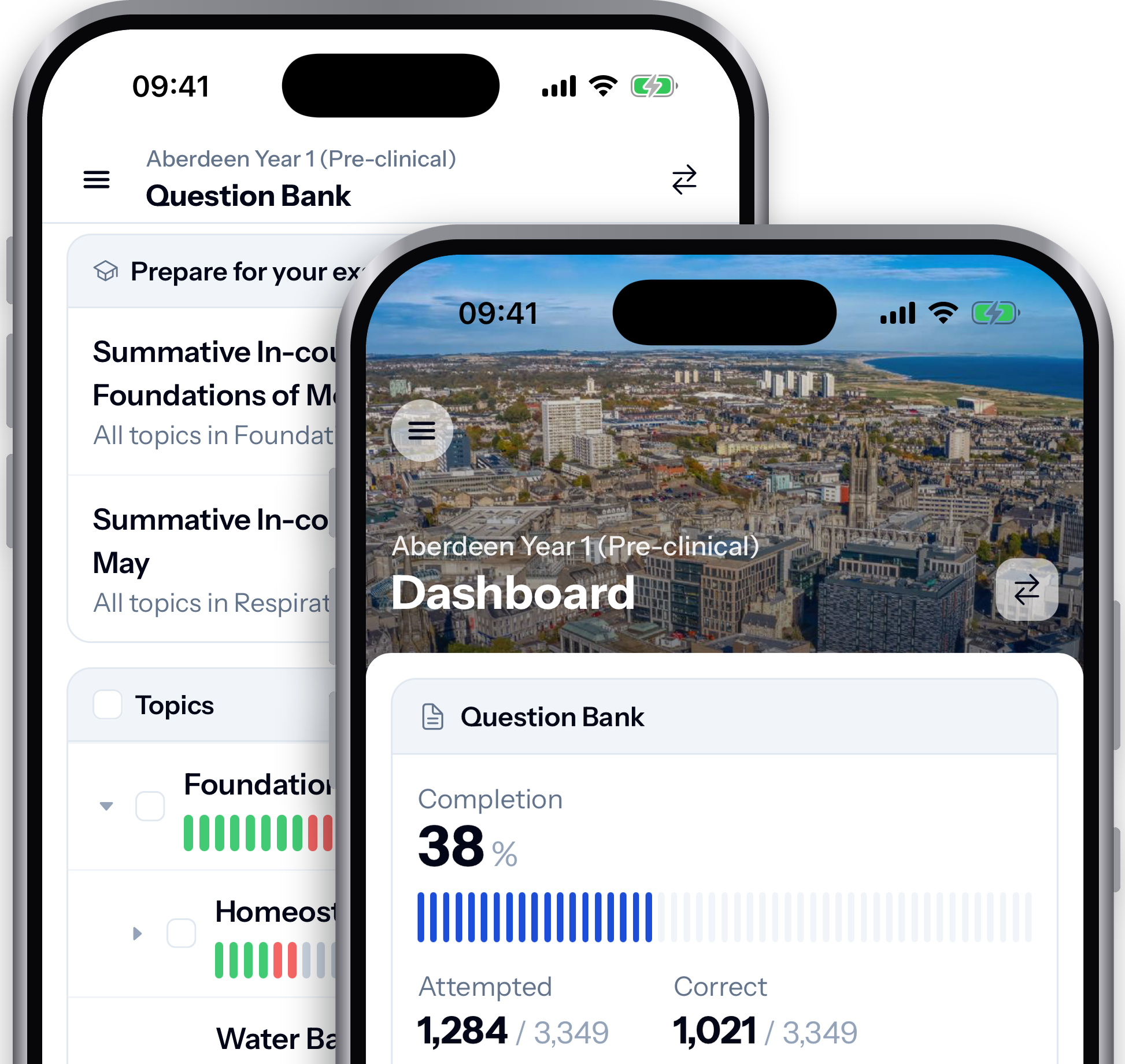
Our mobile app allows you to access your interview and exam question banks wherever you are.