The 2027 Geriatric Medicine ST4 Interview Revision Platform: Question Bank, Live Practice and Mocks with Other Candidates
The Medibuddy Geriatric Medicine ST4 Question Bank includes over 40 scenarios that closely mirror the real interview, each with a model answer written/edited by high-scoring candidates who sat the Geriatric Medicine ST4 interview in 2026.
However, knowing a strong answer isn't the same as delivering it well under pressure, which is why we provide:
Study Groups with candidates across the country
Unlimited Live Mocks with real people
Peer Feedback on your mocks from a wide range of candidates
10 years’ experience preparing doctors for interviews
Users of the Medibuddy Geriatric Medicine ST4 Revision Platform have secured some of the most competitive training jobs in recent rounds. Ask around, there's a good chance the trainees in the year above you used us too.
Always up to date
Did you know the interviews change every year? That's why we review and update every Question Bank on the platform twice a year, so you know you're always practising with scenarios based on the latest interview structure.
Network and practise real interview scenarios with other candidates
Question Bank
See every scenario, and how to answer it well
Over 40 scenarios across every station, which tell you exactly how to respond to each question.
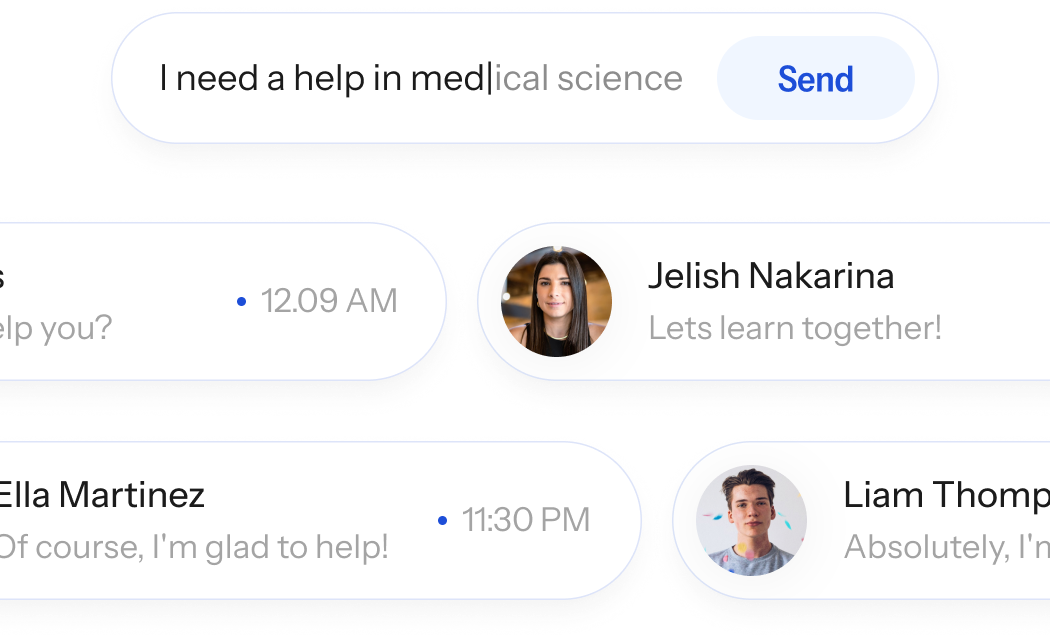
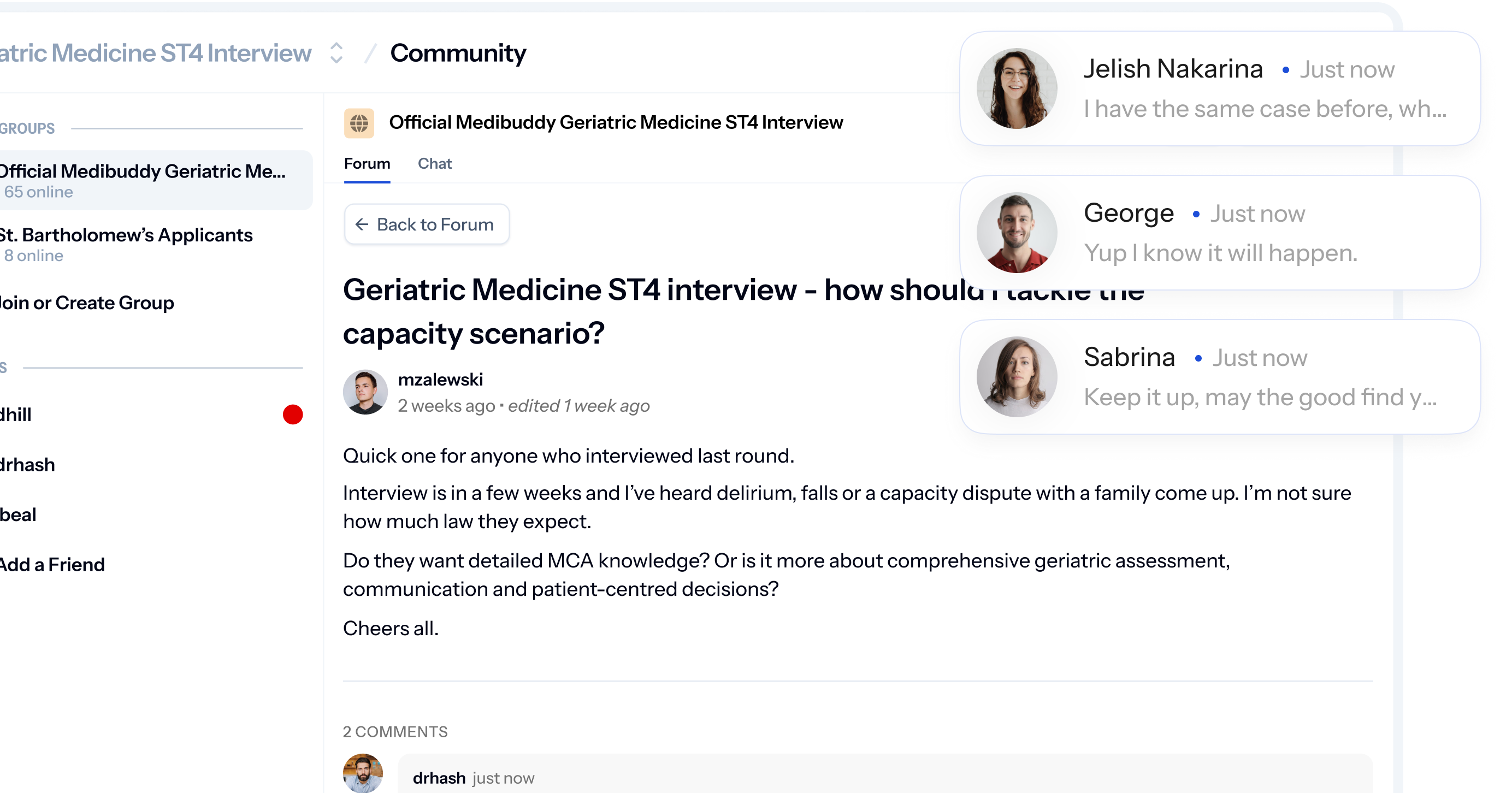
Study Groups
Connect with candidates across the country
Most people only ever practise with one or two friends. Study Groups connect you with candidates right across the country sitting the same Geriatric Medicine ST4 interview.
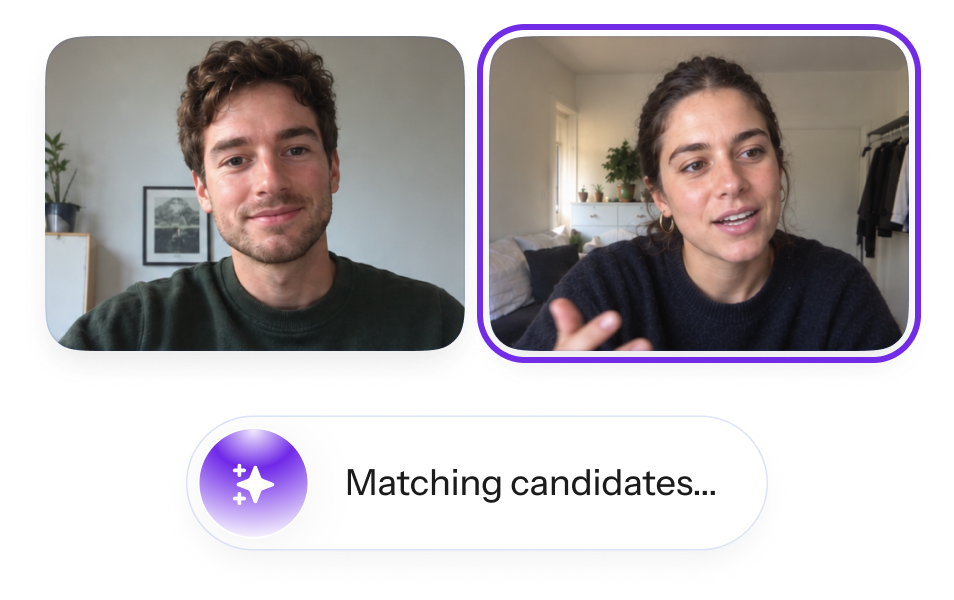
Live MocksBeta
Practise interview technique with different candidates
Arrange or get matched on demand with other candidates and run real scenarios out loud under interview conditions. Those who practise with the widest range of people tend to score the highest.
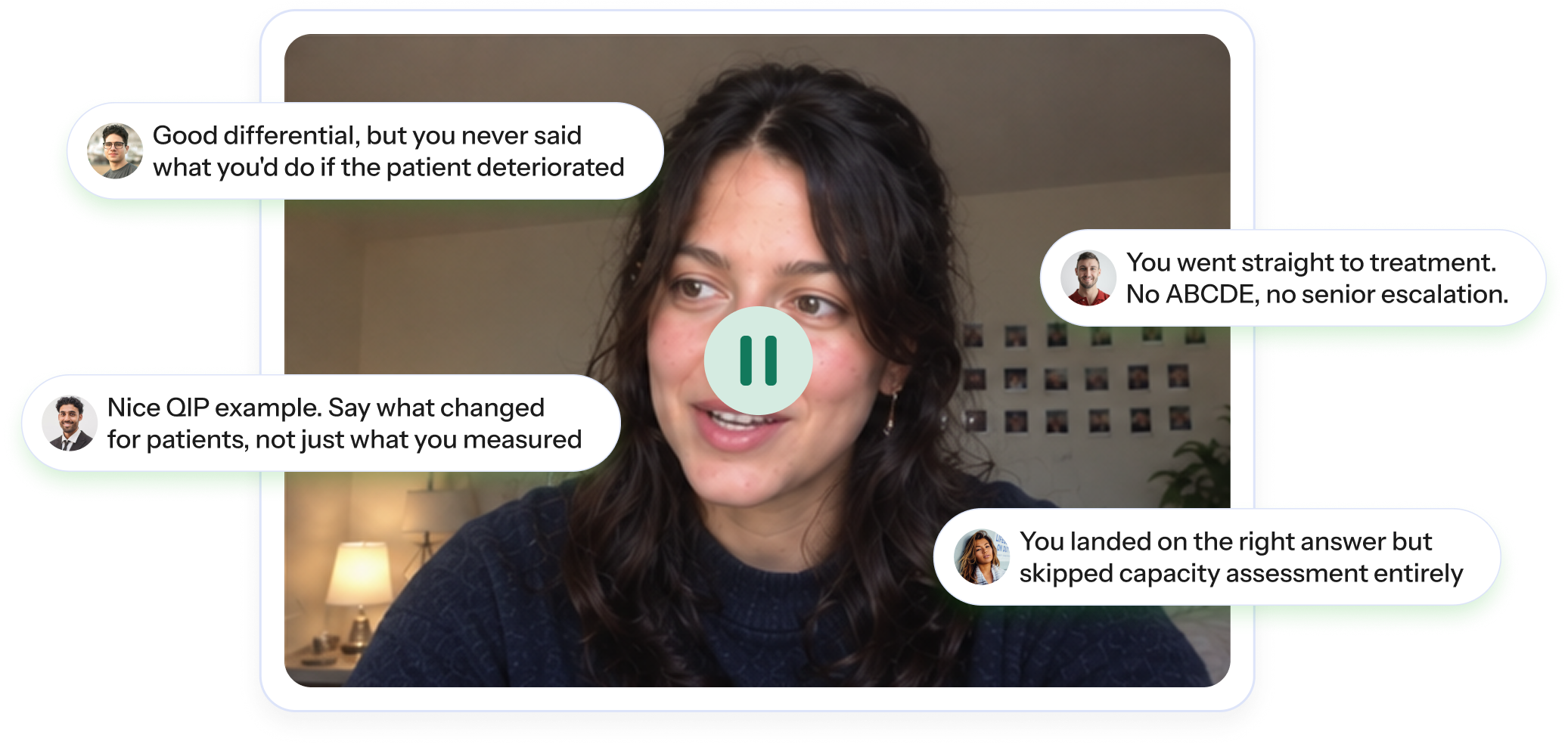
Peer FeedbackBeta
Reviewed by candidates across the platform
Submit your recorded mocks to candidates across the platform and get honest, varied feedback. Reviewing other people's mocks teaches you just as much.
The question bank, and other candidates to practise with, all in one platform.
Geriatric Medicine ST4 interview prep has two parts
The Revision Platform gives you the questions, this year's model answers, and other candidates to practise them out loud with. The Geriatric Medicine ST4 Knowledge Course teaches the clinical topics behind those answers, so when the panel pushes past your first response in the clinical station, you've got somewhere to go. Most candidates take both.
Geriatric Medicine ST4 Revision Platform • £144.99
Gain access to over 40 scenarios across every station, and collaborate with other candidates through Study Groups, Live Mocks and Peer Feedback.
The Revision Platform, plus the Geriatric Medicine ST4 Knowledge Course. A model answer shows you how to structure your response, while each Knowledge Course module teaches one geriatric topic in depth, so you can keep going when the panel asks challenging follow-up questions.
A few of the candidates who prepared with us for the Geriatric Medicine ST4 interview.
Verified candidateInterviewed 2026
"The clinical scenarios were pitched exactly right. Having a structure ready meant I could work through a frailty and delirium case calmly under pressure."
Secured first-choice deanery
Verified candidateInterviewed 2026
"Practising the ethical and registrar questions out loud with other candidates was the single most useful thing I did before the day."
Ranked highly
Part 1 • See the questions
The Medibuddy 2027 Geriatric Medicine ST4 Question Bank
The interview has two stations and lasts around 30 to 40 minutes, and each part is tightly timed, so you only have a limited window to deliver the high-scoring answers you need to do well. That means every point has to land, and knowing how to structure each answer is essential. That's why each of our 40-plus scenarios comes with a model answer, written by candidates who scored highly in the 2026 Geriatric Medicine ST4 interview, so you know exactly how to approach every question the interviewers throw your way.
What's inside
What's included in the Geriatric Medicine ST4 Question Bank
There's nothing worse than getting to the interview and being handed a scenario you've never seen before. The panel can draw on clinical, ethical, suitability and registrar themes across the stations, so the safest approach is to revise across all of them. We provide scenarios for every part of the interview, including the common ones and the more unusual cases that have come up before, so you don't get caught out.
Clinical Scenarios
Frailty, falls, dementia, delirium, end-of-life and polypharmacy scenarios, each with a worked answer showing how to structure your response.
Ethical Scenarios
Realistic questions on capacity, consent, best interests and end-of-life decisions, with structured model answers so you can reason through them clearly on the day.
Suitability & Commitment
Your chance to show your motivation for geriatric medicine and why you're suited to ST4, with example questions and model answers.
Medical Registrar Suitability
Opens with a one-minute presentation on the acute unselected medical take, then questions on your readiness to work as a medical registrar. We provide prompts and model answers so you can prepare a focused, confident presentation.
Reflecting how geriatric medicine is really assessed
Communication is marked separately, so it runs through everything you say, and your raw scores are then weighted to rank offers. Our model answers are written with that in mind, alongside the clinical, ethical, suitability and registrar themes.
Try it
Try an example Geriatric Medicine ST4 question
An 84-year-old man, Mr Hartley, is admitted from his care home with a two-day history of confusion and agitation. Staff report he has been pulling at his catheter, refusing medications and shouting at night.
His background includes moderate vascular dementia, type 2 diabetes, atrial fibrillation and a previous ischaemic stroke. His medications include apixaban, bisoprolol, metformin and donepezil.
On arrival he is disorientated in time and place, restless and intermittently drowsy. Temperature 38.2, heart rate 98, blood pressure 134/82, SpO2 94% on air.
How would you approach this?
Question
How would you assess this patient?
Example answer
I would treat this as delirium superimposed on dementia until proven otherwise, and systematically look for the precipitant.
Collateral history: establish his baseline cognition and function from the care home and family, and the onset and nature of the change. Acute, fluctuating confusion suggests delirium.
Screen for precipitants: urinary symptoms (he has a catheter), respiratory symptoms, pain, constipation, urinary retention, recent procedures or falls, and any new drugs.
Medications: review for anticholinergic burden, opioids or benzodiazepines started in the care home.
Mental state: perform a 4AT to confirm and document delirium, noting inattention and fluctuation, and remembering that hypoactive delirium is easily missed.
Question
What would you look for on examination and investigation?
Example answer
I would examine and investigate for the likely precipitants.
Examination: signs of sepsis and hydration status; a respiratory exam for pneumonia or aspiration; inspect the catheter and urine and check for bladder distension; a neurological exam for new focal signs, keeping subdural haematoma in mind given the apixaban and his stroke history; plus skin, abdominal and cardiovascular exam.
First-line tests: urinalysis and culture (not over-diagnosing UTI on pyuria alone), blood cultures, FBC, U and E, LFTs, CRP, glucose, calcium and thyroid function, a chest X-ray and an ECG.
Second-line: a CT head if there is new focal neurology or suspected subdural, a blood gas if a respiratory cause is likely, and drug levels where relevant.
Question
His urine is cloudy and offensive, with a raised CRP and white cells and nitrites positive. How would you manage the delirium and its cause?
Example answer
This fits a catheter-associated UTI precipitating his delirium, and I would treat both together.
The cause: start IV antibiotics per local urosepsis protocol, change the catheter (biofilm harbours resistant organisms), reassess whether he still needs one, and optimise hydration with care given his cardiac history.
The delirium, non-pharmacological first: regular reorientation, glasses and hearing aids, good lighting and a clock, a consistent day-night routine, early mobilisation, and involving the care home for familiar contact.
Pharmacological only if needed: avoid sedation unless there is a risk of harm, and if essential use low-dose haloperidol per NICE NG193, with caution given his vascular dementia.
Rationalise his medications, and reconsider metformin during acute illness given the risk if he develops an AKI.
Question
The nursing staff want to give lorazepam overnight for his agitation. How would you respond?
Example answer
I would explain why lorazepam is not appropriate and agree a safe alternative with the team.
Benzodiazepines worsen confusion and over-sedation in delirium, increase falls, and can cause paradoxical disinhibition in older patients with dementia.
NICE NG193 advises against routine benzodiazepines in delirium, unless it is due to alcohol or benzodiazepine withdrawal, or antipsychotics are contraindicated.
I would reinforce non-pharmacological measures first: ensure he is pain-free, check for a blocked catheter, provide his glasses and hearing aids, a calm environment and one-to-one nursing if possible.
If sedation is genuinely needed to prevent harm, I would prescribe low-dose haloperidol with a clear indication, maximum dose and review, document it, and flag the rationale at handover.
Question
What preventive strategies should be in place for patients at risk of delirium?
Example answer
Prevention is core geriatric care, underpinned by NICE NG193.
Regular reorientation with a clock and whiteboard, and clear introductions.
Good hydration and nutrition, early mobilisation, and ensuring hearing aids and glasses are used.
Protect sleep by reducing nocturnal disturbance, and review medication to minimise anticholinergics, sedatives and polypharmacy.
Avoid unnecessary catheters, cannulas and ward moves, manage constipation and pain, and treat acute illness promptly.
Screen at-risk patients with a 4AT on admission, and repeat it with any acute change in cognition.
Question
He improves but remains more confused than his baseline, and the care home asks when he can return. How would you plan discharge?
Example answer
I would use an MDT approach and set realistic expectations.
Explain that delirium can persist for weeks to months, especially with underlying dementia, so an immediate return to baseline is unlikely.
Reassess his cognition and function against his documented baseline, with occupational therapy and physiotherapy input.
Reconcile his medications, complete the antibiotic course, reassess the catheter, and provide a clear written discharge summary for the care home.
Consider a discharge-to-assess pathway or intermediate care if he is not yet safe to return, review his ReSPECT form and frailty status with next of kin, and arrange GP and memory clinic follow-up.
That's one scenario. There are over 40 more.
Geriatric Medicine ST4 Revision Platform • £144.99
Includes every scenario in the Question Bank, and access to Study Groups, Live Mocks with other candidates and Peer Feedback.
Everything above, and the Geriatric Medicine ST4 Knowledge Course: 13 interactive modules covering the recognition, investigation and management behind the clinical station, so you're ready when the questions go deeper.
The Geriatric Medicine ST4 interview changes from year to year, and the biggest fear for any candidate is getting to interview day and realising you've revised with a question bank that's totally outdated.
That's why we review and update every Question Bank twice a year, so you know you're revising with scenarios that are likely to come up. We do this in April after the previous year's interviews, and again in the autumn when the new recruitment guidance is published.
For 2027, this process kept the Question Bank aligned with the current multi-station format, including the one-minute Medical Registrar Suitability presentation, so you always practise with the format the panel is using now.
Updated for 2027 Interviews
Part 2 • Practise them live
The only interview resource where you can practise live with other candidates from across the country
Our Geriatric Medicine ST4 Question Bank tells you exactly how to answer real interview scenarios. But how you practise with them will determine how many marks you score. Simply reading answers off a screen won't prepare you for the intense scrutiny you'll face in the interview. And only practising with the same few colleagues or friends limits the amount of feedback you'll get. Medibuddy gives you unique access to Geriatric Medicine ST4 candidates across the country, so you can learn from a variety of perspectives and hear a far wider range of feedback than your own circle could ever give you.
Study Groups
When you prepare in isolation, you're relying on your own interpretation of the interview process, which is one of the quickest ways to get found out on the day. Study Groups connect you with other doctors across the country who are also applying to Geriatric Medicine ST4, so you can engage and network with people preparing for the same interview as you. Everyone brings different experience from different hospitals and deaneries, meaning you won't ever miss out on the key bits of information that could swing the interview in your favour.
Live MocksBeta
Candidates who don't take part in mocks often struggle to adapt to the pressure of the interview. Your knowledge might be correct, but without convincing delivery the interviewers will score you poorly. The best way to improve your delivery is to take part in as many live mocks as possible, which is why we haven't put a cap on how many you can do. We also know how difficult it can be to organise mocks with other people, so all you have to do is join the waiting room and we'll match you with a different Geriatric Medicine ST4 candidate each time. Take turns as both the interviewer and candidate on real Question Bank scenarios, so you can see exactly how other candidates perform in real time, while refining your own interview technique.
Peer FeedbackBeta
Preparing alone means you won't know how you're coming across during the interview. And preparing with the same few candidates means you'll miss opportunities to improve, which is why it's so important to get as many opinions as possible on your performance. With Medibuddy, you can record a mock and submit it for feedback from other candidates on the platform, so you receive a wider range of feedback and refine your answers with each person you practise with. Reviewing other people's mocks is just as valuable, as it shows you how strong candidates handle the same scenarios, which is one of the fastest ways to improve.
Pick your plan
Choose the Revision Platform, the Knowledge Course, or both
The Geriatric Medicine ST4 Revision Platform gives you the Question Bank, the model answers and all the live practice. It covers the common questions that come up across both stations and shows you how to score highly on them.
However, if you're doing well, the interviewers will often probe further to test the depth of your clinical knowledge. It's usually how they decide whether to award the top mark, and these are the questions you can only answer well with a thorough understanding of the topic.
The clinical station rests on that depth. A model answer shows you how to structure your reasoning, but structure only takes you as far as your clinical knowledge goes.
That's what the Geriatric Medicine ST4 Knowledge Course is for: 13 interactive modules and around 6 hours on the geriatric topics the clinical station is built around.
The Knowledge Course is £89.99 on its own. Most candidates add it for £45 as part of the Bundle, which is £189.99 instead of £234.98, so you save £44.99 buying both together.
What the Geriatric Medicine ST4 Knowledge Course covers
DeliriumDementiaSyncope and orthostatic hypotensionUrinary incontinenceMalnutrition and dysphagiaPressure ulcers and immobilityStroke and TIAParkinson's diseaseOsteoporosis and fragility fracturesInfection and sepsisAcute kidney injuryHeart failure in frailtyAtrial fibrillation and anticoagulation
Every module moves through five stages:
The basics
Recognising it
Confirming the diagnosis
Managing it
What happens next
"Working through the questions in each stage made the topics stick far better than watching a lecture ever did."
Instant access on web and the Medibuddy app. The Revision Platform and the Bundle both include Study Groups, Live Mocks and Peer Feedback.
The interview
What to expect from the Geriatric Medicine ST4 interview
Geriatric medicine is a popular and competitive specialty, and strong applicants are often separated by narrow margins at interview.
Station 1
Clinical Scenario
A geriatric scenario, often frailty, falls, dementia, delirium, end-of-life or polypharmacy, assessing your clinical judgement and safe, structured management.
Station 1
Suitability & Commitment
You’ll be asked about your motivation for geriatric medicine and why you’re suited to ST4. Go beyond listing achievements and show how your experience demonstrates your commitment.
Station 2
Ethical Scenario
You’ll work through an ethical issue, which could involve capacity, consent, best interests or end-of-life care. Explain your reasoning, refer to relevant guidance, and show how you would handle it safely.
Station 2
Medical Registrar Suitability
You’ll start with a one-minute presentation on your experience of the acute unselected medical take, followed by questions on your readiness to work as a medical registrar.
How the interview is scored
The stations are marked against the Geriatric Medicine ST4 person specification, combined into a Raw Interview Score and then weighted to rank offers, with communication scored separately. Our model answers are structured against those criteria, so you know exactly what a strong, well-organised answer looks like at each station.
Get ready
How to prepare for the Geriatric Medicine ST4 interview
Start with the Question Bank
Work through over 40 scenarios across every station, each with a worked answer from a candidate who scored well in the 2026 interview. Start by reading how a strong answer is formed, then think about how you'd deliver it.
Talk the hard ones through in Study Groups
Study Groups are your biggest opportunity to network and connect with other candidates sitting the same interview as you. Everyone on the platform is in the same boat, so don't be scared to get involved and ask questions. Someone in your study group might just help you work through a scenario you've been struggling with.
Rehearse out loud in Live Mocks
Live mocks are where you begin to put everything you've learned into practice, and we know from experience that those who practise with a wide range of candidates usually do the best. Organise mocks with people from one of your study groups, or get matched with a random Geriatric Medicine ST4 candidate, then take turns as interviewer and candidate using real scenarios until answering out loud under pressure feels normal.
Get reviewed with Peer Feedback before the day
Once you've recorded a mock, you can have other community members review it. This lets you see how you come across to other people, and gives you time to refine your delivery as you revise, rather than being caught out on the day. Reviewing other people's mocks is just as crucial, as you see how other candidates navigate the same scenarios.
Build the clinical depth behind your answers
When a panel pushes past your first answer, real clinical knowledge is what carries you. The Geriatric Medicine ST4 Knowledge Course teaches the geriatric topics tested in the clinical station in depth, so add it if you want to be ready for the follow-up questions as well as the scenarios themselves.
Questions
Frequently asked questions
What does the Geriatric Medicine ST4 interview involve?
A two-station interview lasting about 30 to 40 minutes. Station 1 pairs a clinical scenario with a Suitability and Commitment question, and Station 2 pairs an ethical scenario with Medical Registrar Suitability, which opens with a one-minute presentation on the acute unselected take. Communication is marked separately.
How is the Geriatric Medicine ST4 interview scored?
Each station is scored and combined into a Raw Interview Score, which is then weighted out of 80 to determine your rank for offers, with communication marked separately across the interview.
Who writes the model answers?
High-scoring candidates who sat the Geriatric Medicine ST4 interview in 2026 and secured some of the most competitive jobs.
Can I practise with other candidates?
Yes. Every Revision Platform purchase gives you the opportunity to connect with other candidates through Study Groups, Live Mocks and Peer Feedback.
How do the Live Mocks work?
All you have to do is join the waiting room, and we match you with another Geriatric Medicine ST4 candidate. You then take turns as interviewer and candidate on real Question Bank scenarios, so you gain experience answering out loud to a real person before you ever sit in front of the panel.
What are Study Groups and how do they help?
Study Groups are community forums for doctors across the country preparing for the same Geriatric Medicine ST4 interview. You can ask questions, share what you're struggling with, and compare how you'd approach a scenario.
Can I get feedback on my interview performance?
Yes. After you've recorded a mock, you can ask other members to review it, so you can see which part of your answer needs fine-tuning.
How do you keep the Geriatric Medicine ST4 Question Bank up to date?
We review and update it twice a year: in April after that year's interviews, and again in the autumn when the new recruitment guidance is published, so you always practise with the current format.
How long do I get access for?
Access runs for 12 months from the purchase date.
What's the difference between the Question Bank and the Geriatric Medicine ST4 Knowledge Course?
The Question Bank is over 40 practice scenarios with worked answers and all the live-practice features. The Geriatric Medicine ST4 Knowledge Course provides the clinical depth behind your answers, with around 6 hours of content across 13 interactive modules on the topics tested in the clinical station. Most candidates use both, and the Bundle saves £44.99.
Start preparing for the Geriatric Medicine ST4 interview
The Revision Platform gives you over 40 scenarios to practise and refine with other candidates through Study Groups, Live Mocks and Peer Feedback.



 Close
Close





 Delirium
 The basics
 Recognising it
 Confirming the diagnosis
 Managing it

