Close
Close

 2nd October 2026
Complete Guide to Paediatric Surgery ST3 Application and Recruitment in United Kingdom (2026)
Written by Medibuddy. Last updated: October 2026.
If you’re planning your Paediatric Surgery ST3 Application for 2027, you’re in the right place. Paediatric Surgery is an uncoupled pathway: you apply at ST3 via a single national process on Oriel, with NHS England North East and Yorkshire leading recruitment. Higher specialty training then runs for six years (ST3 to ST8) to CCT under the JCST/ISCP curriculum.
Preparing while working full-time can feel daunting, so we’ve made the route clear. This guide covers the whole application process, including the recruitment timeline, eligibility, how self-assessment is scored, what portfolio evidence to gather and how it’s verified, plus practical tips to avoid common pitfalls.
Key Facts at a Glance
- Competition ratio (2025): 6.8:1 (109 applications, 16 posts)
- Training length: Six years (ST3–ST8) to CCT
- Key entry requirement: Full GMC registration at application; MRCS by offers; CST/equivalence
- Recruitment platform: Oriel single application; lead NHS England North East and Yorkshire
- Applications window (2027 round): 19 November 2026 at 10am to 10 December 2026 at 4pm
- Interviews: Online in 2027; see the Paediatric Surgery ST3 Interview Question Bank
Table of Contents
- Paediatric Surgery ST3 Curriculum
- Paediatric Surgery ST3 Eligibility Criteria and Entry Requirements
- How to Apply for Paediatric Surgery ST3 National Recruitment
- Paediatric Surgery ST3 Recruitment Timeline and Key Dates (2027)
- How Competitive Is Paediatric Surgery ST3?
- How Paediatric Surgery ST3 Applications Are Scored (2027)
- Paediatric Surgery ST3 Self-Assessment and Portfolio: How to Maximise Your Score
- The Paediatric Surgery ST3 Interview: A Brief Overview
- Paediatric Surgery ST3 Offers, Preferencing and What Happens Next
- Frequently Asked Questions About Paediatric Surgery ST3 Application
- Paediatric Surgery ST3 Useful Resources
- Conclusion
Paediatric Surgery ST3 Curriculum
For Paediatric Surgery ST3, the ISCP Paediatric Surgery curriculum sets out what you must be able to do and how you show it. It’s built around Capabilities in Practice (CiPs) and the GMC’s Generic Professional Capabilities, with your progress evidenced in the ISCP e-portfolio through mapped portfolio evidence and reviewed at ARCP.
The curriculum is overseen by the Joint Committee on Surgical Training (JCST) via the Specialty Advisory Committee in Paediatric Surgery and is GMC approved, with delivery through the Intercollegiate Surgical Curriculum Programme (ISCP). At the intermediate stage (ST3–ST4), the emphasis is on developing sound decision-making, safe operative assistance and supervised operating, peri‑operative care, and non-technical skills across the breadth of paediatric general surgery, neonatal surgery and urology.
What you do day to day depends on where you train. The national framework is the same, but regional programmes configure rotations differently: some operate as region‑wide networks centred on a tertiary children’s hospital, others rotate between multiple paediatric units. That can mean different balances of neonatal exposure, emergency take, and subspecialty clinics. When you’re preferencing posts, look closely at local programme adverts and rotation maps to match the training mix you want.
If you’re moving up from Core Surgical Training, expect to translate your core skills into paediatric contexts, with increasing responsibility under supervision as you progress.
Note: NHS England’s recruitment pages and the ISCP curriculum are updated periodically; we’ll update this section if 2027 trainee guidance changes.
Paediatric Surgery ST3 Eligibility Criteria and Entry Requirements
If you’re applying for Paediatric Surgery ST3 in 2027, here’s what you need to be eligible:
- MBBS/BMBS or equivalent primary medical qualification: You must hold a recognised medical degree.
- Full GMC registration: Full registration is required at the time of application, with a licence to practise by the date the post starts.
- Core Surgical Training completion: By the post start date, you must have successfully completed an approved UK Core Surgical Training programme (or be due to complete) or be able to demonstrate equivalent competencies. If you have not completed CST, you must upload a completed Alternative Certificate of Eligibility to Enter Higher Surgical Training with your application. See our overview of Core Surgical Training for context.
- MRCS by the offers deadline: You must have passed the full MRCS examination by the round’s “initial offers released by” date. It is not required at the point of application.
- Experience caps for Locum Appointment for Training (LAT): You must not have more than 24 months of LAT experience in Paediatric Surgery by the post start date if you wish to be considered for LAT posts.
- Right to work and professional standards: You must be eligible to work in the UK and meet fitness to practise standards.
In addition to this, the following is also listed as desirable paediatric exposure within the desirable selection criteria:
- At least 4 months post-Foundation experience in Paediatric Surgery and 6 months in General Surgery
- A minimum of 3 months each in neonatal and paediatric intensive care.
- Experience in paediatric surgery/urology post Foundation Training.
The requirements above reflect the published 2027 NHS England person specification for Paediatric Surgery ST3, which sets out the core surgical competence routes, the LAT experience cap and the MRCS timing. We’ll update this page if NHS England amends it during the round.
Note: English language evidence (for example IELTS/OET) is handled through GMC registration rather than ST3 recruitment itself; follow GMC guidance when applying for registration.
How to Apply for Paediatric Surgery ST3 National Recruitment
The 2027 recruitment process for Paediatric Surgery ST3 is as follows:
- Register on Oriel and diarise the window. Create or update your Oriel account and set alerts. The Paediatric Surgery ST3 vacancy will appear in Round 1; see the Timeline section for the current window.
- Check the eligibility and plan your evidence. Before you start your application, read the Eligibility for Paediatric Surgery ST3 section of this guide so you know what you’ll later need to evidence.
- Complete your application via Oriel. You’ll complete the standard national sections: personal details and right to work; GMC number and registration; employment history (including any Foundation Programme and non-training posts); training and qualifications (including MRCS status); clinical experience; research/teaching summary; referees; fitness to practise; and equality monitoring. Use plain, consistent job titles and exact dates to match your contracts.
- Prepare supporting documents for post-submission upload. After you submit, you’ll be invited to upload evidence to Qpercom. For 2027, the evidence rules have tightened:
- Every logbook page must be signed and dated by a registered clinician with their registration number; signed consolidation sheets from a validated logbook are acceptable. ISCP evidence is expected for UK training; non-UK experience needs a signed letter stating specialty and dates or you won’t score.
- Upload your Oriel employment history PDF and also a screenshot that shows specialty, as the PDF omits it. For non-training posts, upload the front page of your contract (not an offer letter).
- Life support certificates (e.g., APLS/PALS/EPLS/EPALS) must be current; online-only courses don’t meet the standard where in-person is required.
- If you haven’t completed UK Core Surgical Training, have the Alternative Certificate of Eligibility to Enter Higher Surgical Training completed and ready to upload.
- Preference programmes. When the preferencing window opens on Oriel, rank the available training programmes. You can adjust preferences until the stated deadline; offers will mirror your rankings.
- Submit early and monitor messages. Aim to submit a few days before the deadline (10 December 2026 at 4pm). Keep copies of your application and check Oriel/email regularly for Qpercom upload instructions and any clarification requests.
- Reapplication policy. If you’re not appointed, you can apply again in a future round provided you continue to meet eligibility. There is no published cap on the number of attempts specific to Paediatric Surgery ST3; each round is stand-alone within any round-wide application limits.
Paediatric Surgery ST3 Recruitment Timeline and Key Dates (2027)
NHS England North East and Yorkshire publishes the 2027 timetable below. Two stages are still to be confirmed, and we’ll update them here as soon as they are published.
| Stage | Date |
|---|---|
| Applications open | 10am on 19 November 2026 |
| Application deadline | 4pm on 10 December 2026 |
| Self-assessment submission window | To be confirmed |
| Interviews | To be confirmed |
| Initial offers released by | 5pm on 13 April 2027 |
| Holding deadline | 1pm on 21 April 2027 |
| Upgrade deadline | 4pm on 22 April 2027 |
All interviews will be held online for 2027, and a Round 2 is not expected, so plan for the single window. For context, the 2026 round held interviews on 30 and 31 March 2026.
Note that the offers date matters for your exam planning as you need the full MRCS by the “initial offers released by” date, which is 13 April 2027.
How Competitive Is Paediatric Surgery ST3?
The most recent published competition ratios from NHS England are below:
| Year | Applications | Posts | Competition ratio |
|---|---|---|---|
| 2025 | 109 | 16 | 6.8:1 |
| 2024 | 84 | 9 | 9.3:1 |
What this means for you
- The intake remains very small nationally, so marginal gains matter. Because posts are few, even small changes in your self‑assessment can influence shortlisting and, if carried forward that year, your final ranking. The 2027 handbook will confirm whether self‑assessment contributes to the final score. Prioritise the highest-yield items in the 2027 framework and get your evidence watertight; we cover exactly how to do that in Self‑Assessment and Portfolio.
- Competition eased between these two rounds because more posts were available, but the ratios are still high. If you’re still in Core Surgical Training or a trust-grade post, plan early so your months in paediatric surgery, general surgery and your logbook translate cleanly into points when you apply.
- Popular locations may be harder to secure at preferencing, so be flexible with programme choices to maximise your chance of an offer.
How Paediatric Surgery ST3 Applications Are Scored (2027)
Paediatric Surgery ST3 uses a two‑stage scoring framework: a verified self‑assessment on the application form, followed by a nationally run online interview for shortlisted candidates. The 2027 self‑assessment framework is published and totals 36 marks across 12 questions, while the 2027 interview scoring is pending final publication. The 2026 applicant handbook sets out the recent interview scoring model; we’ve summarised that below so you can see the overall weighting at a glance.
| Component | Maximum score | Year/reference |
|---|---|---|
| Self‑assessment (12 questions) | 36 | 2027 self‑assessment form (published Sept 2026) |
| Interview (career progression, academic, clinical) | 264 | 2026 applicant handbook |
| Overall maximum | 295 | 2026 applicant handbook |
Self‑assessment (2027)
The 2027 self‑assessment form carries 12 domains worth a total of 36 marks. It focuses on what you’ve actually done in core training and service posts: time in paediatric surgery and adult general surgery, stand‑alone neonatal and PICU posts, life‑support training for sick children, operative numbers (including appendicectomy and, new for 2027, scrotal exploration), publications, national presentations, audit/QI, teaching, and portfolio presentation. You’ll claim scores and then upload evidence after submission for verification. The 2026 handbook sets self‑assessment as the basis for interview shortlisting, and that process continues in 2027 with the updated grid; detailed scoring by domain sits in the Self‑Assessment & Portfolio section.
Tip: Much of this evidence comes from Core Surgical Training and trust‑grade posts. If you’re still in CST, build it in as you go: teaching programmes, QI completions, and validated logbook outputs.
Interview and final weighting
In 2026, the interview contributed 264 of the 295 available marks, with stations covering career progression, academic/CARE and clinical scenarios; the CARE communication station was piloted and unscored. The minimum appointable overall score was 178.
When the 2027 handbook is published, you may see a change to the scoring. While it has been confirmed that the interview will continue with four stations, the Career Progression station now incorporates a Non‑Technical Skills element.
Final offers are made using your overall selection score as defined in that year’s handbook (in 2026 this combined interview with a smaller self‑assessment component). The 2027 handbook will confirm whether any self‑assessment element contributes to the final ranking.
Note: We’ll update this section when the 2027 handbook becomes available.
Paediatric Surgery ST3 Self-Assessment and Portfolio: How to Maximise Your Score
The 2027 Paediatric Surgery ST3 Self-Assessment Form sets out 12 questions worth a total of 36 marks. The biggest gains come from the clinical exposure and operative domains, backed by watertight evidence and a clearly presented portfolio.
How to score in each domain
| Question | What scores | Marks |
|---|---|---|
| Q1 Months in paediatric surgery | 4 to 24 months by the end of July 2027, or on completing core training | 8 |
| 25 to 36 months | 4 | |
| 37 to 48 months | 1 | |
| Under 4 months, or 49 months and over | 0 | |
| Q2 Months in adult general surgery | 13 to 18 months | 4 |
| 19 to 24 months | 2 | |
| 6 to 12 months | 1 | |
| Under 6 months, or over 24 months | 0 | |
| Q3 Stand-alone neonatal unit post | 6 months | 2 |
| 3 months | 1 | |
| Q4 Stand-alone paediatric intensive care post | At least 3 months | 1 |
| Q5 Managing acutely unwell children | In-person APLS, PALS, EPLS or EPALS, or a supervisor statement of local training plus documented assessment. Online-only courses do not score | 1 |
| Q6 Appendicectomies as STS, STU, P or T | Over 20 cases | 4 |
| 10 to 19 cases | 2 | |
| 1 to 9 cases | 1 | |
| Q7 Scrotal explorations, new for 2027 | Over 20 cases | 4 |
| 10 to 19 cases | 2 | |
| 1 to 9 cases | 1 | |
| Q8 Publications as first or last author | Two or more, in journals indexed in both PubMed and Web of Science | 4 |
| One | 2 | |
| Q9 First-author national or international oral presentations | Two or more. Posters and regional meetings do not score | 2 |
| One | 1 | |
| Q10 Quality improvement or audit | One or more completed closed-loop cycles | 1 |
| Q11 Formal teaching | A formal qualification: MSc Education, PGCert or Dip Ed | 3 |
| Faculty on a recognised course, for example NOTSS or APLS | 2 | |
| Regularly engaged in formal teaching | 1 | |
| Q12 Portfolio presentation | Well prepared and easy to navigate | 2 |
| Reasonable | 1 |
Aim for 4 to 24 months in paediatric surgery rather than as much as possible, and note that “Training the Trainers” and anatomy demonstrating do not score under Q11.
Where candidates lose easy points
- Submitting more than 24 months in paediatric surgery (Q1) or more than 24 months in general surgery (Q2), which scores lower or zero.
- Uploading unsigned logbook pages or a front sheet only; every page must be signed and dated.
- Claiming APLS/PALS done online only; these do not score for Q5.
- Publications in journals not indexed in both PubMed and Web of Science, or submitting letters/case reports.
- Do not rely on a train-the-trainer style course or anatomy demonstrating for Q11. The 2027 guidance excludes both, so neither earns marks.
- Missing the Oriel employment history screenshot or uploading an offer letter instead of a contract front page for LAS/trust posts.
Practical actions now
- Map your rotations so paediatric surgery sits in the 4–24‑month band and adult general surgery in the 13–18‑month band; if you’re still in the Foundation Programme or early in Core Surgical Training, plan placements with this in mind and Core Surgical Training.
- Book an in‑person APLS/EPLS course early so your certificate is current by submission.
- Target supervised opportunities for appendicectomies and scrotal explorations, and keep contemporaneous ISCP/eLogbook entries ready for signature.
- Deliver a closed‑loop QI project and secure first‑author national presentation and a PubMed/Web of Science‑indexed first/last‑author publication.
- Take faculty roles on recognised courses (e.g. NOTSS, APLS) if available.
- Build an organised, indexed digital portfolio so Q12 is an easy 2 marks.
The Paediatric Surgery ST3 Interview: A Brief Overview
The 2027 interviews will be held online. For more information about the format and how to prepare, including a full station‑by‑station breakdown, example scenarios and model answers, see our Paediatric Surgery ST3 Interview Question Bank.
Paediatric Surgery ST3 Offers, Preferencing and What Happens Next
From interview to a confirmed Paediatric Surgery ST3 post
Getting from interview to a confirmed Paediatric Surgery ST3 post can feel like a whirlwind. Here’s how the national offer mechanism, preferencing and upgrades generally work, and what to expect next.
- Preferencing on Oriel. Before offers are released, you’ll rank all available programmes on Oriel from most to least preferred; this list drives every allocation and later upgrade.
- Initial offers released. Offers are made in strict rank order based on your final selection score. You’ll be matched to the highest-ranked programme on your list that still has a vacancy.
- Respond within the window. You’ll usually be able to Accept, Accept with upgrades enabled, Hold, or Decline. The Hold option is only available during the hold-down period before the national hold deadline.
- Upgrades (automatic reallocation). If you accept with upgrades enabled or choose Hold with upgrades, Oriel will automatically move you to any higher-preferenced programme that becomes available, in rank order, until the published upgrade deadline. Upgrades are binding and only move upwards; you can’t revert to a lower preference.
- Reserve and further offers. If you’re appointable but not initially offered, you may sit on a reserve list. As posts free up (withdrawals/declines), additional offers are released in rank order.
- Allocation finalised. After the upgrade deadline passes, your post is fixed. With no Round 2 expected in 2027, there is unlikely to be a second chance within the same year.
- Pre-employment checks and start. Your employer will complete references, occupational health and ID checks, then issue your contract and start date.
Note: Exact response windows, the hold-down period, and upgrade deadlines are set each round on Oriel by NHS England; follow the timings in your offer email.
Frequently Asked Questions About Paediatric Surgery ST3 Application
Is Paediatric Surgery ST3 very competitive?
It’s highly competitive with small national numbers. NHS England reports 109 applications for 16 posts in 2025 (6.8:1) and 84 applications for 9 posts in 2024 (9.3:1). Competition fell between 2024 and 2025 because more posts were available, but selection remains tight given the cohort size. Focus on maximising self-assessment points and clear evidence to stay competitive.
What are the eligibility requirements for Paediatric Surgery ST3 in 2027?
You need full GMC registration at application and a licence to practise by the post start date, completion of approved Core Surgical Training or equivalent (via the Alternative Certificate), and the full MRCS by the round’s initial offers date. You must not hold (or be eligible for) a CCT/CESR in paediatric surgery and must have no more than 24 months of LAT in the specialty by start date to be considered for LAT posts.
Do I need MRCS to apply for Paediatric Surgery ST3 and by when?
Yes, you must have successfully completed the full MRCS by the round’s initial offers release date (note, it isn’t required at application). Plan your sitting so the pass is confirmed before offers. If you haven’t completed Core Surgical Training in the UK, you’ll also need the Alternative Certificate to demonstrate equivalent competencies. For exam planning and support, see our MRCS resources.
How do I apply for Paediatric Surgery ST3 and what are the 2027 dates?
You submit a single national application on Oriel covering all UK vacancies. For 2027, applications open on 19 November 2026 at 10am and close on 10 December 2026 at 4pm. The lead recruiter is NHS England North East and Yorkshire, and interviews are held online. Plan for one main window; if a round 2 is announced, we’ll update this page. You’ll preference posts before offers are released.
What scores well on the Paediatric Surgery ST3 self-assessment and what evidence is needed?
The 2027 framework has 12 questions, totalling 36 marks. Strong scores come from 4–24 months in paediatric surgery (8 marks), adult general surgery exposure, operative numbers (appendicectomies and scrotal explorations), first/last author PubMed and Web of Science–indexed papers, national/international first‑author presentations, closed‑loop QI, and recognised teaching credentials (PGCert/MSc/Dip Ed). Upload signed, dated logbook pages with the clinician’s GMC or registration number, ISCP-validated UK evidence, current life support certificates, Oriel employment history (with a screenshot), and the contract front page for non‑training posts via Qpercom.
How many Paediatric Surgery ST3 posts are there each year?
Numbers are small and vary annually. NHS England recorded 16 national posts in 2025 and 9 in 2024. Expect low double‑digit vacancies across the UK in most cycles, coordinated through one national process.
Can I reapply for Paediatric Surgery ST3 if I’m unsuccessful?
Yes, you can reapply in a later round if you still meet eligibility, including full GMC registration at application, MRCS by that round’s offers date, CST completion or the Alternative Certificate. Use the time to build self‑assessment points and tighten your portfolio.
How are offers and upgrades handled for Paediatric Surgery ST3?
Offers are made via Oriel in rank order. If you accept or hold an offer, you can opt in to automatic upgrades: if a higher‑ranked preference becomes available, Oriel upgrades you in rank order until the published upgrade deadline. For 2027, recruitment is national through NHS England North East and Yorkshire.
Paediatric Surgery ST3 Useful Resources
Use these core links to plan, check eligibility, and get ready for selection:
- National Paediatric Surgery ST3 Recruitment (NHS England North East and Yorkshire): lead recruiter page with the 2027 timetable, self-assessment guidance, evidence rules and applicant handbook.
- Paediatric Surgery ST3 Person Specification (2027): current national eligibility and entry requirements.
- Paediatric Surgery ST3 Interview Question Bank: high‑yield scenarios with model answers, written by recent high‑scoring trainees.
Conclusion
We’ve covered what Paediatric Surgery ST3 recruiters look for, how the 2027 self‑assessment allocates marks, and the tightened evidence rules for verification. Remember the big eligibility pitfalls we discussed: you’ll need full GMC registration at application and MRCS by the initial offers date, not at submission. From here, focus on gap‑closing tasks under your control: complete any required life support, keep your logbook and employment history tidy and signed, and organise documents so uploading is smooth.
When you’re ready to prepare for the interview itself, work through the Paediatric Surgery ST3 Interview Question Bank for a full breakdown and realistic practice scenarios.
Take your subscriptions with you
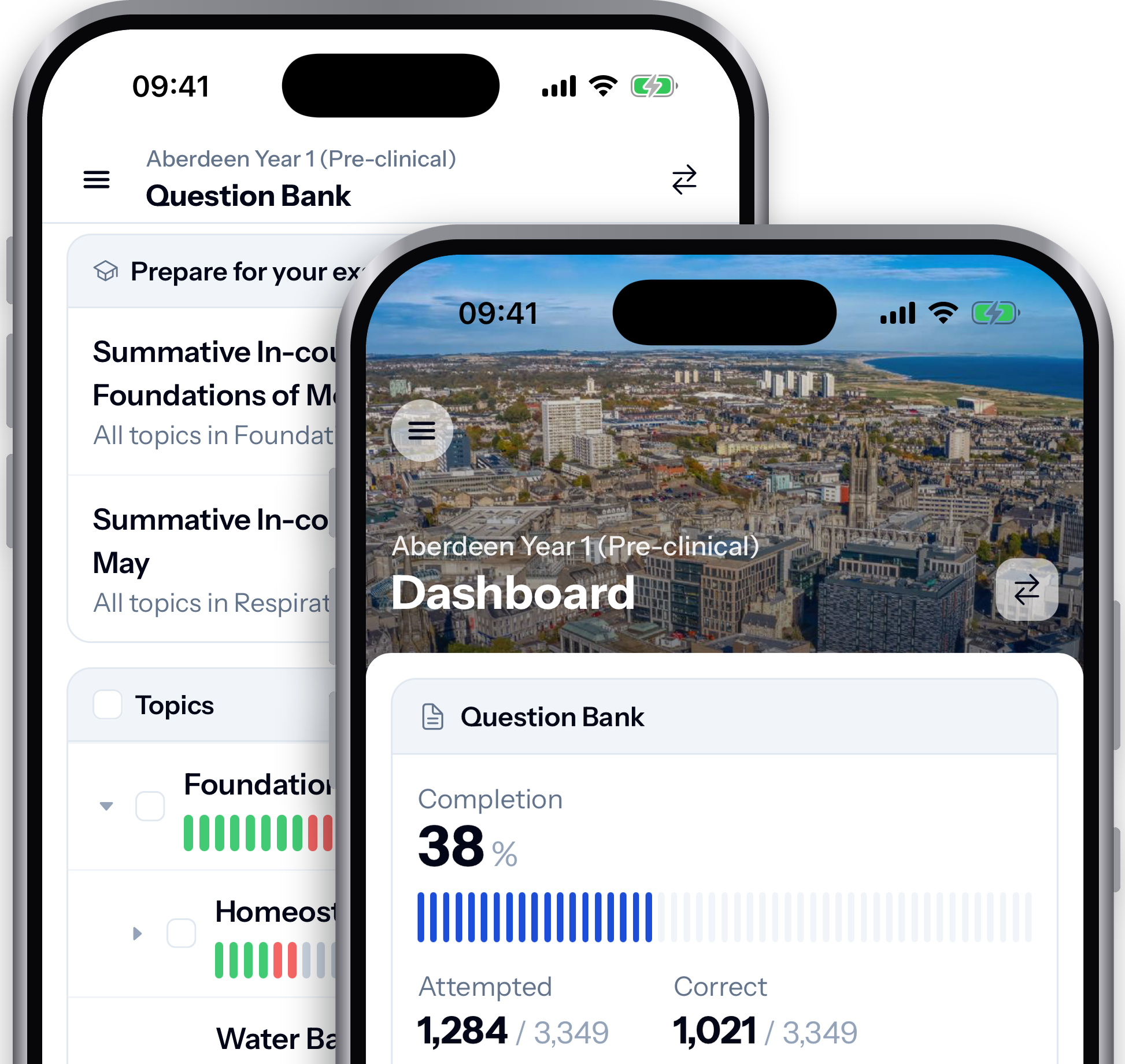
Our mobile app allows you to access your interview and exam question banks wherever you are.