Close
Close

 15th September 2026
Complete Guide to Geriatric Medicine ST4 Application and Recruitment (2027)
Written by Medibuddy. Last updated: September 2026.
If you’re planning your Geriatric Medicine ST4 Application, this guide is for you. Geriatric Medicine is an uncoupled pathway: you apply at ST4 to a four-year higher programme that’s dual-accredited with General Internal Medicine. You’ll need to complete Internal Medicine Training (IMT) and the full MRCP(UK) diploma prior to this. We cover national recruitment via Oriel, eligibility, self-assessment and portfolio scoring, and how offers are made, so you can plan with confidence.
Key Facts at a Glance
- Competition ratio (2025): 2.06:1 (323 applications, 157 posts)
- Training length: Standard four years (ST4–ST7); some regions advertise five
- Key entry requirement: IMT completion, GMC registration, full MRCP(UK) diploma by offer
- Recruitment platform: Oriel, under Physician Higher Specialty Training (PHST)
- Interview dates (2026): 10–12 February; 2027 schedule to follow
Table of Contents
- Geriatric Medicine ST4 Curriculum
- Geriatric Medicine ST4 Eligibility Criteria and Entry Requirements
- How to Apply for Geriatric Medicine ST4 National Recruitment
- Geriatric Medicine ST4 Recruitment Timeline and Key Dates (2027)
- How Competitive Is Geriatric Medicine ST4?
- How Geriatric Medicine ST4 Applications Are Scored (2027)
- Geriatric Medicine ST4 Self-Assessment and Portfolio: How to Maximise Your Score
- The Geriatric Medicine ST4 Interview: A Brief Overview
- Geriatric Medicine ST4 Offers, Preferencing and What Happens Next
- Frequently Asked Questions About Geriatric Medicine ST4 Application
- Geriatric Medicine ST4 Useful Resources
Geriatric Medicine ST4 Curriculum
The current Geriatric Medicine higher training is built around specialty Capabilities in Practice (CiPs) and the Generic Professional Capabilities (GPCs) in the GMC’s 2022 curriculum. You’ll evidence your progression in the JRCPTB ePortfolio, drawing on workplace-based assessments, supervisor reports and reflective portfolio entries that cover both Geriatric Medicine and General Internal Medicine. Training quality and delivery are overseen nationally by the Joint Royal Colleges of Physicians Training Board, and the curriculum is approved by the GMC, while regional statutory education bodies run the day-to-day programmes.
Regional programmes deliver to the same national curriculum but differ in how they organise placements and teaching. Rotation footprints and block lengths vary, and the balance between acute frailty/front door, community geriatrics, rehabilitation, stroke and orthogeriatrics is shaped locally. For example, Scotland West sets out rotations spanning at least two units over the programme, with its own regional teaching schedule; other deaneries publish similarly distinct footprints and timetables. On-call and acute medicine commitments also differ by hospital network, so review local programme adverts when you’re ranking preferences.
Note: This section reflects the 2022 GMC‑approved curriculum and JRCPTB guidance; if minor updates appear for 2027, programmes will brief trainees locally.
Geriatric Medicine ST4 Eligibility Criteria and Entry Requirements
If you’re applying for Geriatric Medicine ST4 in 2027, you’ll need to meet the entry requirements outlined in the person specification. The 2027 person specification has not yet been published; however, the 2026 document is a useful guide for understanding the eligibility criteria.
In brief, you’ll need:
- Primary medical qualification: MBBS or equivalent medical degree.
- GMC registration: Full registration with a current licence to practise at the time of application.
- Postgraduate exams: MRCP(UK) Part 1 and the full MRCP(UK) diploma (Parts 2 Written and PACES). For England, Wales and Northern Ireland, you need Part 1 at application and full MRCP(UK) by the first‑offers deadline. For Scotland, check the ScotMT person specification for the current round, as MRCP timing may differ (some rounds require full MRCP at application). Accepted alternatives include completion of Irish Basic Specialty Training with the full MRCPI by offer, or eligibility for the General Internal Medicine Specialist Register.
- IMT completion and competencies: Completion of three years of Internal Medicine Training (IMT) by post start date, or evidence of equivalent capabilities for those who have not completed UK IMT, plus evidence of meeting IMT competencies via either an appropriate IMT ARCP outcome or the alternative certificate of competence.
- Right to work: Valid right-to-work documentation is required at appointment; Health and Care Visa sponsorship is commonly available via employers.
- English language: If you need to evidence English for GMC registration, the GMC accepts tests such as IELTS Academic or OET Medicine; thresholds are set by the GMC’s guidance.
- Prior experience: The 2026 person specification does not set a maximum cap on prior post-foundation experience; meeting the minimum requirements above is what matters.
NHS England sets these requirements for ST4 Geriatric Medicine in the 2026 person specification, which is the governing reference for the current cycle. Although 2027 guidance is not yet published, the 2026 document is a reliable guide for planning your 2027 application. We’ll update this page when the 2027 person specification is released.
Note: International medical graduates follow the same rules but will usually need to secure GMC registration, demonstrate English, and arrange sponsorship.
How to Apply for Geriatric Medicine ST4 National Recruitment
The 2027 recruitment timeline has not been published yet. However, the 2026 PHST timetable is a good guide for planning your 2027 application. We’ll update this page as soon as the 2027 dates are released.
- Check you’re eligible and map key deadlines. Read the eligibility section of this guide and ensure you can evidence that you meet the person specification.
- Apply via Oriel under PHST. Applications run nationally via Oriel under Physician Higher Specialty Training (PHST). You need to complete all sections of the Oriel form, working through personal details and right-to-work; eligibility (GMC licence, MRCP(UK) status, IMT Stage 1 or equivalent); employment and training history; the PHST self-assessment; referee nominations; and programme preferences.
- Self‑assessment. PHST uses your self-assessment to shortlist for interview, and it also contributes to your final recruitment score. Claim honestly and be ready to evidence each item at verification; scores can be adjusted if evidence doesn’t match.
- Gather and upload supporting documents. Expect to upload standard documents such as proof of identity, GMC registration, primary medical qualification, MRCP(UK) pass letters/transcripts (MRCP(UK) Part 1 must be held at application; the full diploma by the first offers deadline, per NHS England), and evidence of IMT Stage 1 completion or equivalent. Exact document lists and file rules will be confirmed on Oriel for the current recruitment round.
- Nominate referees.You’ll be asked to nominate referees (commonly three, covering recent posts, including your current or most recent consultant or educational supervisor). References are usually requested later in the process; the precise number and timing are confirmed on Oriel for the round.
- Rank programme preferences. Within a single application you can rank regional programmes in order. There’s no cap on the number of preferences you can make, so rank widely and order them carefully. You can usually reorder up to the preferencing deadline.
- Submit your application before the window closes. For 2026, Round 1 opened in November and closed in mid-December, with first offers by 31 March 2026. You can expect a similar timeframe for the 2027 application process.
- Verification, shortlisting and interview invite. After submission, your self-assessment evidence is verified and applicants are ranked. The highest-ranked are invited to an online interview.
- Offers and upgrades. Offers are released through Oriel. You can accept, decline, or hold with upgrades until the published deadlines.
- Reapplication and support form (if needed). You can reapply in a future cycle. If you’ve previously been in UK specialty training (left a programme early or are reapplying from within training), you’ll need a Support for Reapplication to Specialty Training form signed by your Training Programme Director or Head of School. Appeals are limited to procedural issues via the recruiter’s complaints and appeals route.
Geriatric Medicine ST4 Recruitment Timeline and Key Dates (2027)
Although the 2027 recruitment dates have not yet been published, the 2026 (Round 1) dates are a useful guide when planning your 2027 application. The 2026 dates were as follows:
Note: We’ll update this section as soon as the 2027 timetable is published.
| Stage | Date |
|---|---|
| Applications open | November 2025 |
| Applications close | Mid‑December 2025 |
| Interviews | 10, 11, 12 February 2026 |
| Shortlisting outcomes and interview invitations issued by | 3 February 2026 |
| Initial offers released (Round 1) | By 31 March 2026 |
| Offer hold deadline | 1 pm Thursday 2 April 2026 |
| Upgrade deadline | 4 pm Thursday 9 April 2026 |
Note: Dates shown reflect the 2026 Round 1 schedule published by NHS England.
Previously, Geriatric Medicine has also included a second round of recruitment. Round 2 dates are released later in the year once Round 1 concludes.
How Competitive Is Geriatric Medicine ST4?
Geriatric Medicine remains moderately competitive at national selection. The latest official competition figures come from NHS England’s annual competition ratios. For 2027 applicants, the most recent two published rounds are below.
| Year | Applications | Posts | Competition ratio |
|---|---|---|---|
| 2025 | 323 | 157 | 2.06:1 |
| 2024 | 281 | 161 | 1.75:1 |
Ratios have sat around two-to-one nationally. That said, it’s not a guaranteed post: a strong self-assessment and complete, well-evidenced portfolio still make a real difference at shortlisting and final ranking.
NHS England’s 2025 England fill-rate data show not all posts were accepted (107 of 133), highlighting that vacancies persist in some regions even when the national ratio looks competitive. Regional variation matters: British Geriatrics Society commentary has flagged some deaneries with markedly lower fill rates in recent rounds. What this means for you:
- If you’re flexible on location, your chances of securing an NTN are higher.
- If you’re set on a popular area, maximise your score and apply broadly to similar regions.
Note: The table reflects NHS England’s published figures for 2025 and 2024. We’ll update this page when newer competition ratios are released.
How Geriatric Medicine ST4 Applications Are Scored (2027)
Geriatric Medicine ST4 uses a formal scoring framework through Physician Higher Specialty Training (PHST): you self-assess on Oriel, that score is verified, and you’re then ranked further at interview. The self-assessment is used to shortlist for interview and also contributes to the final application score.
The following information is from the 2026 guidance:
Components of the overall score
| Component | What it covers (domains) | Role in final score |
|---|---|---|
| Eligibility/longlisting | Person specification essentials (e.g. training and exam requirements) | Not scored; must be met to proceed |
| Self-assessment (portfolio) | Domains such as postgraduate qualifications, publications, presentations, teaching, QI/audit, leadership and commitment to specialty | Verified score used for shortlisting and carried forward into the overall total |
| Interview/selection centre | Assessed domains mapped to the person specification | Drives final ranking; PHST applies weighting to generate the final interview total |
PHST confirms that a weighting is applied to the interview total to produce the final rank, but geriatrics-specific numerical weights are not publicly published. We’ll update this page when the 2027 scoring matrix is released.
Interview scoring and appointability
Your verified self‑assessment contributes to the overall score and final ranking is driven by interview performance.
PHST sets appointability rules on its geriatrics page:
- Raw Interview Score (RIS) of at least 30/50
- No scores of 1/5
- No more than two scores of 2/5
Self‑assessment domains
You’ll self‑score across set domains with fixed descriptors and upload evidence for verification. The domains cover your academic output (publications, presentations), education activity (teaching and any formal training in teaching), improvement work (QI/audit), leadership/management, additional qualifications and explicit commitment to Geriatric Medicine. Your verified total forms the shortlisting score and is added to the final application total alongside interview performance. We’ll discuss what counts and common evidence pitfalls in the next section.
Geriatric Medicine ST4 Self-Assessment and Portfolio: How to Maximise Your Score
In recent years, PHST has shortlisted and ranked Geriatric Medicine ST4 applications using a self-assessment across defined domains, with evidence checked against your claims. Exact weightings can shift year to year, so treat the 2026 PHST guidance below as your baseline and check for any minor updates when the 2027 guidance is published.
How to score in each domain
- Qualifications and degrees
- Additional academic qualifications (e.g. intercalated or postgraduate degrees) can add points when relevant to medicine or education.
- Keep transcripts and award letters ready.
- Teaching and training in teaching
- The person specification expects evidence of teaching and/or training in teaching. In PHST specialties, self-assessment awards 1 point for a live “train the trainer” style course lasting at least 6 hours; our Teach the Teacher course meets this.
- Keep formal session plans, feedback summaries and any teaching awards.
- Quality Improvement and audit
- Higher credit goes to closed-loop projects with measurable change and your defined role.
- Upload project reports, data displays and a supervisor-signed letter confirming your contribution.
- Publications and presentations
- Peer-reviewed publications and oral/poster presentations score; accepted-in-press items generally count.
- Provide PubMed links/DOIs, acceptance emails and conference programmes listing you as author/speaker.
- Leadership and management
- Roles with defined responsibility (rota lead, committee positions, guideline author) are valued.
- Evidence with dated appointment letters, terms of reference and outputs.
Evidence and verification
For your self-assessment score, you’ll be asked to upload documentary evidence for every claim in a separate PHST evidence-upload window after applications close. Acceptable documents usually include certificates, supervisor letters on headed paper, publication proofs (with DOI), conference acceptance emails/programmes, and structured teaching/QI feedback. If a claim can’t be verified, it’s usually scored down to the lowest applicable level, often zero.
Easy points people miss
- Not claiming the 1-point live training-in-teaching course that meets the 6-hour requirement.
- QI without a completed re-audit cycle or unclear personal role.
- Posters counted without an acceptance email or programme extract.
- Leadership roles with no dated letter or evidence of outputs.
- “Submitted” papers that aren’t yet accepted.
Evidence pitfalls: dos and don’ts
- Do combine multi-page proof into a single clearly named PDF per claim.
- Do get supervisor letters dated, on headed paper, specifying your role, dates and outcomes.
- Do include PubMed/DOI links for publications.
- Don’t claim points for planned or future activities.
- Don’t upload screenshots without identifiers, dates or your name.
- Don’t assume generic feedback forms suffice; add a brief summary tying feedback to the teaching claim.
Practical next steps:
- Book and complete a live Teach the Teacher course (≥6 hours) for a guaranteed point and stronger teaching narrative.
- Lead a QI project you can close, write up, and present regionally or nationally.
- Target one presentable output: submit an abstract to a geriatrics or general medicine meeting and save the acceptance email.
- Take on a defined leadership role with measurable deliverables and ask a consultant to record outcomes in a sign‑off letter.
- Set up a monthly teaching series, collect feedback each session, and summarise the data.
- Create a clear evidence folder now; label PDFs with date, domain and a one‑line description.
The Geriatric Medicine ST4 Interview: A Brief Overview
Geriatric Medicine ST4 uses a structured online interview delivered via the national PHST process; for format and targeted practice, see our dedicated resource: Geriatric Medicine ST4 Interview Question Bank.
Geriatric Medicine ST4 Offers, Preferencing and What Happens Next
The offers stage can feel like a whirlwind. Here’s how it generally works, and what to do at each step.
- Post‑interview outcome and rank. If you’re deemed appointable, your overall recruitment score sets a single national rank.
- Preferencing. You’ll then complete post-programme preferencing in Oriel, ranking regions/programmes. You can reorder choices until the preferencing deadline.
- Initial offers. Offers are released in batches by rank. You’re matched to the highest-preferenced programme that still has capacity when your turn comes.
- Responding and the hold period. You can Accept, Accept with upgrades, Hold with upgrades, or Decline. Holds reserve one offer until the national hold deadline shown in Oriel; after that, you must be either holding‑converted to Accept or released.
- Upgrades. If you opt in to upgrades (on Accept or Hold), Oriel will automatically move you to any higher‑ranked preference that becomes available. Upgrades stop at the national upgrade deadline.
- Cascades and reserve list. As candidates decline or are upgraded, offers cascade down the rank list. If you’re on the reserve list, you can still be offered a post during cascades.
- After you accept. Your new employer completes pre-employment checks and contracts. Training usually starts in August; your deanery will confirm induction and rotation details.
Frequently Asked Questions About Geriatric Medicine ST4 Application
How competitive is Geriatric Medicine ST4 training in the UK?
NHS England’s 2025 competition ratio was 2.06:1 (323 applications for 157 posts). Recent rounds have sat around 1.5–2:1. Strong self‑assessment evidence helps secure interviews and improves final ranking.
What are the eligibility requirements for Geriatric Medicine ST4?
You’ll need MBBS (or equivalent), full GMC registration, completion of Internal Medicine Training (IMT) stage 1 (or equivalent capabilities), and MRCP(UK) Part 1 at application with the full MRCP(UK) diploma by the offer date (Scotland may require full MRCP at application). The person specification also recognises MRCPI via Irish BST or eligibility for the General Internal Medicine specialist register.
How does the Geriatric Medicine ST4 application process work?
There’s a single national application via Oriel. You submit one form under PHST, upload your self‑assessment and evidence, and preference regions/deaneries. Longlisting checks eligibility; verified self‑assessment ranks you for interview. Post allocation happens later via offers.
How are candidates shortlisted for Geriatric Medicine ST4?
Shortlisting is by verified self‑assessment score across domains such as QI, teaching/training in teaching, leadership, presentations/publications and additional qualifications. Where used, any separate commitment‑to‑specialty screen affects shortlisting only.
What scores well on the Geriatric Medicine ST4 self‑assessment?
High-yield areas include closed-loop audit or QI with demonstrated change, regular teaching with feedback and training in teaching, regional/national presentations, peer‑reviewed publications, leadership roles, and additional qualifications. PHST also awards 1 point for a live “train the trainer” course of at least 6 hours; a Teach the Teacher course is ideal.
How many Geriatric Medicine ST4 posts are there each year?
For 2025, there were 157 UK posts and 323 applications. Indicative regional numbers are usually shown on PHST’s recruitment pages; Scotland and Northern Ireland publish their own regional adverts. Final numbers can shift slightly before offers.
How do offers, holds and upgrades work for Geriatric Medicine ST4?
Offers are made via Oriel based on your final rank and preferences. You can accept, decline, or hold, and opt in for automatic upgrades to a higher preference if it becomes available before the upgrade deadline.
Can I reapply if I’m unsuccessful in Geriatric Medicine ST4?
Yes. You can reapply if you remain eligible. If you previously left UK specialty training or are reapplying from within training, you’ll need a Support for Reapplication form signed by your TPD/Head of School. You may also need to strengthen your self‑assessment evidence before reapplying.
Geriatric Medicine ST4 Useful Resources
Our recommended resources for your 2027 application:
- PHST Recruitment: Geriatric Medicine ST4 specialty page
- NHS England: Geriatric Medicine ST4 Person Specification (2026)
- Geriatric Medicine ST4 Interview Question Bank
Note: The links above reflect the latest published round: 2026 for the person specification. We’ll update this page when 2027 documents are released.
Conclusion
That’s a lot to juggle while you’re working, but you’ve got this. We’ve covered eligibility, how the self-assessment and portfolio are scored, and where applicants often drop easy points so you can plan evidence early and avoid last‑minute scrambles. With only a few marks between candidates, a tidy, well‑verified portfolio and a realistic timeline can make a real difference.
Preparing for the interview? Work through the Geriatric Medicine ST4 Interview Question Bank for scenario questions with model answers, put together by high-scoring trainees.
Take your subscriptions with you
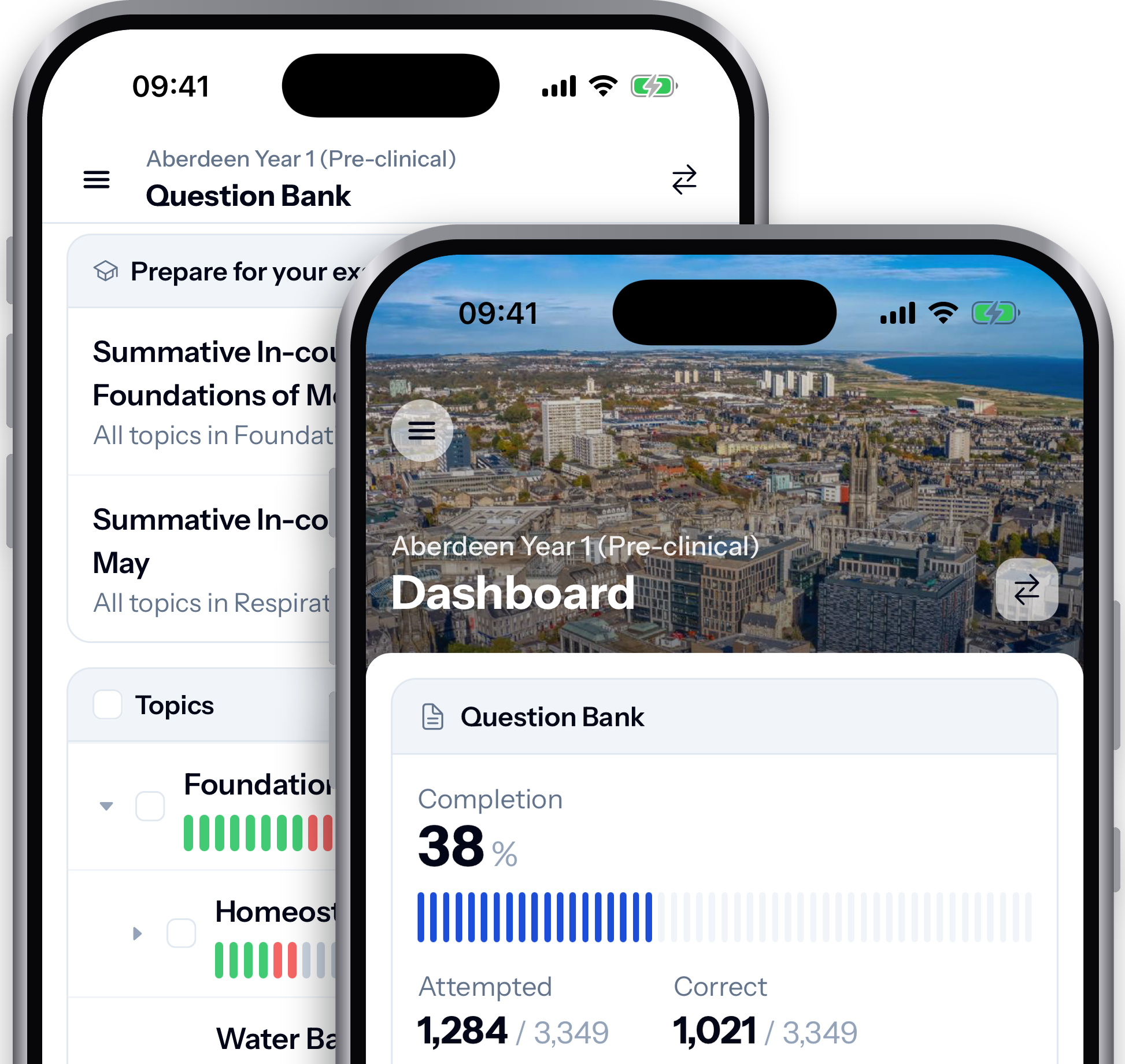
Our mobile app allows you to access your interview and exam question banks wherever you are.